F28-2000
Fokker
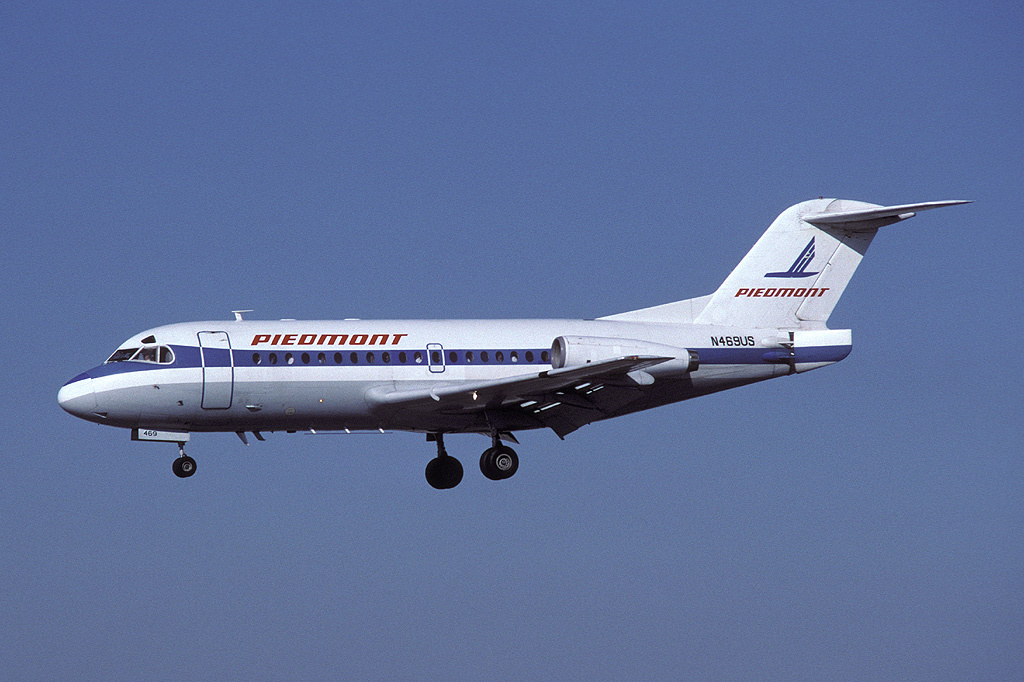
Historical Context & Origins
At the turn of the 1960s, the regional aviation landscape was dominated by turboprops, but Fokker's vision anticipated the growing demand for jets for short- and medium-range routes. The Fokker F28 Fellowship project began with the aim of creating a robust, efficient jet aircraft capable of operating from less equipped airports, replicating the success of the famous F27 Friendship.
The F28 series saw its first flight in 1967 with the -1000 model. However, the Fokker F28-2000 variant, with its first flight in 1971, represented a significant evolution, designed to offer greater passenger capacity. This fuselage lengthening directly responded to the market needs of regional carriers who needed a more spacious jet without sacrificing remarkable STOL (Short Take-Off and Landing) performance.
The introduction of the F28-2000 was a pivotal moment, as it consolidated Fokker's position as a pioneer in the regional jet industry. Its genesis was shaped by the need for an aircraft that could connect smaller centers with larger hubs, offering the speed and comfort of a jet, but with the agility of a small aircraft.
Architecture & Technological Design
The Fokker F28-2000 sported a distinctive design, featuring a moderately swept low wing, a sleek T-tail configuration and two rear-mounted turbofan engines. This configuration not only contributed to a quiet cabin, but also protected the engines from debris during operations on unprepared or semi-prepared runways, one of its most appreciated features.
At the heart of the F28-2000 were two reliable Rolls-Royce Spey Mk 555-15P engines, chosen for their robustness and ability to operate effectively in a variety of environmental conditions. The -2000 version was notable for its stretched fuselage by 2.21 meters compared to the original -1000, increasing capacity from 65 to 79 passengers and improving efficiency per seat.
One of the most original engineering solutions was the absence of thrust reversers, compensated by large aerodynamic brakes placed on both the wings and the tail, a distinctive feature that simplified maintenance. This bold choice reflected Dutch engineering aimed at practicality and efficiency, making the F28-2000 a robust and easy-to-handle aircraft even in demanding operational environments.
Onboard Specifications
- ◆Integrated air brakes: A unique, highly efficient system positioned on the wings and tail, which eliminated the need for thrust reversers.
- ◆Structural robustness for unprepared runways: Designed to operate from airports with limited infrastructure, a true regional "workhorse".
- ◆Rolls-Royce Spey Mk 555-15P engines: Two reliable and proven turbofans, known for their efficiency and durability in intense regional operations.
Operational Career & Operators
The Fokker F28-2000 quickly found its place in the market, becoming a mainstay for numerous regional carriers around the world. Its increased capacity and excellent short runway performance made it ideal for expanding airline networks into underserved areas, connecting cities and regions with modern jet service.
Carriers such as Braathens SAFE, Linjeflyg and Germania were among the first to exploit the benefits. The aircraft earned a reputation for extreme reliability and versatility, capable of operating in very different climates, from the Arctic to the tropics. Its simplicity of design contributed to relatively low operating and maintenance costs.
For decades, the F28-2000 has played a vital role in regional air transport, often operating in challenging conditions where other jets might not have ventured. Its ability to fly frequently and with good fill has made it an economical and strategic choice for many growing airlines.
Legacy & Cultural Impact
The Fokker F28-2000 was not only a commercially successful aircraft, but a true pioneer in regional jet aviation. It demonstrated that it was possible to produce a small jet that combined comfort, speed and economy, paving the way for new air routes and connections.
Its technical and operational legacy was crucial to the development of future regional aircraft, including Fokker's own successors, the Fokker 70 and Fokker 100. Many of the design solutions and operational philosophies tested and validated on the F28 have found application in its descendants, demonstrating design foresight.
Even though many examples have been withdrawn from service, the memory of the Fokker F28-2000 persists as that of a "classic" that shaped an important part of the history of civil aviation. It remains a symbol of the Dutch ability to innovate and produce aircraft that not only meet, but often anticipate the needs of the global market.
Telemetria Specs (HUD)
Hangar Trivia & Curiosità
- 💡The F28 Fellowship was Fokker's first jet airliner, pioneering the regional jet market segment with its maiden flight in 1967 (the -2000 variant entered service around 1971).
- 💡It featured distinctive fuselage-mounted petal airbrakes near the tail cone, similar to some earlier Fokker designs, allowing for precise speed control during descent.
- 💡Designed for frequent flights on short to medium-haul routes, the F28 was robustly built and capable of operating from shorter, less-prepared runways due to its sturdy landing gear and high wing placement.
Archivio Avvistamenti Spotter
Immagini scattate dalla community in tutto il mondo
Vettori Rilevati (Flotta Attiva)










Vettori Rilevati (Flotta Storica / Dismessa)


Germanair
Stato: Dismesso

Itavia
Stato: Dismesso
LTU International
Stato: Dismesso
Linjeflyg
Stato: Dismesso

Piedmont Airlines
Stato: Dismesso
Delta Air Lines
Stato: Dismesso
Cimber Air
Stato: Dismesso
Braathens Regional Airlines
Stato: Dismesso