Fokker 100
Fokker
Historical Context & Origins
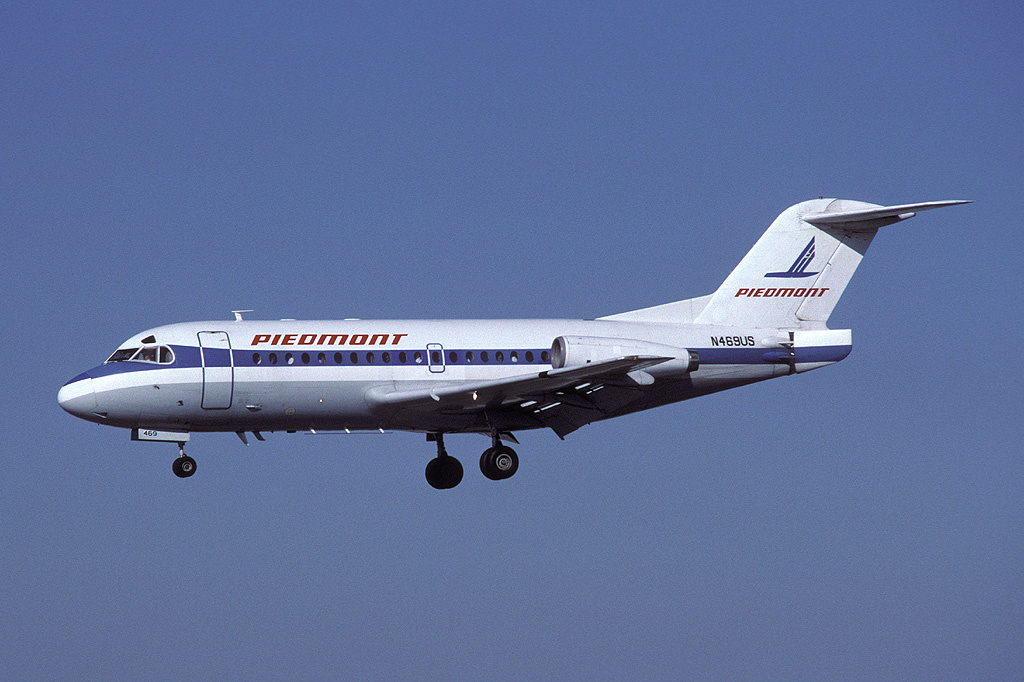
The Fokker 100, with its first flight in 1986, represents a crucial chapter and the last great bet of the legendary Dutch aeronautical company. Born from the need to modernize the short-haul fleet and compete in the 100 seat segment, it aimed to succeed the long-lived but now dated Fokker F28 Fellowship.
Development of the Fokker 100 gained momentum in the early 1980s, responding to a growing demand for more efficient, spacious and quiet aircraft for regional and medium-range routes. The goal was to create an aircraft that combined the reliability of previous Fokker models with cutting-edge technologies for the time.
The design was not a total revolution, but rather an intelligent evolution: it retained the twin-engine tail configuration and the basic structure of the F28, but significantly extended and refined it, resulting in a modern and competitive jet destined to leave a profound mark.
Architecture & Technological Design
The architecture of the Fokker 100 was based on a profound evolution of the F28, characterized by a lengthened fuselage that brought the capacity to over 100 passengers. The real innovation lay in the completely redesigned wing, now featuring a larger span, optimized aerodynamics and optional winglets for better fuel efficiency and superior take-off and landing performance.
At the heart of its performance were Rolls-Royce Tay turbofan engines, a revolutionary choice for its time. These new generation engines offered not only greater power but also dramatic reductions in fuel consumption, emissions and noise, making the Fokker 100 one of the quietest aircraft in its class.
The cockpit, or cockpit, was equipped with advanced digital avionics, including an EFIS (Electronic Flight Instrument System) system with multifunction CRT screens, which reduced the pilots' workload and improved situational awareness, projecting it towards future standards.
Onboard Specifications
- ◆Rolls-Royce Tay 620/650 engines: High efficiency turbofan engines and compliant with Stage 3 noise regulations.
- ◆"Wide-body look" cabin: Interior design with spacious overhead bins and indirect lighting, for superior comfort in 2-3 or 3-2 seat configurations per row.
- ◆Advanced Honeywell Digital Avionics: With FMS (Flight Management System) and EFIS for precise navigation and optimized operations.
Operational Career & Operators
The Fokker 100 entered service with Swissair in 1988, immediately enjoying enormous success among European and global airlines. Its reliability, low operating costs and ability to operate on shorter runways made it extremely versatile for a wide range of regional and domestic routes.
Prominent airlines such as American Airlines, Lufthansa, KLM, TAM Linhas Aéreas and many others included the Fokker 100 in their fleets, appreciating its combination of passenger comfort and operator profitability. Its robust design allowed it to operate in different climatic conditions, from the hot desert to the cold Nordic.
Despite a solid order book and an excellent reputation, production of the Fokker 100 came to an abrupt end in 1997 due to the bankruptcy of Fokker Aviation. This event marked the end of a glorious era for Dutch aviation, leaving many with the regret of a potential not fully realized.
Legacy & Cultural Impact
The legacy of the Fokker 100 is that of an excellent, often underestimated aircraft that demonstrated Dutch engineering foresight. Despite the premature discontinuation of production, many examples have remained in service for decades, with some still operating today, testifying to their extraordinary durability and reliability.
The Fokker 100 helped define the modern regional jet segment, influencing subsequent generations of aircraft with its emphasis on efficiency, noise reduction and passenger comfort. It proved that a 100 seat jet could be economically viable and technologically advanced.
Its elegant design, combined with solid performance and low operating costs, has made it a true workhorse for decades, a testament to Dutch engineering excellence. The Fokker 100 remains a bittersweet symbol of the success and decline of an aviation pioneer whose vision left an indelible mark.
Telemetria Specs (HUD)
Hangar Trivia & Curiosità
- 💡Nonostante la sua popolarità, la produzione del Fokker 100 cessò nel 1997 a seguito del fallimento di Fokker, rendendolo uno degli ultimi aerei prodotti dall'azienda.
- 💡Il Fokker 100 si è guadagnato una reputazione per la sua cabina silenziosa, grazie ai moderni motori turbofan Rolls-Royce Tay e all'efficace insonorizzazione, migliorando il comfort dei passeggeri sulle rotte regionali.
- 💡Il suo design presenta una configurazione a 'T-tail' e motori montati nella parte posteriore della fusoliera, un layout comune per molti jet regionali di quel periodo, che permetteva un design dell'ala più pulito e un accesso più facile alla cabina.
Archivio Avvistamenti Spotter
Immagini scattate dalla community in tutto il mondo