F28 Fellowship
Fokker
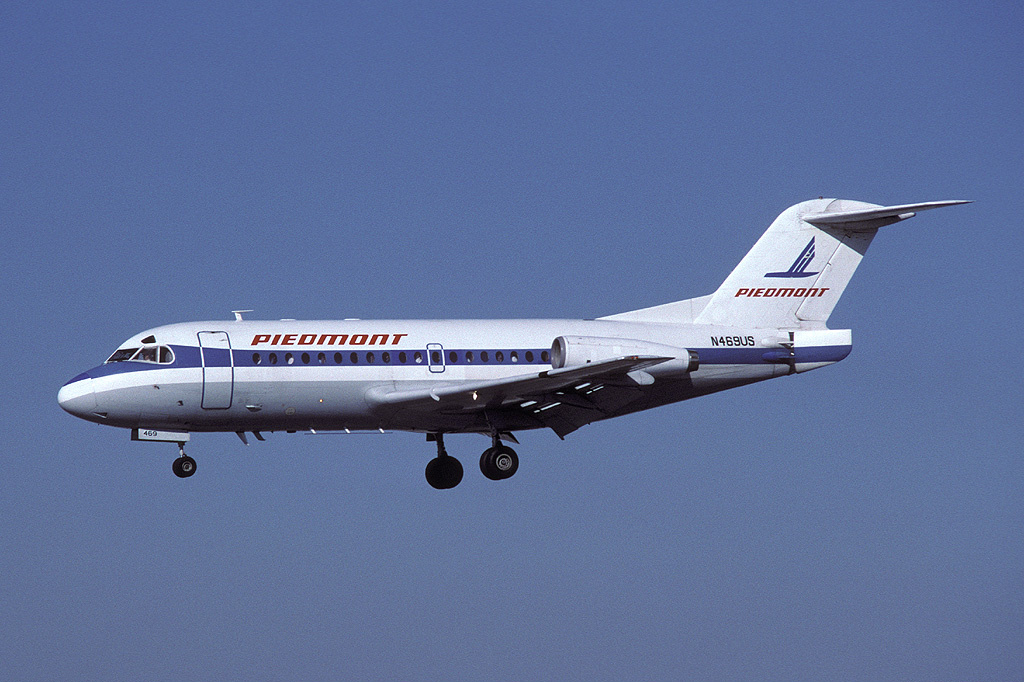
Historical Context & Origins
The Fokker F28 Fellowship emerged in an era of rapid expansion for regional air transport, when demand for efficient and robust aircraft, capable of operating on shorter routes and less well-equipped airports, was growing rapidly. Fokker, strong in its engineering tradition, saw the opportunity to create a jetliner designed specifically for this segment, aiming to consolidate its position in the international aeronautical market.
The project took shape in the early 1960s with the aim of offering a modern alternative to turboprops and larger jets, focusing on reliability, low operating costs and the ability for frequent cycle operations. The first flight occurred on May 9, 1967 at Schiphol, marking the beginning of a new era for the Dutch manufacturer in the regional jet market and heralding its global success.
Architecture & Technological Design
The Fokker F28 Fellowship was distinguished by an elegant and functional engineering design, featuring a tail-mounted two turbofan engine configuration and a high swept wing. This architecture not only guaranteed excellent aerodynamics and low cabin noise, but also allowed high protection of the engines from debris and damage, a crucial factor for operations on less prepared or unpaved runways.
One of the most innovative and distinctive technical solutions of the F28 was the adoption of shell aerodynamic brakes placed on the sides of the tail fuselage. This system, unique for its time, eliminated the need for thrust reversers on the engines and spoilers on the wings, helping to simplify maintenance and reduce the overall weight of the aircraft. Its construction, based on principles of simplicity and durability, was intrinsically designed to deal with short and frequent flight cycles, reducing turnaround times and maintenance costs for operators.
Onboard Specifications
- ◆Aerodynamic clamshell brakes on the tail: A highly innovative system that allowed effective braking without thrust reversal or wing spoilers.
- ◆High-wing design: Offered greater ground clearance, protecting the engines and allowing operations from semi-prepared or dirt runways.
- ◆Rolls-Royce Spey Mk. engines 555: These turbofans were known for their reliability, efficiency and adequate performance for regional flight.
Operational Career & Operators
The Fokker F28 entered service with Braathens SAFE of Norway in 1969, quickly demonstrating its versatility and reliability in diverse operating conditions. It became a mainstay for numerous airlines around the world, operating successfully in extremely diverse geographical and climatic contexts, from Europe to Australia, from Asia to Africa and the Americas.
Its ability to operate on short runways and its operating economics made it ideal for connecting smaller cities and serving emerging markets with reliable jet service. Molte delle 241 unità prodotte rimasero in servizio per decenni, alcune addirittura fino ai primi anni 2000, testimoniando la straordinaria robustezza del progetto e la qualità costruttiva olandese. The F28 was deployed in several variants, from standard passenger configuration to cargo and VIP versions for governments and businesses, reinforcing its reputation as a tireless regional workhorse.
Legacy & Cultural Impact
The Fokker F28 Fellowship was not just a commercially successful aircraft; he was a true pioneer in establishing the concept of the modern regional jet. Its design philosophy, focused on strength, efficiency, operational economy and adaptability, profoundly influenced the next generation of short-range aircraft, laying the foundation for modern regional jets.
Although today most F28s have been retired from scheduled service, its impact endures, symbolizing Dutch ingenuity and ambition to connect the world through regional air transport. It has significantly helped shape the commercial aviation landscape, expanding the reach of air transportation and pioneering new business models for regional airlines, serving as a technology bridge to today's regional jets.
Telemetria Specs (HUD)
Hangar Trivia & Curiosità
- 💡The F28 was Fokker's first entirely Dutch-designed and built jet airliner.
- 💡It featured unique 'petal' style airbrakes integrated into the tailcone, which deployed to slow the aircraft down without relying on thrust reversers.
- 💡Its design legacy continued with the later Fokker 70 and Fokker 100, which were stretched and updated derivatives of the original F28 concept.
Archivio Avvistamenti Spotter
Immagini scattate dalla community in tutto il mondo
Vettori Rilevati (Flotta Attiva)










Vettori Rilevati (Flotta Storica / Dismessa)


Germanair
Stato: Dismesso

Itavia
Stato: Dismesso
LTU International
Stato: Dismesso
Linjeflyg
Stato: Dismesso

Piedmont Airlines
Stato: Dismesso
Delta Air Lines
Stato: Dismesso
Cimber Air
Stato: Dismesso
Braathens Regional Airlines
Stato: Dismesso