W.8
Handley Page
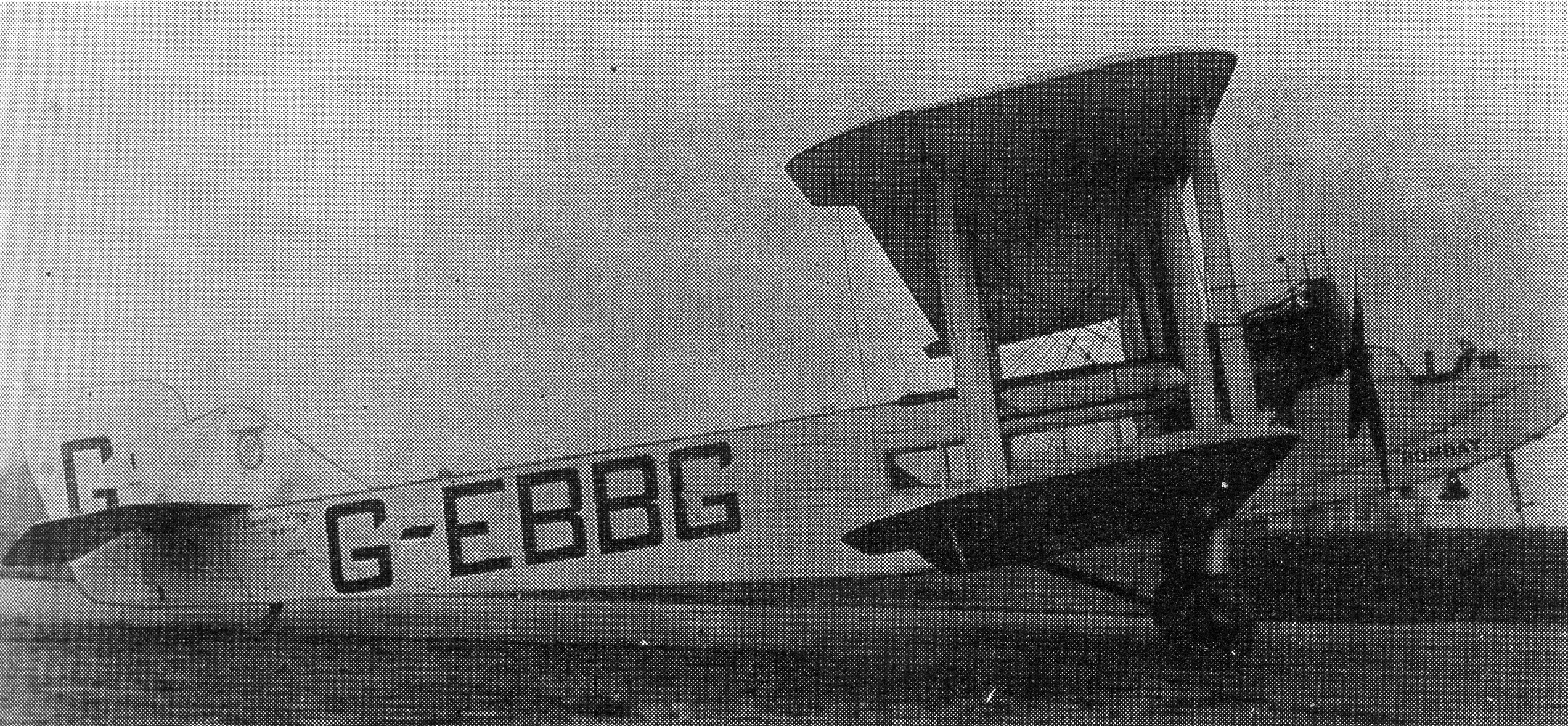
Historical Context & Origins
The Handley Page W.8 emerged in an era of profound transition for aviation, in the crucial post-World War I period. With the end of the conflict, the aeronautical industry found itself converting its immense war production capacities towards civilian purposes, trying to capitalize on the experience acquired with large bombers. In this scenario, Handley Page, already famous for its O/400 twin-engine planes, sensed the potential of commercial passenger transport.
The W.8 project, also known as HP.18, was not a simple conversion, but an ambitious airliner designed specifically for passengers. Its first flight was in December 1919, marking a bold step towards establishing regular and reliable air routes. It was a concrete symbol of the vision that saw the sky as a new frontier for trade and travel.
Architecture & Technological Design
The W.8 presented itself as a robust twin-engine biplane, a configuration that embodied the solidity and reliability required by early commercial flights. Its structure, expertly made with a mix of wood and canvas, guaranteed resistance and lightness, typical of the aeronautical engineering of the time but with notable improvements. Every detail was designed to ensure maximum structural integrity.
A revolutionary aspect for the times was the attention to passenger comfort. The W.8 offered an enclosed and heated cabin, a true luxury that distinguished Handley Page flights from the more spartan and open experiences of early aircraft. This design not only protected occupants from the elements, but elevated the travel experience to a new standard, setting the stage for modern airline aviation.
Onboard Specifications
- ◆Enclosed and heated passenger cabin: A fundamental innovation for the comfort and feasibility of long-haul flights.
- ◆Capacity for 15 passengers: An impressive number for the time, demonstrating the scalability of air travel.
- ◆Rolls-Royce Eagle VIII engines of 360 hp each: Source of power and reliability, crucial for emerging international routes.
Operational Career & Operators
The Handley Page W.8 quickly became a mainstay of emerging European airline routes, initially operating with Handley Page Transport and later with the historic Imperial Airways. Its main routes connected key cities such as London to Paris and London to Brussels, establishing regular international connections that were previously unthinkable. The reliability of the W.8 was a testament to its excellent engineering.
The aircraft stood out for its robustness and ability to operate with a certain regularity in weather conditions that were not always favorable, earning the trust of passengers and operators. Several variants were produced, including the W.8b, the W.8e (Hamilton) and the more powerful W.9 (Hampstead), each with incremental improvements that contributed to the evolution of the design. Its operational longevity was remarkable.
Legacy & Cultural Impact
The Handley Page W.8 was not simply an airplane; he was a pioneer who contributed decisively to shaping the future of civil air transport. It unequivocally demonstrated the commercial viability and safety of passenger flights, convincing the public and investors of the potential of this new form of travel. Its presence in the European skies was a beacon of progress.
Its influence extended far beyond its operational career, serving as an essential precursor to subsequent airliners. Lessons learned from its design, operations, and passenger needs were critical to the development of larger, more sophisticated aircraft. The W.8 remains a powerful symbol of an era of engineering courage and futuristic vision, a true giant in the pantheon of aviation.
Telemetria Specs (HUD)
Hangar Trivia & Curiosità
- 💡Originally designed as a heavy bomber during World War I, its primary role shifted to civil transport after the armistice.
- 💡It was one of the first aircraft to offer an enclosed cabin for passengers, a significant comfort innovation for its era.
- 💡Various W.8 variants were powered by different engine types, including Rolls-Royce Eagles and Napier Lions, demonstrating early modularity in design.
Archivio Avvistamenti Spotter
Immagini scattate dalla community in tutto il mondo