Twin Pioneer
Scottish Aviation
Historical Context & Origins
The Scottish Aviation Twin Pioneer, with its first flight in 1955, emerged as a bold response to post-war needs for robust and versatile air transport. Born from the experience of the previous Single Pioneer, this twin-engine aircraft was designed to excel in short take-off and landing (STOL) operations, essential for serving the most remote and rugged regions of the British Empire and beyond.
The inspiration for the Twin Pioneer came directly from the need for an aircraft capable of operating from unprepared and extremely small runways, often in colonial or military contexts where airport infrastructure was non-existent. The Royal Air Force (RAF) was among the first to recognize the potential of an aerial platform with these unique specifications.
The design aimed to overcome the limitations of its predecessor, the Single Pioneer, by offering greater payload capacity, extended range and the inherent reliability of a twin-engine configuration. This immediately made it an ideal candidate for general utility, logistics and surveillance tasks in hostile environments.
Architecture & Technological Design
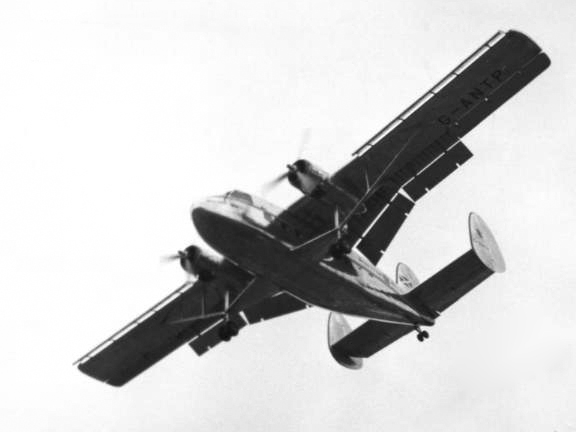
The heart of its exceptional STOL capability lay in the high-lift wing, characterized by a large surface area and equipped with wide-span slats on the leading edge and double-slotted flaps on the trailing edge. This advanced aerodynamic configuration allowed the aircraft to generate extraordinary lift even at low speeds, drastically reducing take-off and landing distances.
The Twin Pioneer was powered by two Alvis Leonides radial engines, typically the 503/8 model with 550 horsepower each. These robust and reliable thrusters were chosen for their proven endurance in difficult operating conditions and for their ability to deliver the power necessary for the low-speed maneuvers required for STOL operations.
Its structure was deliberately robust and simplified, with a fixed and reinforced landing gear, designed to absorb the impacts of landings on uneven surfaces. The spacious and versatile cabin allowed rapid adaptation from passenger to cargo transport, or even to specialized missions such as reconnaissance or medical evacuation.
Onboard Specifications
- ◆Advanced high-lift systems: full-span leading-edge slats and double-slotted flaps for extreme STOL.
- ◆Alvis Leonides radial engine: high reliability and power for operation in hostile environments.
- ◆Robust and reinforced fixed landing gear: maximum resilience for unprepared runways and rough landings.
Operational Career & Operators
The Twin Pioneer quickly found use with numerous air forces and civilian operators around the world. The Royal Air Force (RAF) employed it in various theaters, from the Far East to the Middle East, demonstrating its irreplaceable ability to support troops and bases in remote locations. The Royal Navy also used it for transport and support duties, notably with the icebreaker HMS Protector in the Antarctic regions.
In addition to the military, numerous civilian carriers adopted the Twin Pioneer to connect isolated communities in Africa, Asia and Australia, where land infrastructure was lacking. Its capabilities made it perfect for transporting cargo, passengers, medical evacuations and even search and rescue (SAR) operations, earning it the nickname "pack mule of the skies".
Its ruggedness and reliability became legendary, allowing it to operate successfully from improvised airfields and in prohibitive weather conditions. Its operational flexibility and ease of maintenance made it a valuable asset for decades, serving in a variety of roles from patrolling to parachute drops to agricultural irrigation.
Legacy & Cultural Impact
The Scottish Aviation Twin Pioneer left a significant legacy as one of the pioneers in the field of twin-engine STOL aircraft. It unequivocally demonstrated the feasibility and effectiveness of a design specifically optimized for very short runway operations, indirectly influencing the design of future light transport aircraft.
While it was never produced in huge numbers (approximately 87 were built), its impact on air operations in challenging environments was profound. Its distinctive silhouette, with high wings and clearly visible radial engines, has become an icon of resilience and adaptability in utility aviation.
Today, few Twin Pioneers remain in flying condition, treasured by enthusiasts and museums that celebrate their history. They represent a fundamental chapter in British aeronautical engineering, a tribute to the vision of an aircraft designed to overcome the challenges posed by the farthest reaches of the world.
Telemetria Specs (HUD)
Hangar Trivia & Curiosità
- 💡Era famoso per le sue incredibili capacità STOL, spesso riuscendo a decollare e atterrare in meno di 100 metri.
- 💡Il suo design alare presentava complessi dispositivi ad alta portanza, come slat e grandi flap, essenziali per le sue prestazioni STOL uniche.
- 💡È stato ampiamente utilizzato dalla Royal Air Force (RAF) e dalla Royal Navy per compiti di trasporto e comunicazione in diverse operazioni globali.
Archivio Avvistamenti Spotter
Immagini scattate dalla community in tutto il mondo