Lodestar (18)
Lockheed
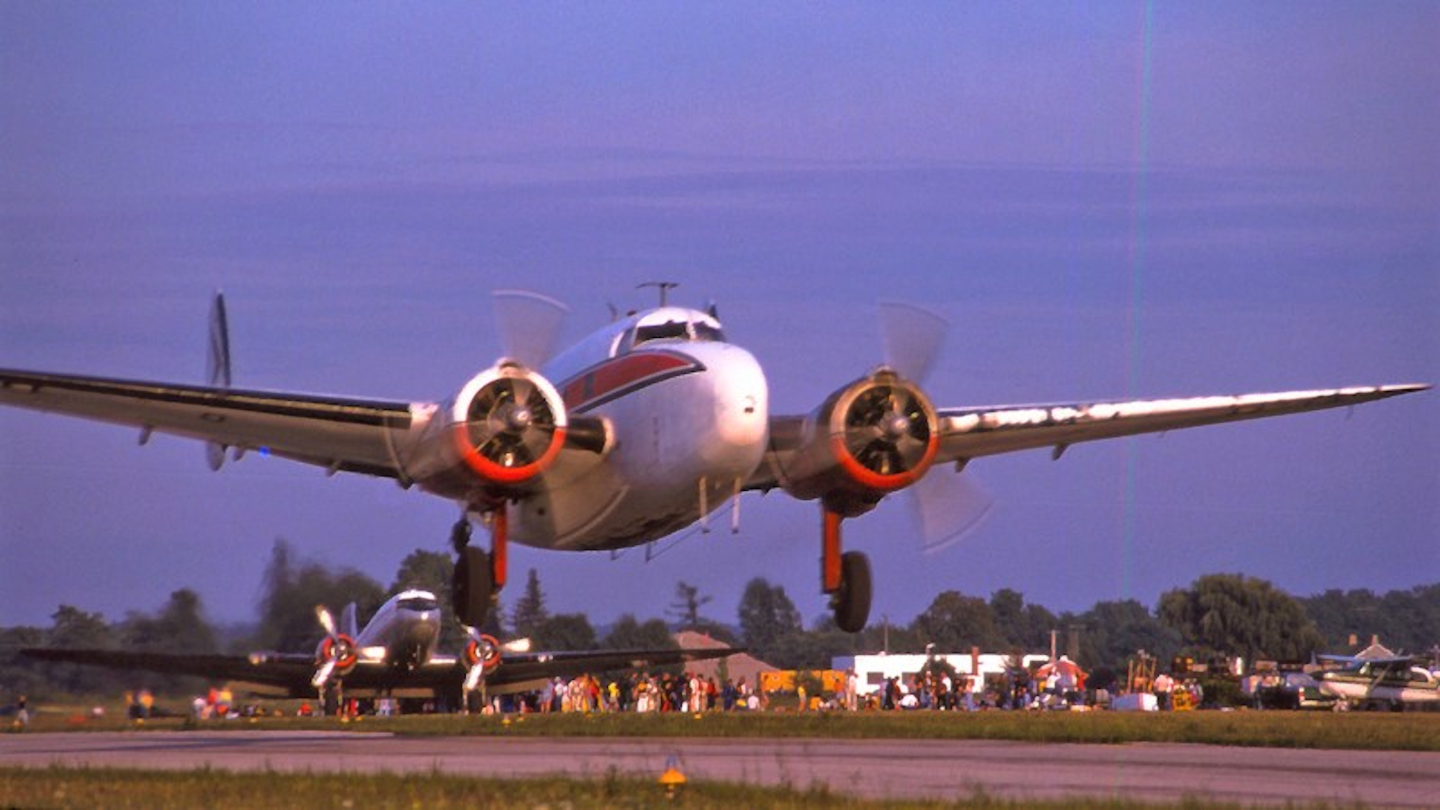
Historical Context & Origins
In the late 1930s, the aviation industry was in full swing, with growing demand for faster and more efficient passenger planes. Lockheed, already famous for its innovative twin-engine monoplanes such as the Electra and Super Electra, found itself having to compete in a market dominated by the ubiquitous Douglas DC-3. The Lockheed Model 18 Lodestar was born from this need, designed as a more competitive successor to the previous Model 14 Super Electra.
Developed from the Model 14, the Lodestar inherited its robust basic structure, but incorporated significant changes aimed at improving its operating economy and load capacity. The intent was to offer airlines a more profitable aircraft, capable of carrying more passengers on medium-haul routes. His first flight occurred in 1939, marking the beginning of a surprisingly versatile career.
Architecture & Technological Design
The Lockheed Lodestar was distinguished by an all-metal twin-engine architecture, with a semi-monocoque fuselage that ensured both lightness and considerable structural strength. The main innovation compared to the Model 14 was the redesign of the wing, which featured a larger span and an optimized aerodynamic profile. This improvement allowed for greater flight efficiency, especially at lower speeds, and better stability.
The fuselage was slightly lengthened to accommodate more passengers, bringing typical seating capacity to 14-18 seats, a significant increase over the Super Electra's 10-12. Equipped with a pair of radial engines, generally the powerful Pratt & Whitney R-1830 Twin Wasp or Wright R-1820 Cyclone, the Lodestar offered reliable performance and a competitive cruise speed, essential for air transport of the time. The robust and well-designed conventional retractable landing gear contributed to its operational versatility.
Onboard Specifications
- ◆Redesigned wing with larger span: Improved aerodynamic efficiency, stability and load capacity, reducing take-off and landing speeds.
- ◆Increased passenger capacity (up to 18): Optimization of the payload, making the aircraft more attractive for commercial operations on medium-haul routes.
- ◆All-metal semi-monocoque structure: Maximum structural strength combined with low weight, crucial for performance and operational longevity.
Operational Career & Operators
Despite its excellent qualities, the Lodestar initially struggled to establish itself on the civilian market, already saturated by the success of the DC-3. However, the advent of World War II radically transformed its fate. The armed forces of several countries, in particular the USAAF and the RAF, recognized the Lodestar as an excellent military transport aircraft, ordering hundreds of examples.
Designated as C-56, C-57 and C-60 by the USAAF and employed extensively by the Commonwealth as a troop transport, VIP and utility aircraft, the Lodestar demonstrated extraordinary reliability in every theater of operation. It was used for the transport of personnel, goods and for special missions in often extreme conditions, from jungles to deserts. Its robustness and ease of maintenance made it a fundamental logistical pillar.
Legacy & Cultural Impact
The Lockheed Lodestar, while not achieving the commercial fame of its more famous competitor, left a significant legacy as a reliable and versatile workhorse. Its ability to adapt from an airliner to an efficient military transport, and subsequently to a cargo or executive aircraft in the post-war period, testifies to the solidity of its design. Many specimens continued to fly for decades, often in secondary but essential roles.
The Lodestar embodied Lockheed's ingenuity in creating robust, high-performance aircraft, contributing significantly to the Allied war efforts and the advancement of civil aviation. Its story is a reminder that success is not only measured in sales volumes, but also in the impact and reliability demonstrated in the field, making it an aeronautical engineering icon of its era.
Telemetria Specs (HUD)
Hangar Trivia & Curiosità
- 💡Evolved from the Lockheed Model 14 Super Electra, the Lodestar featured a longer fuselage to improve passenger capacity and overcome some of its predecessor's limitations.
- 💡Though technically advanced for its era, it faced stiff commercial competition, particularly from the more successful Douglas DC-3, limiting its initial sales before World War II.
- 💡During World War II, it served extensively as a military transport, notably as the C-56/C-60 for the USAAF, carrying troops, cargo, and sometimes even functioning as a VIP transport.
Archivio Avvistamenti Spotter
Immagini scattate dalla community in tutto il mondo