Model 18
Beechcraft
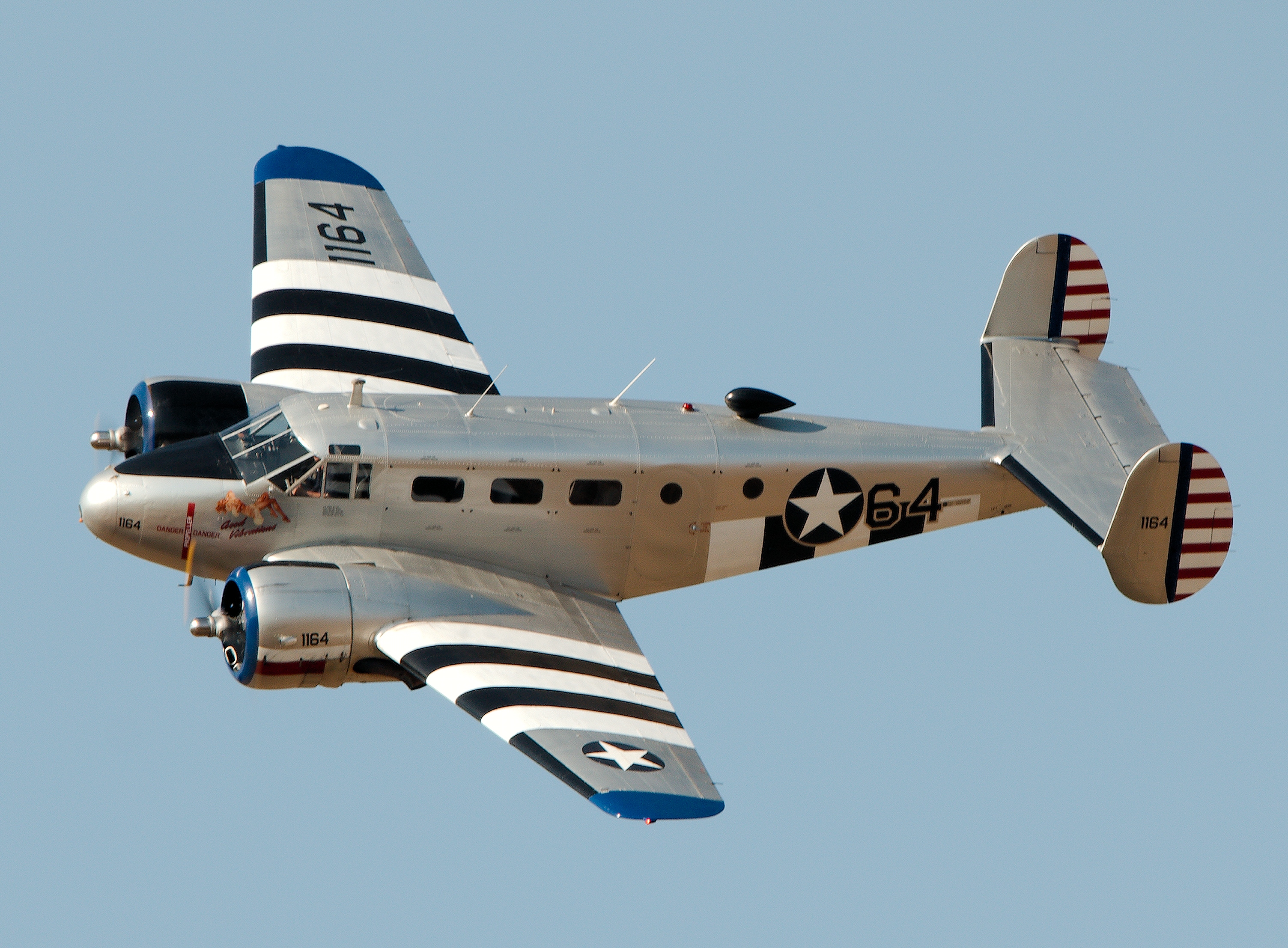
Historical Context & Origins
1937 was a year of fervent innovation in the aeronautical landscape, characterized by a growing demand for more capable and multi-purpose aircraft. In this dynamic scenario, the Beech Aircraft Corporation of Wichita, Kansas, under the leadership of the visionary Walter H. Beech, presented a project destined to mark an era: the Model 18.
Conceived as a multi-role aircraft, the Beechcraft Model 18 aimed to meet the emerging needs of business aviation, regional passenger transport and future military applications. Its introduction represented a turning point, promising high performance and unprecedented operational flexibility for the time.
The ambition was to create an all-metal twin-engine aircraft, an avant-garde in a period when many aircraft still used mixed structures. This bold design choice reflected Beechcraft's vision for an aeronautical future founded on durability, safety and efficient maintenance.
Architecture & Technological Design
The Beechcraft Model 18 sported a twin-engine, low-wing monoplane architecture, with an all-metal semi-monocoque construction, a technologically advanced solution for the 1930s. This approach not only ensured superior strength and longevity, but also facilitated maintenance and provided better resistance to structural fatigue than traditional designs.
Equipped with retractable landing gear and variable-pitch propellers, the Model 18 was cutting edge in many ways. These technical innovations helped to significantly optimize flight performance, aerodynamic efficiency and the ability to operate from less prepared runways, offering extraordinary operational versatility.
Its aesthetic, characterized by clean lines and an aerodynamic fuselage, concealed extraordinary functionality. The internal configuration was quickly adaptable, allowing quick transitions between passenger, cargo or specialized versions, making it a true "Swiss army knife" of the air.
Onboard Specifications
- ◆Modular Versatility: Ability to quickly reconfigure the cabin for passenger transport (up to 11 seats), cargo, aerial reconnaissance, advanced training or medical evacuation.
- ◆Reliable Star Engines: Twin radial engines, typically Pratt & Whitney R-985 Wasp Junior, which delivered a combined output of up to 900 horsepower, ensuring robust performance and exceptional reliability even in demanding operating conditions.
- ◆All Metallic Structure: Fuselage and wings constructed predominantly of aluminum alloy, providing light weight, extraordinary structural strength, excellent corrosion resistance and an extended operational life.
Operational Career & Operators
The outbreak of the Second World War radically transformed the career of the Model 18. Adopted en masse by the US and allied armed forces as C-45 Expeditor (light transport), AT-7 Navigator (navigation trainer) and AT-11 Kansan (bombing trainer), over 9,000 examples were produced during the conflict alone. Its reliability and ease of use made it irreplaceable.
After the war, the Model 18 experienced a remarkable resurgence in the civilian sector. It became the backbone for countless regional airlines, air taxi services, cargo operators and businesses needing an efficient aircraft for executive transportation. Its economical operation and ability to operate from semi-prepared runways cemented its reputation as a workaholic of the skies.
Even today, many examples, meticulously maintained and modernized, continue to fly the skies around the world, decades after their first flight. This longevity is an eloquent testimony to the validity of the original design and the inherent robustness of the aircraft.
Legacy & Cultural Impact
The Beechcraft Model 18 holds the notable distinction of being one of the longest continuously produced aircraft in the history of aviation, with a time span extending from 1937 to 1970, exceeding 32 years. With over 9,000 units produced in countless variations, it has set a benchmark for longevity and adaptability in the aviation industry.
His influence extended far beyond mere technical specifications; the "Twin Beech" became an emblem of progress and reliability in aviation. It has inspired generations of pilots and engineers, demonstrating the validity of a versatile and robust design, capable of evolving with the changing needs of the time.
Today, the Beechcraft Model 18 is a recognized icon, beloved by enthusiasts for its unmistakable radial engine roar and its classic, timeless lines. It is a flying testament to American ingenuity, a tangible bridge between the golden age of aviation and the present, celebrated at air shows and in the hearts of those who appreciated its exceptional qualities.
Telemetria Specs (HUD)
Hangar Trivia & Curiosità
- 💡Sono stati prodotti oltre 9.000 esemplari del Model 18, rendendolo uno degli aerei bimotore più diffusi di sempre.
- 💡La sua produzione si è estesa per ben 32 anni, dal 1937 al 1969, un vero testamento alla durata del suo design.
- 💡Conosciuto con diverse designazioni militari, tra cui C-45 Expeditor (trasporto), AT-7 Navigator (addestratore di navigazione) e AT-11 Kansan (addestratore per bombardieri).
Archivio Avvistamenti Spotter
Immagini scattate dalla community in tutto il mondo