L-1011-1 TriStar
Lockheed
Historical Context & Origins
The Lockheed L-1011 TriStar, with its first flight in 1970, emerged in an era of fervent aeronautical innovation. It was the ambitious response of Lockheed, a predominantly military giant, to the growing demand for medium-capacity wide-body aircraft for US domestic routes, placing itself in direct competition with the McDonnell Douglas DC-10 and, later, the Airbus A300.
This tri-reactor, born from American Airlines' specification for a passenger aircraft smaller than the Boeing 747 but capable of intercontinental autonomy, represented a bold re-entry by Lockheed into the civilian market after decades. The TriStar program was a billion-dollar gamble, a herculean investment for a company with little recent commercial experience, but backed by the vision of a technologically superior aircraft.
Architecture & Technological Design
The TriStar stood out for its futuristic design and elegant fuselage, but its true beating heart was its innovative architecture. Powered exclusively by three Rolls-Royce RB211-22B turbofan engines, the aircraft boasted exceptional reliability and remarkable silence in the cabin, thanks also to the three-shaft engine configuration.
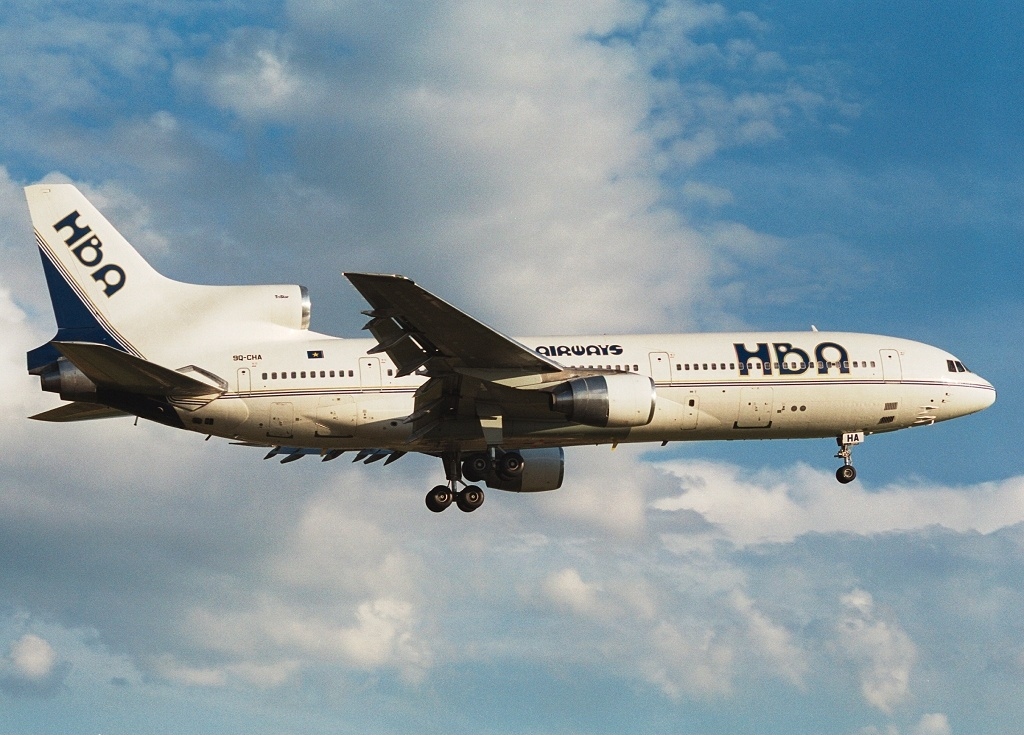
The placement of the third engine, cleverly integrated into the tail via an S-duct, not only contributed to clean aerodynamics, but was also an engineering masterpiece. The L-1011 was pioneering in many ways, introducing highly advanced flight automation systems that aimed to reduce pilot workload and improve safety.
The cabin, spacious and designed for maximum comfort, offered a superior travel experience, with wide aisles and an airy feeling that many passengers still remember fondly today. Its aesthetic was a mix of functionality and beauty, hallmarks of Lockheed engineering.
Onboard Specifications
- ◆Highly advanced Autoland CAT IIIc system, capable of performing fully automatic landings in conditions of almost zero visibility, a revolutionary innovation for the time.
- ◆Innovative Rolls-Royce RB211 three-engine design, with the third engine integrated into the tail via an S-shaped duct, providing power, efficiency and significant noise reduction.
- ◆First to have Direct Lift Control (DLC), a direct lift control system that allowed precise control of the aircraft's attitude during the landing phase, improving stability and comfort.
Operational Career & Operators
The TriStar entered service with Eastern Air Lines and TWA in 1972, immediately earning a reputation as an extremely reliable and comfortable aircraft. Pilots praised its stability and maneuverability, while passengers appreciated the spaciousness of the cabin and the quietness of the ride.
Despite its technical excellence, the TriStar's commercial career was hampered by a number of challenges. Rolls-Royce's bankruptcy in 1971, caused by development costs of the RB211 engine, delayed production and undermined confidence. The fierce competition with the DC-10, already consolidated on the market, and the oil crisis of 1973 drastically reduced demand.
Lockheed managed to sell only 250 units of the TriStar, well below expectations, leading the company to finally withdraw from the commercial aviation market in 1984, after suffering massive losses.
Legacy & Cultural Impact
The Lockheed L-1011 TriStar remains a symbol of engineering greatness and bold vision. Although its commercial failure marked the end of Lockheed's civilian ambition, the aircraft left an indelible legacy in terms of innovation and comfort.
Many of the technologies introduced by the TriStar, such as the advanced autoland system, ergonomic cockpit and attention to passenger comfort, have become industry standards. It was a precursor to many of the innovations we take for granted in modern aircraft today.
For aviation enthusiasts, the TriStar is a beloved icon, remembered for its elegance, its advanced technology and its role as "what could have been". It represents a glorious but melancholic chapter in the history of commercial aviation, an aircraft that was perhaps too ahead of its time.
Telemetria Specs (HUD)
Hangar Trivia & Curiosità
- 💡Fu il primo aereo di linea wide-body certificato per l'autoland di Cat-IIIc, consentendo atterraggi completamente automatici in condizioni di visibilità zero.
- 💡Il motore di coda dell'L-1011 (Rolls-Royce RB211) era alimentato da un'insolita presa d'aria a 'condotto a S', che contribuiva al suo funzionamento silenzioso e alla riduzione della resistenza aerodinamica.
- 💡Il programma TriStar quasi portò Lockheed alla bancarotta, richiedendo un prestito garantito dal governo degli Stati Uniti per completare la sua produzione e salvare l'azienda.
Archivio Avvistamenti Spotter
Immagini scattate dalla community in tutto il mondo