DC-10-40
McDonnell Douglas
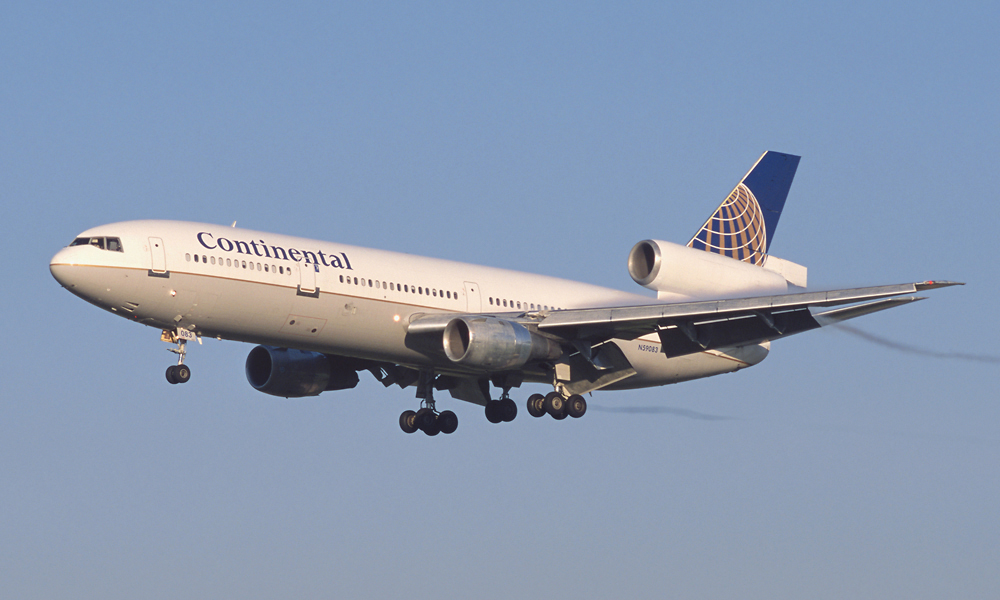
Historical Context & Origins
The McDonnell Douglas DC-10, conceived in the late 1960s, emerged as a response to the growing need for a medium-sized wide-body aircraft, capable of covering long-range intercontinental and domestic routes, positioning itself between the Boeing 747 and narrow-body aircraft. Its genesis was largely driven by an American Airlines specification for a plane smaller than the 747, but with transcontinental capabilities.
The DC-10-40 variant represented the definitive embodiment of the family's long-range potential, distinguishing itself from its predecessors by the adoption of more powerful engines and greater operational autonomy. Its first flight occurred in 1972, marking a significant expansion of the mission capabilities offered by the original DC-10.
Architecture & Technological Design
The architecture of the DC-10-40 was based on the trijet configuration, with two engines mounted under the wings and a third integrated vertically into the base of the tail fin. This unique arrangement offered crucial propulsive redundancy and aerodynamic efficiency optimized for long-range flight.
The DC-10-40's design emphasized structural strength and reliability, key features for long-range operators. The wide fuselage provided superior passenger comfort and significant cargo carrying capacity, making it a versatile asset for airlines.
Onboard Specifications
- ◆Upgraded Pratt & Whitney JT9D-59A or JT9D-20 engines: Provided more thrust than the General Electric CF6s of other variants, essential for long range.
- ◆Maximum range of approximately 10,460 km (5,650 nautical miles): A key capability that set it apart, allowing non-stop transpacific and transcontinental flights.
- ◆Typical capacity of 250-300 passengers: Standard configurations for business and tourist class, with large and comfortable layouts.
Operational Career & Operators
The DC-10-40 found its main operators in two aviation giants: Northwest Orient Airlines (later Northwest Airlines) and Japan Air Lines (JAL). These companies took full advantage of its exceptional long-haul capabilities on transpacific routes and on high-density Japanese domestic routes.
For JAL, the DC-10-40 was a true backbone for international flights to America and long-haul routes between major Japanese cities. Northwest successfully deployed it on routes to Asia and Europe, demonstrating its reliability and performance in challenging operating environments. Its career was prolonged, with some examples in service for decades.
Legacy & Cultural Impact
The McDonnell Douglas DC-10-40, despite being a variant of an aircraft that faced significant challenges in its operational history, represents an important chapter in aeronautical engineering. It symbolizes an era of great innovation and competition in the wide-body industry.
Its legacy lies in demonstrating the capabilities of long-range trijets and influencing the design of subsequent airliners. Although production of the DC-10 has ceased, its design and engineering lessons helped shape the development of modern cargo and passenger aircraft, making it a cornerstone of commercial aviation.
Telemetria Specs (HUD)
Hangar Trivia & Curiosità
- 💡Il DC-10-40 fu l'unica variante del DC-10 ad essere alimentata esclusivamente dai motori Pratt & Whitney JT9D, distinguendosi dagli altri modelli che utilizzavano i motori General Electric CF6.
- 💡Questa versione era la più pesante e con il raggio d'azione più lungo della famiglia DC-10 al momento della sua introduzione, pensata per voli transpacifici.
- 💡Fu ordinato e operato solo da due compagnie aeree: Northwest Airlines (in seguito Delta Air Lines) e Japan Air Lines (JAL).
Archivio Avvistamenti Spotter
Immagini scattate dalla community in tutto il mondo