DC-10-15
McDonnell Douglas
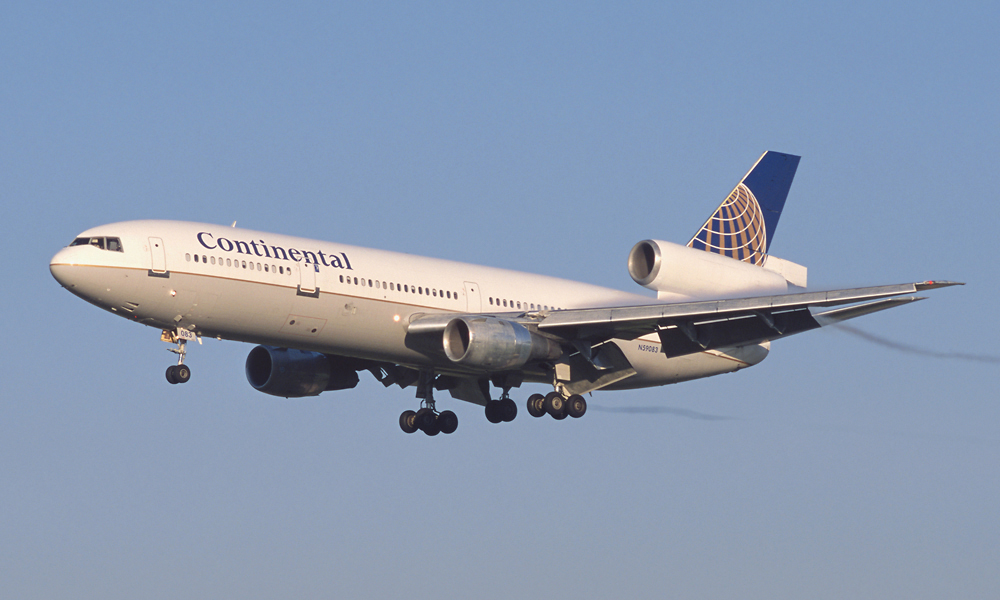
Historical Context & Origins
The McDonnell Douglas DC-10, a pillar of wide-body aviation, was born in the 1960s to meet the demand for medium-long range passenger aircraft. If the DC-10-10, the basic version, debuted in 1971, it was in 1981 that the DC-10-15 emerged, a variant designed to meet unique operational challenges.
This version was not a direct sequential evolution, but a strategic hybridization. The need was clear: a three-jet engine capable of operating efficiently from airports located at high altitudes and in hot climates, conditions that drastically reduce flight performance.
The DC-10-15 combined the lighter airframe of the DC-10-10 with significantly more powerful engines. This configuration aimed to optimize take-off and climb performance, which is essential for operating in hostile and complex environments.
Architecture & Technological Design
The DC-10-15 represented an ingenious engineering compromise. It combined the fuselage and wings of the lighter DC-10-10 with the powerful thrust of the General Electric CF6-50C2F engines, typical of the heavier and longer-range DC-10-30. This merger was crucial to its purpose.
The design aimed to maximize takeoff power and climb rate in critical conditions. Rarefied air and high temperatures significantly degrade performance; the -15 offered recognized operational excellence for medium-range routes from complex airports.
Despite the use of more powerful engines, the basic structure of the DC-10-10 maintained a lower empty operating weight. This ensured an optimal thrust-to-weight ratio, ideal for companies requiring operational robustness without the extended range of intercontinental versions.
Onboard Specifications
- ◆General Electric CF6-50C2F engines: Offered significantly more thrust, crucial for "hot and high" operations.
- ◆DC-10-10 fuselage and wings: Optimized for lighter structural weight, improving overall thrust-to-weight ratio.
- ◆Versatile passenger and cargo carrying capacity: Maintained to accommodate different service configurations, typical of the DC-10 family.
Operational Career & Operators
Production of the DC-10-15 was extremely limited, with only four examples built and delivered. This rarity makes it a true collector's item for aviation enthusiasts and an example of the push for customization in the sector.
All four planes were acquired by a single, significant operator: Aeroméxico. This airline took full advantage of the -15's unique capabilities, deploying them predominantly on domestic and regional routes, especially to and from Mexico City Airport.
The DC-10-15 stood out for its ability to maintain reliable schedules and carry significant loads from even the most demanding runways. It helped solidify Aeroméxico's reputation for operational efficiency in complex, high-altitude conditions.
Legacy & Cultural Impact
The McDonnell Douglas DC-10-15, despite its limited production, remains a prime example of the modularity and adaptability of the DC-10 family. It demonstrated McDonnell Douglas' ability to precisely respond to highly specific market needs.
For aviation lovers, the -15 is a rare gem, a "unicorn" that highlights compromise engineering and the pursuit of performance in operational niches. Its story is a reminder that high production numbers don't always define the importance of a design.
Today, the DC-10-15 is remembered as a testament to design flexibility and focused innovation. Although all examples have been retired from passenger service, their legacy lives on as a fascinating and specialist chapter in the rich saga of the famous trijet.
Telemetria Specs (HUD)
Hangar Trivia & Curiosità
- 💡The 'DC-10-15' designation, though not widely documented, would imply minor evolutionary changes from the initial DC-10-10, possibly related to fuel capacity or payload.
- 💡A first flight date in 1981 would make this one of the later DC-10 variants to emerge, long after the original model's debut in 1970.
- 💡The specific context for a 'DC-10-15' could have been a custom order for an airline, focusing on particular route requirements or incorporating updated components available in the early 1980s.
Archivio Avvistamenti Spotter
Immagini scattate dalla community in tutto il mondo