DC-10-10
McDonnell Douglas
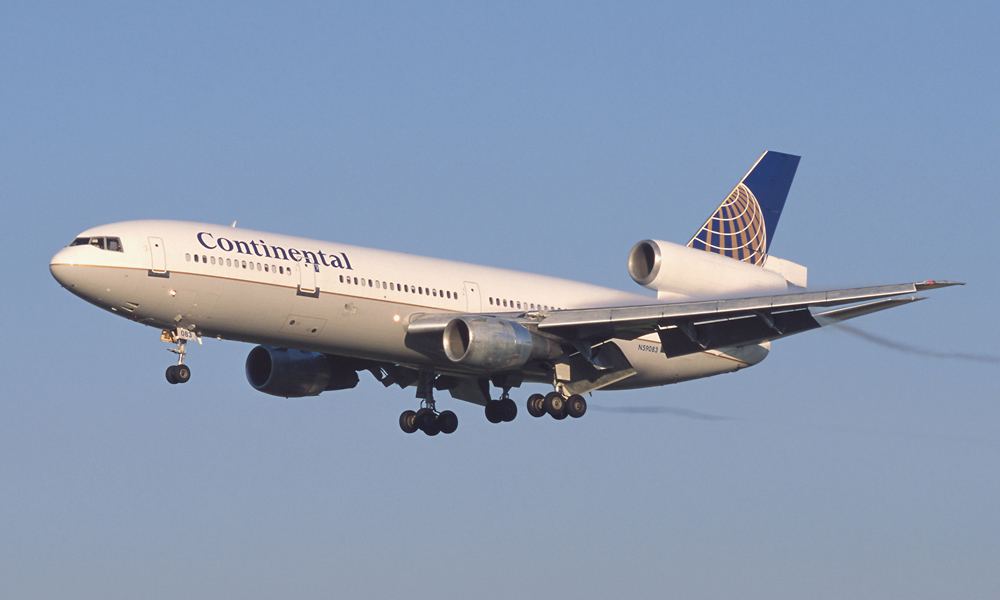
Historical Context & Origins
The early 1970s were a period of extraordinary turmoil for commercial aviation, driven by the advent of the Boeing 747 which redefined the concept of mass air travel. Airlines, however, soon recognized the need for a more compact and versatile wide-body aircraft, capable of serving medium-range routes with efficiency and high comfort, without the enormous capacity of the "Jumbo Jet".
In this scenario, American Airlines and United Airlines issued a specific request for a new long-range aircraft that could operate from existing airports. McDonnell Douglas responded with the DC-10, a design initially conceived as a twin-engine, but quickly evolved into a tri-jet to meet reliability and range requirements, culminating in the first flight of the DC-10-10 on August 29, 1970.
Architecture & Technological Design
The McDonnell Douglas DC-10-10 stood out for its innovative tri-reactor configuration, a layout chosen to balance efficiency, thrust and operational redundancy, overcoming the limitations of twin-engine engines of the time. Two engines were housed in underwing nacelles, while the third was elegantly integrated into the base of the vertical fin, powered through a distinctive "S"-shaped air intake.
This variant, the -10, was equipped with the powerful General Electric CF6-6D turbofan engines, designed to provide robust thrust and optimized fuel consumption for US domestic routes. Its large wide-body fuselage ensured unprecedented passenger comfort, with a spacious interior that could accommodate up to 380 passengers in high-density configurations.
The cockpit, state-of-the-art for its time, offered an ergonomic environment with sophisticated instrumentation that reduced the workload for the crew. The DC-10-10's design masterfully balanced performance with functionality, making it a pioneer in its market segment.
Onboard Specifications
- ◆Tri-reactor configuration for efficiency and operational redundancy, ensuring high performance and greater safety on medium-range routes.
- ◆General Electric CF6-6D high-bypass engines that offered optimal thrust and competitive fuel consumption for domestic and transcontinental flights.
- ◆Large wide-body fuselage with passenger capacity of up to 380 and substantial cargo volume, maximizing comfort and cargo carrying opportunities.
Operational Career & Operators
The DC-10-10 made its triumphant entry into commercial service in 1971, with American Airlines and United Airlines as launch customers. This aircraft was quickly appreciated for its ability to combine the comfort of wide-bodies with the flexibility required for medium-long haul domestic routes, consolidating its presence in the main hubs.
In addition to launch carriers, prominent airlines such as National Airlines and Continental Airlines integrated the DC-10-10 into their fleets, leveraging its versatility to expand their network. Despite initial controversies over the safety of some variants of the DC-10, the -10 version proved to be a reliable workhorse, helping to define the air travel experience in the United States for decades.
Legacy & Cultural Impact
The McDonnell Douglas DC-10-10 left an indelible mark on the history of commercial aviation, representing a crucial bridge between the first generation of passenger jets and the modern wide-body era. It has democratized access to “twin-aisle” comfort on shorter routes, making air travel more enjoyable for millions of passengers.
Its distinctive silhouette, characterized by the third engine on the tail, has become a recognizable icon of the skies, symbolizing an era of engineering innovation and global expansion. Although many examples have ended their passenger careers, numerous DC-10s, including some converted -10s, continue to fly today in cargo configuration, testifying to the robustness and longevity of the original design.
Telemetria Specs (HUD)
Hangar Trivia & Curiosità
- 💡Il DC-10-10 fu il primo aereo wide-body prodotto da McDonnell Douglas, concepito per competere direttamente nel crescente mercato dei voli di linea a lungo raggio.
- 💡La designazione '-10' indica la versione iniziale equipaggiata con motori General Electric CF6-6D e un peso massimo al decollo inferiore rispetto alle successive varianti a lungo raggio come il DC-10-30 e DC-10-40.
- 💡Il suo distintivo terzo motore montato sulla coda, integrato nella struttura tramite un condotto a 'S', è una delle sue caratteristiche di design più iconiche e facilmente riconoscibili.
Archivio Avvistamenti Spotter
Immagini scattate dalla community in tutto il mondo