York
Avro
Historical Context & Origins
The Second World War created an urgent need for the UK for efficient and rapidly available transport aircraft, vital to its global supply lines. In a context of limited resources and pressing times, the most practical solution was to quickly adapt existing aerial platforms, optimizing the production process.
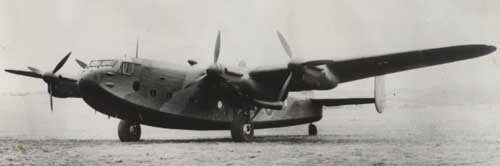
Thus was born the Avro York, a brilliant conversion of the famous four-engine bomber Avro Lancaster. The goal was to reuse the wings, engines and tail entirely to accelerate the development and production of a robust strategic transport aircraft. The first flight occurred on 5 July 1942, a surprising result in terms of speed.
Architecture & Technological Design
The architecture of the Avro York represented an example of pure pragmatism and functional engineering, focused on maximum utility. Keeping the Lancaster's robust external sections intact, the real innovation and design focus lay in the fuselage, which was completely redesigned.
Assuming a much wider and deeper quadrangular section of the bomber, this modification ensured a generous internal volume, ideal for bulky cargo or numerous passengers. Under the wings, four reliable Rolls-Royce Merlin engines (typically XX, 22 or 24 versions) provided the necessary power, ensuring solid performance and reliability.
Onboard Specifications
- ◆Large cargo and passenger capacity (up to 24-30 passengers or 6,100 kg of cargo)
- ◆Spacious but non-pressurized cabin, optimized for medium-altitude flights and bulky loads
- ◆Four Rolls-Royce Merlin engines, synonymous with power, reliability and standardization
Operational Career & Operators
The Avro York quickly established itself as a tireless workhorse for the British military and airlines. During the war, it was crucial for the strategic transport of personnel and materials, effectively connecting the British Empire at every key point.
The most iconic moment of his career was undoubtedly the Berlin Airlift (1948-1949). Here, the Yorks played a vital role, making thousands of flights to supply besieged West Berlin with coal, food and medicine, demonstrating operational reliability and robustness in extreme conditions, an epic of logistics and resilience.
Legacy & Cultural Impact
The Avro York, while often eclipsed by the fame of the more famous Lancaster, left a significant legacy, serving as a bridge between the era of converted bombers and modern civilian transport aircraft. Its production of over 250 examples underlines its strategic importance and its role as a pillar of post-war logistics.
He fully embodied the British spirit of adaptation and ingenuity in an age of great need and reconstruction. Today, the York is remembered as a tireless transport hero, an aircraft that performed vital tasks with utmost efficiency. Symbol of an era in which practicality and robustness guided design, its contribution to the history of aviation remains fundamental and inspiring.
Telemetria Specs (HUD)
Hangar Trivia & Curiosità
- 💡L'Avro York fu derivato direttamente dal famoso bombardiere Avro Lancaster, condividendo ali, motori e la coda.
- 💡Winston Churchill utilizzò un Avro York personalizzato, battezzato 'Ascalon', per i suoi viaggi ufficiali durante la guerra.
- 💡Svolse un ruolo fondamentale nel Ponte Aereo di Berlino (1948-1949), trasportando tonnellate di rifornimenti vitali alla città assediata.
Archivio Avvistamenti Spotter
Immagini scattate dalla community in tutto il mondo