W.8b
Handley Page
Historical Context & Origins
In the turbulent aftermath of World War I, civil aviation emerged as a bold promise, transforming military needs into commercial opportunities. Handley Page, thanks to its experience with the O/400 heavy bombers, positioned itself as a pioneer, recognizing the need for aircraft dedicated to passenger transport.
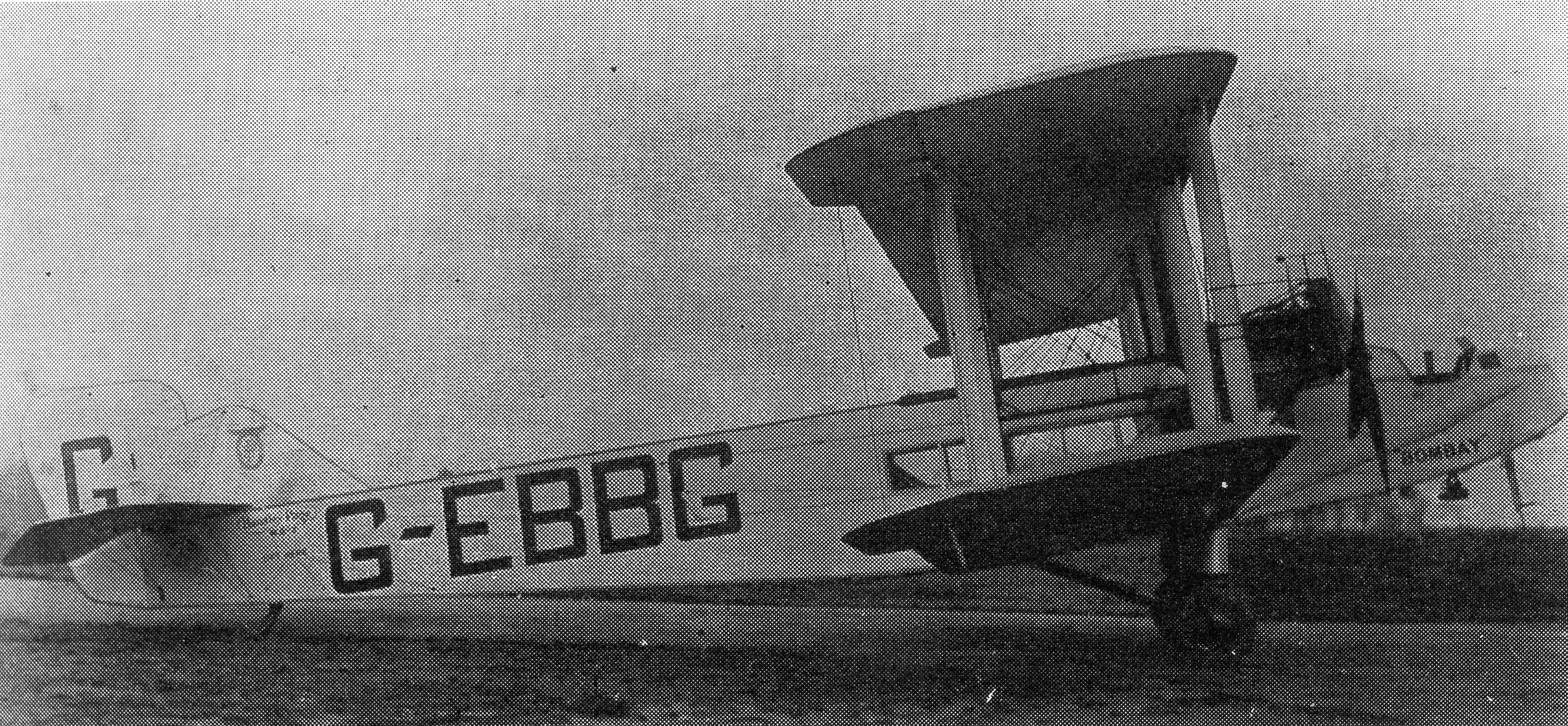
The first flight of the W.8, precursor of the W.8b model, took place on 4 December 1919, marking a crucial moment. This prototype was a direct evolution, conceived from the beginning to offer a more spacious and comfortable cabin, clearly distinguishing itself from the aircraft adapted for passenger transport of the time.
The Handley Page W.8b, which first flew in 1920, represented the first mass-produced version, refined to optimize operational capability and practicality. This twin-engine biplane was not just a means of transportation, but a tangible symbol of the nascent era of scheduled air travel.
Architecture & Technological Design
The architecture of the W.8b was a classic example of biplane design of the time, balancing strength and aerodynamic capabilities. Its structure, mainly made of wood covered in canvas, was designed to withstand the stresses of prolonged flight, while ensuring relative lightness.
Equipped with two Rolls-Royce Eagle VIII engines of 360 hp each, or later with the more powerful Napier Lion of 450 hp, the W.8b offered the crucial twin-engine redundancy, essential for safety on scheduled flights. This configuration guaranteed greater reliability and better performance than contemporary single-engine aircraft.
The passenger cabin represented a radical innovation: it was completely closed, equipped with large windows and, in some versions, even heating. This comfort, almost luxurious for its time, was intended to make air travel a less intimidating and more pleasant experience.
Onboard Specifications
- ◆Capacity: 12-15 passengers, a remarkable number by 1920 standards, making it a true "flying bus".
- ◆Closed and insulated cabin, a revolution that offered shelter from the weather and the noise of the engines.
- ◆Double spar wings and a robust structure for maximum operational safety and durability.
Operational Career & Operators
The Handley Page W.8b found its main stage on European air routes, ushering in an era of international connections. It operated with pioneer companies such as Handley Page Transport and, subsequently, with the nascent Imperial Airways, the British national airline.
Its most famous routes included services between London and Paris, and London and Brussels, establishing the de facto first regularly scheduled air services. These flights, although affected by weather conditions and technical challenges, demonstrated the feasibility and demand for commercial air transportation.
The W.8b was not just an airplane, but a real aviation marketing tool, helping to normalize the idea of air travel. Its capacity and relative comfort were crucial in overcoming the public's initial skepticism towards "passenger flights".
Legacy & Cultural Impact
The Handley Page W.8b has left an indelible legacy in aviation history, serving as an archetypal model for future airliners. It demonstrated that an aircraft designed specifically for passengers could be a commercially and technologically successful venture.
The innovations introduced, such as the closed cabin and the twin-engine design, became fundamental standards for the design of modern airliners. The W.8b helped lay the foundation for the development of larger, faster and more comfortable aircraft.
His operational career marked the beginning of the era of international air travel, helping to connect nations and cultures. The Handley Page W.8b's influence goes beyond its architecture, representing a cultural watershed moment that made the dream of flight an everyday reality.
Telemetria Specs (HUD)
Hangar Trivia & Curiosità
- 💡The Handley Page W.8 series were among the first purpose-built airliners, moving beyond simply converted military aircraft for passenger service.
- 💡Designed by aviation pioneer Frederick Handley Page, the W.8b helped establish early international air routes, including services from London to Paris and Brussels.
- 💡Some W.8 variants could accommodate up to 15 passengers, a remarkable capacity for the early 1920s, often featuring enclosed cabins for comfort.
Archivio Avvistamenti Spotter
Immagini scattate dalla community in tutto il mondo