Viscount 800
Vickers
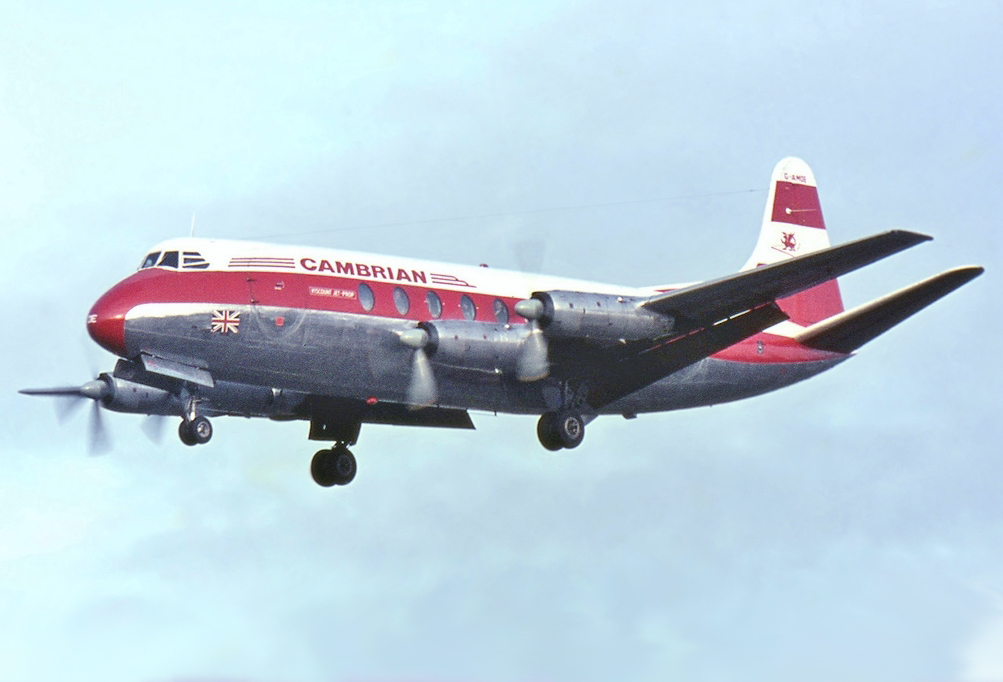
Historical Context & Origins
In the post-war turmoil, the British aviation industry was looking for innovation to redefine civilian transport. Il Brabazon Committee identificò la necessità di un aereo di linea a medio raggio, portando la Vickers ad esplorare nuove soluzioni propulsive. Thus was born the Viscount project, a bold bet on the future.
The basic idea was a passenger aircraft that broke with the tradition of piston engines and embraced an emerging technology. The V.630 Viscount prototype first flew in 1948, but it was the V.700 series that consolidated the design. The commercial success of the latter paved the way for an improved and more capacious version, necessary for the growing routes.
The Vickers Viscount 800, with its first flight in 1956, represented the pinnacle of this evolution. Featuring a lengthened fuselage of 1.17 meters, it offered greater capacity and comfort. This variant not only met market needs, but also perfected the flying experience for passengers and crew.
Architecture & Technological Design
The beating heart of the Viscount 800 was its turboprop propulsion, a revolutionary choice for the time. Quattro motori Rolls-Royce Dart non solo garantivano prestazioni superiori rispetto ai propulsori a pistoni, ma introducevano un'era di voli più silenziosi e con minori vibrazioni, un vantaggio inestimabile per il comfort dei passeggeri.
The pressurized cabin, combined with the large oval windows, offered an unprecedented viewing experience. The Viscount's design, with its low wing and conventional configuration, was optimized for aerodynamic efficiency and relatively simple maintenance. The robust structure, mainly made of aluminum alloys, ensured durability and operational safety.
Every element of the design contributed to maximizing efficiency and reliability. The positioning of the engines on the wings minimized cabin noise, while the modern avionics of the time contributed to making the Viscount 800 a cutting-edge aircraft loved by crews for its easy handling.
Onboard Specifications
- ◆Rolls-Royce Dart Mk. engines 510 or 525: Four powerful turboprop engines that delivered up to 1,700 shp (shaft horsepower) each, ensuring exceptional reliability and low operating costs.
- ◆Extended Passenger Capacity: The extended fuselage accommodated 65 to 75 passengers in standard configurations, making it ideal for high-density medium-range routes.
- ◆Optimal Cruise Speed: A typical cruise speed of approximately 500 km/h (270 knots), which significantly reduced travel times compared to contemporary piston aircraft.
Operational Career & Operators
The Viscount 800 enjoyed an impressive operational career, rapidly spreading across the fleets of numerous global airlines. British European Airways (BEA) was among the earliest and most important operators, helping to establish the aircraft's reputation for efficiency and passenger appeal. Its introduction revolutionized regional and intercity routes.
Its reliability and low operating costs made it a popular choice for over 60 airlines worldwide, including prestige carriers such as Lufthansa, Aer Lingus and Trans-Canada Airlines. The Viscount 800 proved particularly effective in connecting medium-sized cities, opening up new air travel opportunities.
Many examples remained in service for decades, testifying to the robustness of the design. The last commercial operation of a Viscount 800 ended in South Africa in the 2000s, a tribute to its longevity and ability to adapt to different markets and operational requirements.
Legacy & Cultural Impact
The Vickers Viscount 800 was not just an airplane, but a pioneer that redefined the expectations of air travel. Its large-scale introduction unequivocally demonstrated the superiority of turboprops over piston engines for passenger transport, pushing the entire industry towards this new technological frontier.
Its unmistakable silhouette, large windows and comfortable flying experience have left an indelible mark on the collective imagination. The Viscount 800 is often remembered as the aircraft that made civilian flight accessible and enjoyable for a generation of travelers, laying the foundation for modern comfort standards.
Today, the Viscount 800 is celebrated as a classic of aeronautical engineering, a symbol of British ingenuity and a seminal piece in the history of commercial aviation. Its legacy continues to influence the development of regional aircraft, confirming its status as a true flying icon.
Telemetria Specs (HUD)
Hangar Trivia & Curiosità
- 💡The Viscount family was the world's first turboprop airliner to enter service, setting new standards for flight comfort and efficiency.
- 💡Its distinctive 'Viscount hum' from the Rolls-Royce Dart turboprop engines became legendary among passengers and aviation enthusiasts.
- 💡Over 440 Viscounts were built across all variants, making it one of the most commercially successful British civil aircraft ever produced.
Archivio Avvistamenti Spotter
Immagini scattate dalla community in tutto il mondo
Vettori Rilevati (Flotta Attiva)


Lufthansa
In Flotta: x13 u.

Aer Lingus
In Flotta: x5 u.
Cubana de Aviación
In Flotta: x2 u.
Airwork
In Flotta: x5 u.
Arkia
In Flotta: x15 u.
Austrian Airlines
In Flotta: x15 u.
Iran Air
In Flotta: x15 u.
Condor Flugdienst
In Flotta: x14 u.
Sudan Airways
In Flotta: x2 u.

All Nippon Airways
In Flotta: x14 u.
LOT Polish Airlines
In Flotta: x4 u.Vettori Rilevati (Flotta Storica / Dismessa)


Lineas Aereas Canarias
Stato: Dismesso

British United Air Ferries
Stato: Dismesso
Skyline
Stato: Dismesso
Cyprus Airways
Stato: Dismesso

VASP
Stato: Dismesso
British European Airways
Stato: Dismesso
British Airways
Stato: Dismesso
Bouraq Indonesia Airlines
Stato: Dismesso

Ansett Australia
Stato: Dismesso