VC10 Standard
Vickers
Historical Context & Origins
In the 1960s, the jet age was booming and the global aviation landscape required long-range aircraft capable of operating effectively on complex routes. The Vickers VC10 was born as a British response to this need, specifically to serve the intercontinental routes of BOAC (British Overseas Airways Corporation), many of which involved stops at airports with "hot and high" conditions or shorter runways.
The Vickers design aimed to overcome the limitations of early American jets, such as the Boeing 707 and Douglas DC-8, which were optimized for long runways. The decision was to create an aircraft that excelled at short takeoff and landing, while ensuring speed and comfort. On 29 June 1962, the Vickers VC10 Standard made its maiden flight, promising a bright future for British aeronautical engineering.
Architecture & Technological Design
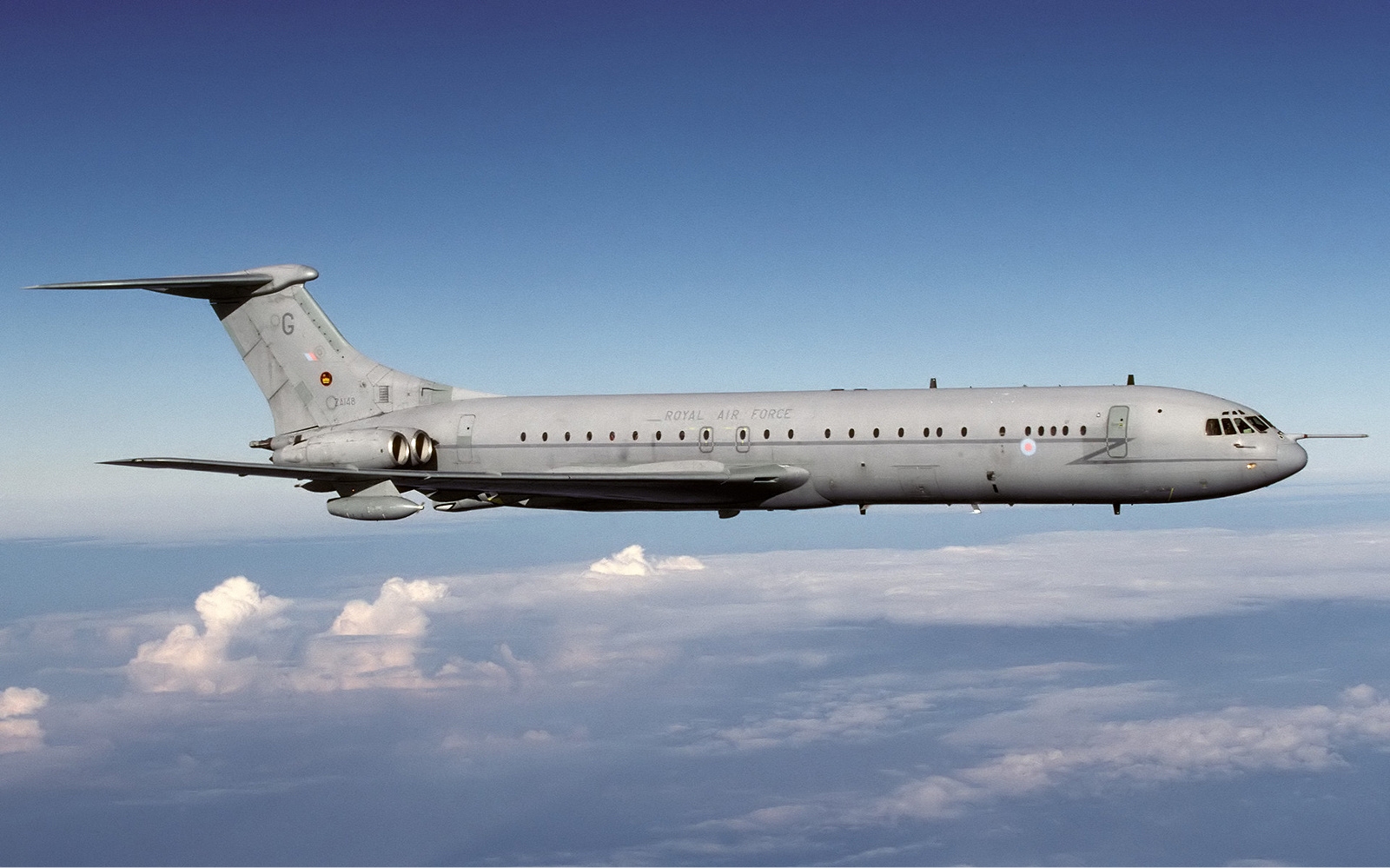
The VC10 was notable for its bold and innovative architecture, characterized primarily by its configuration of four tail-mounted Rolls-Royce Conway engines. This design choice, rare for an aircraft of this size, allowed for a clean wing, ensuring exceptional aerodynamic characteristics, in particular high lift and notable reduction in cabin noise.
The VC10's high swept wing and sophisticated design contributed significantly to its superior short takeoff and landing capabilities, ideal for stopovers in Africa and Asia. The T-tail design complemented the aircraft's elegant and functional aesthetic. This configuration, combined with powerful engines, gave the VC10 enviable climbing performance and speed for its time, making it a true "hot rod" of the sky.
Onboard Specifications
- ◆Rolls-Royce Conway Mk. engines 540: These turbofans, pioneers in their category, provided exceptional thrust and remarkable efficiency for their time.
- ◆Advanced Hydraulic and Avionics Systems: Designed for high redundancy and reliability, with automatic landing (autoland) capability that was cutting edge for the 1960s.
- ◆Quiet and Spacious Interior: The arrangement of the engines at the rear ensured an exceptionally quiet and comfortable passenger cabin, which was much appreciated.
Operational Career & Operators
The VC10 found its main carrier in BOAC, and later in British Airways, where it became the aircraft of choice for passengers for long routes. Its speed, superior comfort and exceptionally quiet cabin made it legendary, often chosen even when alternatives were available. The VC10 fleet was renowned for its reliability and exceptional performance.
Despite its excellent technical qualities and passenger appreciation, the VC10 encountered commercial difficulties. Production stood at 54 units, a lower number than the American giants, due to changes in BOAC's specifications and fierce competition offering larger and, at times, cheaper to operate aircraft as fuel prices fell.
Legacy & Cultural Impact
The Vickers VC10, while not a far-reaching commercial success, is considered an engineering triumph and a symbol of the British aircraft industry. Its operational longevity has been remarkable, especially with the Royal Air Force (RAF), which used it for decades as a transport aircraft, in-flight refueling and, in modified versions, even as a VIP transport for the Royal Family.
The VC10 continued to fly with the RAF well into the new millennium, only retiring from active service in September 2013, after more than fifty years of honorable career. Its elegant figure and exceptional performance still make it a beloved icon today, bearing witness to an era in which British ingenuity produced aircraft with unique and unmistakable characteristics.
Telemetria Specs (HUD)
Hangar Trivia & Curiosità
- 💡It was often referred to as 'The Queen of the Skies' by its crews and passengers for its elegance and remarkably quiet cabin.
- 💡The VC10 was one of the few commercial airliners to feature four powerful engines mounted at the rear, contributing to its clean wing design and reduced cabin noise.
- 💡The last operational VC10, an RAF K3 tanker, retired in 2013, marking over 50 years of service since its first flight.
Archivio Avvistamenti Spotter
Immagini scattate dalla community in tutto il mondo