Tudor
Avro
Historical Context & Origins
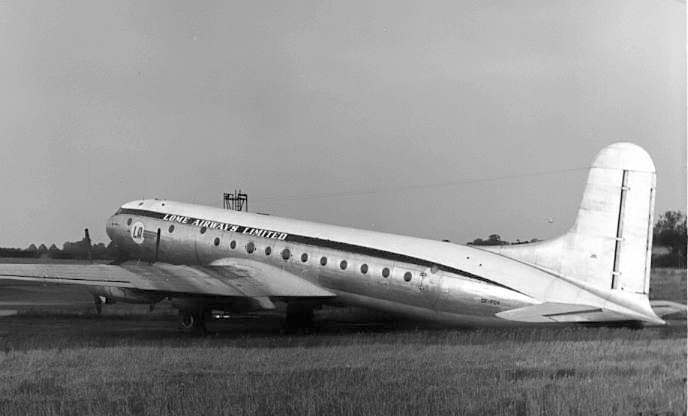
The Avro Tudor was born from an audacious ambition in post-war Britain: to dominate the civilian sky with a transatlantic airliner. Developed by A.V. Roe and Company (Avro), a manufacturer with a proud military tradition, the Tudor was destined to represent the British leap into the era of long-haul scheduled flights. The need was clear: an aircraft that could compete with American giants, such as the Douglas DC-4 and Lockheed Constellation, on emerging global routes.
The design drew on Avro's experience with successful heavy bombers such as the Lancaster and the Lincoln, inheriting their reliable wing structure and engine power. The first flight occurred on June 14, 1945, shortly after the end of the war in Europe, a crucial moment that symbolized the transition from war use to the era of passenger transport. The focus was on innovative design for comfort and performance in a rapidly evolving global market.
Architecture & Technological Design
The Avro Tudor featured a low-wing monoplane architecture, with a sleek, streamlined fuselage, designed to accommodate a spacious and, for the time, luxurious passenger cabin. One of its most advanced features was the pressurized cabin, a rarity in 1945, which promised unprecedented comfort for passengers during high-altitude flights while avoiding the effects of low atmospheric pressure. This was a clear attempt to outdo the American competition in terms of on-board well-being.
Propulsion was entrusted to four Rolls-Royce Merlin 621 piston engines, arranged under the wings. These engines, although highly tested and powerful, derived from those of fighters and bombers, proved not always optimal for the flight profile and weight of the airliner, contributing to performance and range problems that would plague the aircraft during its development. The overall design, although refined, was subject to continuous revisions which delayed its entry into service.
Onboard Specifications
- ◆Pressurized cabin: One of the first to be implemented on a British civilian aircraft, ensuring greater comfort on high altitude flights.
- ◆Rolls-Royce Merlin 621 Engines: Four powerful piston engines, with a military heritage, which offered reliability but not always the efficiency desired for the civilian role.
- ◆Robust Structure: Derived from Avro experience with heavy bombers, giving the Tudor solid structural integrity.
Operational Career & Operators
The operational career of the Avro Tudor was marked by a series of challenges. Despite expectations, the aircraft struggled to find its place in the civilian market, mainly due to development delays, technical problems and fierce competition. BOAC (British Overseas Airways Corporation), the major customer, found itself operating an aircraft that did not fully meet the range and load capacity requirements for the desired transatlantic routes, leading to order cancellations and fallbacks.
Despite the difficulties, the Tudor found use in niche roles. Several variants were produced, including the Tudor IVB used for passenger charter flights and cargo versions such as the Tudor V. The latter particularly distinguished itself during the crucial Berlin Airlift (1948-1949), transporting vital cargo into besieged West Berlin, demonstrating its robustness and load-carrying capacity in extreme conditions. However, a series of unexplained accidents, some linked to pressurization problems or structural failures, seriously undermined its reputation and trust.
Legacy & Cultural Impact
Despite its troubled commercial existence, the Avro Tudor holds a significant place in British aviation history. It represents a major attempt to consolidate the UK's leadership in post-war air transport, pushing forward technologies such as pressurised cabin and advanced aerodynamic designs. Its failure to compete with its American counterparts was a crucial lesson in the complexities of airliner design and the importance of market timing.
The Tudor is a symbol of thwarted ambitions, but also of British innovation and engineering tenacity. It paved the way for future developments and helped define the requirements for subsequent airliners. Although he did not achieve the desired success, his story is a warning and an inspiration, highlighting the challenges encountered in adapting military technology to civilian needs and the fierce global competition that defined the dawn of the jet age.
Telemetria Specs (HUD)
Hangar Trivia & Curiosità
- 💡Fu il primo aereo di linea britannico pressurizzato ad entrare in produzione.
- 💡Molti Avro Tudor furono convertiti in aerei da trasporto e giocarono un ruolo cruciale nel Ponte aereo di Berlino.
- 💡Il design del Tudor fu influenzato dalle specifiche di guerra, che portarono a compromessi non ideali per un aereo civile.
Archivio Avvistamenti Spotter
Immagini scattate dalla community in tutto il mondo