Tu-154M
Tupolev
Historical Context & Origins
The Tupolev Tu-154M, with its first flight in 1982, represents the evolutionary pinnacle of an ambitious project born in the Soviet Union. In the 1960s, the USSR needed a modern successor for its turboprop airliners and early jets such as the Tu-104, capable of competing with the Western giants. From this need was born the original Tu-154, a medium-long range three-jet engine.
The Tu-154 quickly established itself as the backbone of Aeroflot's fleet and many other Eastern Bloc airlines, carrying millions of passengers across vast expanses. However, rapid technological evolution and the growing emphasis on operational efficiency pushed Tupolev to conceive a radically improved version, capable of meeting the challenges of the new decade.
Thus, at the beginning of the 1980s, the Tu-154M came to light, an update that was not only aesthetic but profoundly technical and structural. This model aimed to perfect reliability, reduce operating costs and significantly improve passenger comfort, consolidating the prestige of Soviet aeronautical engineering.
Architecture & Technological Design
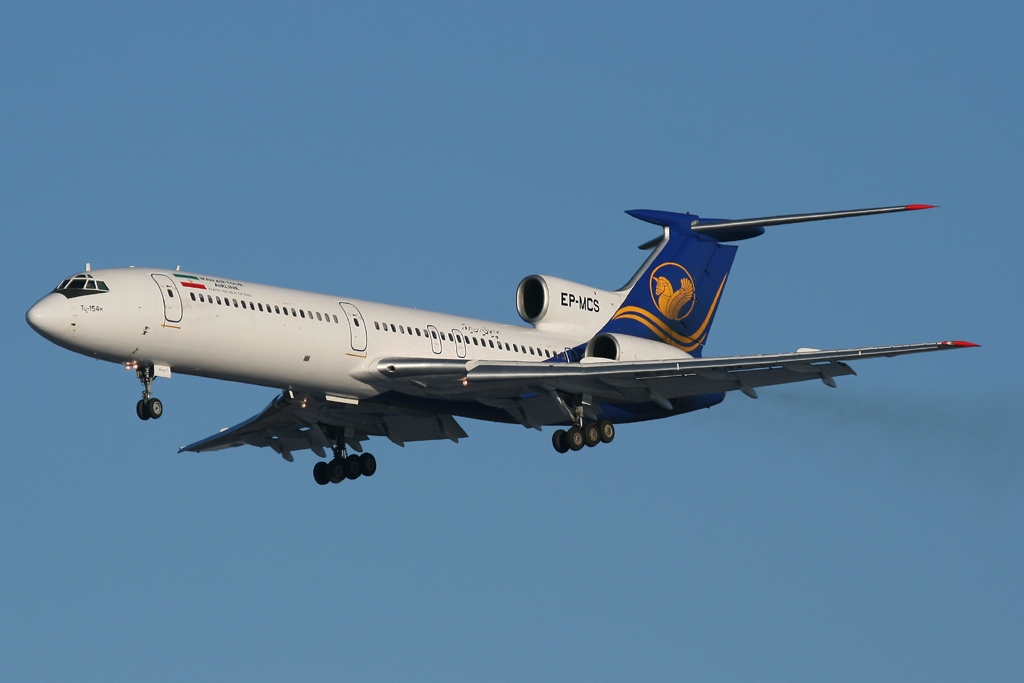
The Tu-154M was distinguished from its predecessor by a series of engineering refinements that raised its performance to a new level. The most significant modification was the adoption of the new Soloviev D-30KU-154 engines, more modern and efficient turbofans compared to the Kuznetsov NK-8, which guaranteed a drastic reduction in fuel consumption and a significant reduction in noise.
The aerodynamics also benefited from a thorough overhaul, with a redesign of the wings and high-support devices. These modifications helped improve lift and reduce drag, allowing the Tu-154M to achieve greater range and operate more effectively from less prepared runways, a feature appreciated in many regions of the USSR.
The onboard avionics underwent extensive modernization, introducing more advanced navigation and flight management systems. This upgrade not only increased operational safety but also reduced the workload for the crew, propelling the Soviet "triple seven" into the era of modern aviation with a cutting-edge technological suite for its time.
Onboard Specifications
- ◆Soloviev D-30KU-154 engines: More efficient, quieter and more powerful turbofans.
- ◆Advanced Digital Avionics: Modernized navigation and communications systems.
- ◆Greater aerodynamic efficiency: Redesigned wings for superior lift and range.
Operational Career & Operators
The Tu-154M quickly became a key pillar for Aeroflot, operating on both domestic and international routes. Its robustness and ability to operate in extreme climatic conditions, together with a considerable passenger carrying capacity (up to 180 seats), made it irreplaceable for decades in the vast Soviet territory and beyond.
In addition to Aeroflot, numerous carriers of the Warsaw Pact and, later, of the new ex-Soviet republics, used it extensively. Airlines such as Balkan Bulgarian Airlines, Cubana de Aviación and China Xinjiang Airlines, among others, appreciated its reliability and structural soundness, crucial factors for long-haul operations in areas often lacking cutting-edge airport infrastructure.
Despite its longevity, the Tu-154M has faced the challenge of increasingly stringent international regulations on noise and emissions. Many examples have been retired from active service, although some continue to fly in military contexts or for cargo companies, testifying to its inherent durability and the versatility of the original design.
Legacy & Cultural Impact
The Tupolev Tu-154M was not just an airplane; it was a tangible symbol of the industrial and engineering might of the Soviet Union. Its unmistakable shape, with the three engines mounted at the tail, crossed the skies of half the world, becoming a recognizable icon and often immortalized in films, documentaries and works of art that tell the story of the era.
Its cultural impact and technical legacy persist today. The experience gained in the development and operation of the Tu-154M influenced generations of Russian aeronautical engineers and laid the foundation for subsequent civil projects, demonstrating Tupolev's ability to adapt and innovate in the face of aviation's changing needs.
Even as the number of operational Tu-154Ms steadily declines, its role in aviation history is indelible. It remains an extraordinary example of Soviet engineering, an aircraft that served faithfully, bridging cultures and continents, and which will continue to be remembered as one of the most iconic and resilient jetliners ever built.
Telemetria Specs (HUD)
Hangar Trivia & Curiosità
- 💡The Tu-154M was the primary airliner for Aeroflot and other Soviet-bloc airlines for decades, known for its reliability.
- 💡Its robust landing gear allowed it to operate from semi-prepared or unpaved runways, essential for many remote Soviet airfields.
- 💡Despite its age, some Tu-154Ms were still in service with military or government entities until the late 2010s.
Archivio Avvistamenti Spotter
Immagini scattate dalla community in tutto il mondo