Tu-154B
Tupolev
Historical Context & Origins
The Tupolev Tu-154B, with its first flight in 1975, represents a crucial evolution of an already ambitious project, the original Tu-154. Born from the Soviet need to modernize its civil air fleet, it aimed to replace less efficient turboprop aircraft such as the Ilyushin Il-18 and the Antonov An-10, offering the performance of latest generation jets.
The 'B' version was a direct response to operational feedback from the first variants, introducing significant improvements in terms of reliability, operating economy and load capacity. The objective was to create a medium-range airliner capable of operating in a vast and diversified territory, often characterized by less developed airport infrastructures.
Architecture & Technological Design
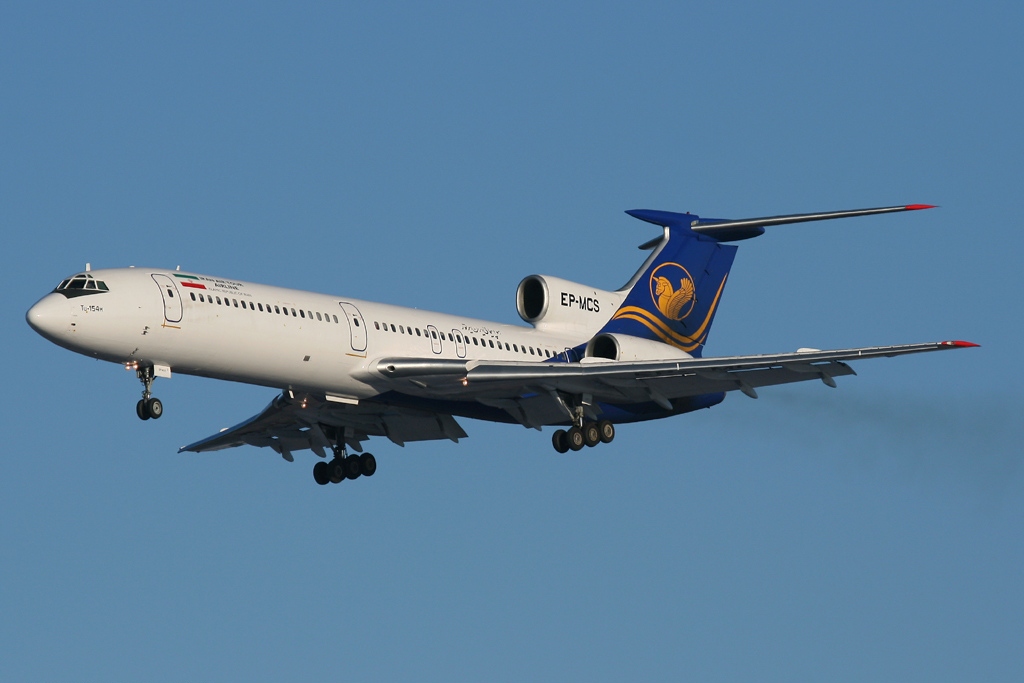
The Tu-154B sported a three jet engine configuration, mounted in the tail section, with the third engine integrated at the base of the fin, typical for a T-tail design. This architecture offered excellent performance in terms of thrust and redundancy, a crucial aspect for the long internal routes of the Soviet Union.
Featuring a pronounced swept wing and a robust fuselage, the Tu-154B was designed to achieve a cruising speed of approximately 950 km/h and a maximum range of approximately 3,900 km. Its structure was designed to withstand severe operating conditions, including the ability to operate from semi-prepared runways.
Onboard Specifications
- ◆Advanced Avionics: Included inertial navigation systems (INS) and weather radar, crucial for operations in adverse weather conditions.
- ◆Reinforced landing gear: Designed to withstand landings on unpaved or less maintenance surfaces, a vital feature for many Soviet airports.
- ◆APU (Auxiliary Power Unit): An independent auxiliary power unit that allowed the aircraft to be autonomous for engine starting and on-board ground power.
Operational Career & Operators
The Tupolev Tu-154B quickly became the backbone of the fleet of Aeroflot, the Soviet flag carrier, covering domestic and international routes. Its versatility and reliability made it a true "workhorse", carrying millions of passengers across the Eastern Bloc and beyond.
In addition to Aeroflot, numerous other carriers, especially in Warsaw Pact countries and some friendly nations, adopted the Tu-154B. It has demonstrated remarkable operational longevity, with some examples remaining in service until the early 2020s, testifying to its robustness and ease of maintenance.
Legacy & Cultural Impact
The Tu-154B was not just a means of transport; it has become an iconic symbol of Soviet aeronautical engineering and its ability to compete with Western counterparts such as the Boeing 727. Its unmistakable silhouette and the characteristic hiss of its engines are imprinted in the collective memory of several generations.
Despite its gradual retirement from service due to noise regulations and operating costs, the Tu-154B left a lasting legacy. He contributed significantly to the development of civil aviation in Russia and Eastern Europe, training pilots and technicians and demonstrating the validity of a distinctive engineering approach.
Telemetria Specs (HUD)
Hangar Trivia & Curiosità
- 💡It was often dubbed the 'Soviet 727' due to its similar rear-mounted trijet configuration and medium-range role.
- 💡The Tu-154 series was one of the fastest civilian airliners in its class, capable of high cruise speeds.
- 💡Early versions, and to some extent the B variant, were designed for robust operation, including from unpaved or semi-prepared airstrips, crucial for remote Soviet regions.
Archivio Avvistamenti Spotter
Immagini scattate dalla community in tutto il mondo