Tu-144
Tupolev
Historical Context & Origins
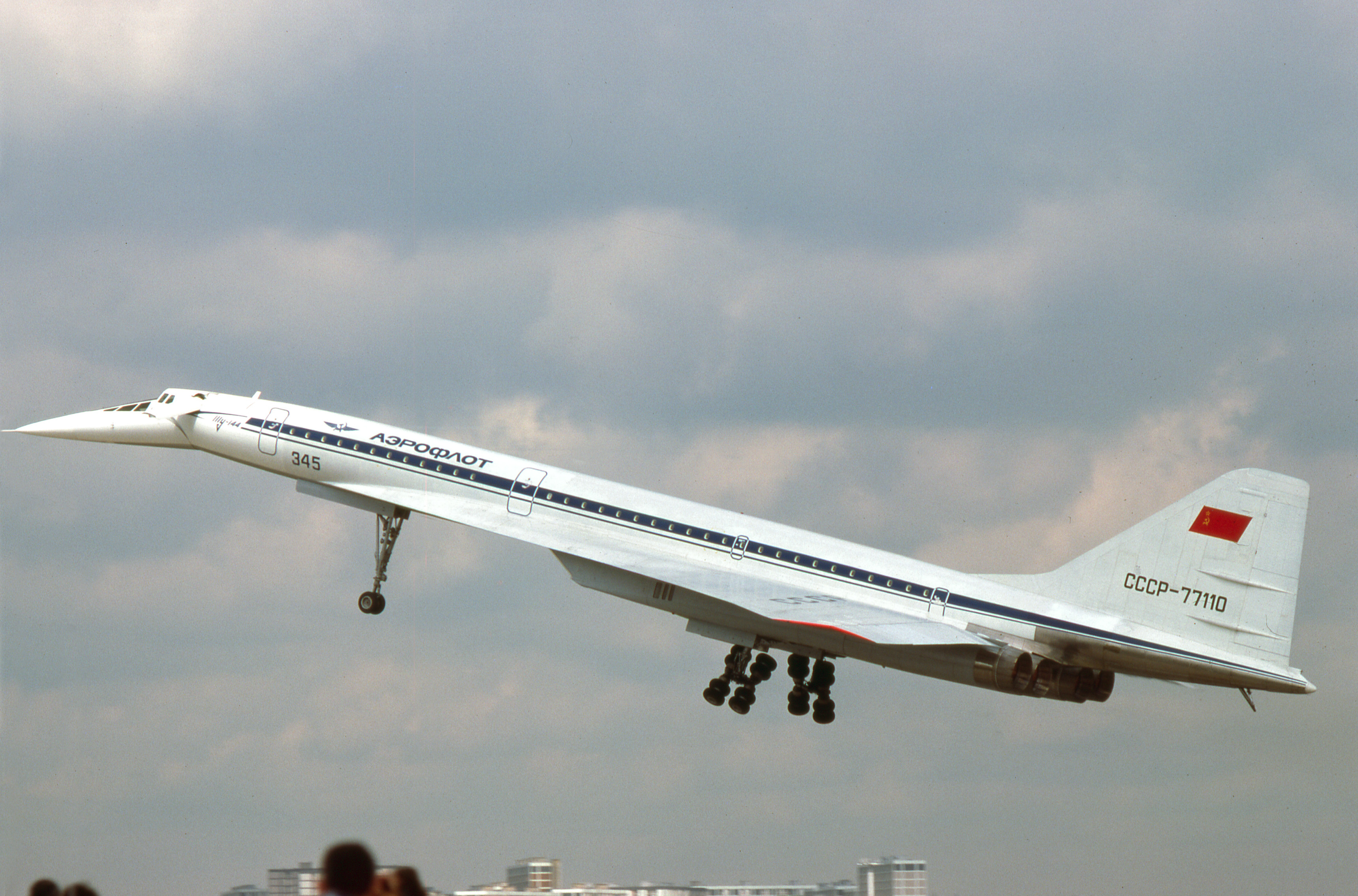
The Tupolev Tu-144, with its first flight in 1968, was not just an airplane, but a bold technological statement by the Soviet Union. Born from the fervent competition of the Cold War, it represented the Soviet response to the Anglo-French Concorde project, aiming to surpass it in prestige and performance.
This jewel of Soviet engineering was developed by the Tupolev design bureau, one of the brightest minds behind Russian aviation. The goal was ambitious: to create supersonic passenger transport (SST) capable of covering enormous distances in record time, symbolizing Soviet technological superiority.
The Tu-144 holds a crucial historical record: it was the first supersonic airliner in the world to take flight, anticipating the Concorde by a few months. This strategic move demonstrated to the world the USSR's ability to compete at the highest levels in civil and military aeronautics.
Architecture & Technological Design
The design of the Tu-144 was a true masterpiece of aerodynamic engineering, dominated by an impressive delta wing, a fundamental feature for supersonic flight. Its tapered lines and elongated fuselage were optimized to reduce aerodynamic drag, allowing it to cut through the air at extreme speeds.
One of the most innovative solutions adopted on the Tu-144, and which distinguished it from its Western rival, were the retractable canard winglets. These additional wing surfaces provided exceptional control at low speeds, significantly improving maneuverability during takeoff and landing.
Propulsion was entrusted to four powerful turbofan engines which, in early versions, required the use of afterburners to maintain supersonic cruising speed. This configuration, although extremely high-performance, resulted in very high fuel consumption and a considerable noise footprint.
Onboard Specifications
- ◆Retractable canard flaps: Greatly improved stability and handling at low speeds, a distinguishing feature compared to the Concorde.
- ◆Kuznetsov NK-144 engines (initial): Four powerful dual-flow turbofan engines, capable of propelling the aircraft to speeds exceeding Mach 2, albeit with high fuel consumption.
- ◆Advanced aluminum alloy structure: Designed to withstand the extreme thermal and structural stresses of prolonged supersonic flight, with an innovative cooling system.
Operational Career & Operators
Despite its revolutionary potential, the operational career of the Tu-144 was relatively short and troubled. It entered service with Aeroflot in 1977, making only 55 regular passenger flights before being withdrawn due to reliability problems, prohibitive operating costs and, above all, following a tragic accident.
The disaster at the 1973 Paris Air Show, where a Tu-144 disintegrated in flight, was a devastating blow to the program. While the exact cause remains a matter of debate, the event severely undermined public trust and accelerated problems with an already complex project.
After passenger service, some examples were converted for freight transport and for scientific and space research purposes, still demonstrating the reliability of its airframe in different contexts. In an unusual post-Cold War collaboration, NASA used a Tu-144 for a research program between 1996 and 1999, studying supersonic flight for future generations of aircraft.
Legacy & Cultural Impact
The Tupolev Tu-144 remains a fascinating icon of 20th-century aeronautical engineering, a symbol of the unbridled ambition and technological challenges of the Cold War era. Nicknamed "Concordski" in the West, it represented the Soviet attempt to match and surpass the best of Western aircraft design.
His story is a warning about the costs and complexities of commercial supersonic flight, a field into which only a few have ventured. Although it did not achieve the commercial success of the Concorde, the Tu-144 provided valuable engineering and aerodynamic knowledge, contributing to the advancement of aeronautical science.
Today, the Tu-144 is celebrated in museums and collective memory as an ill-fated pioneer, an aircraft that pushed the boundaries of the possible, leaving a legacy of innovation and daring that continues to inspire and fascinate aviation enthusiasts around the world.
Telemetria Specs (HUD)
Hangar Trivia & Curiosità
- 💡Il Tu-144 fu il primo aereo da trasporto supersonico commerciale (SST) a volare, precedendo il Concorde di circa due mesi.
- 💡Presentava distintivi alette canard retrattili vicino al muso, che miglioravano la manovrabilità a basse velocità e le prestazioni di decollo/atterraggio, una caratteristica assente nel Concorde.
- 💡Il suo servizio passeggeri fu eccezionalmente breve, con soli 55 voli di linea operati, principalmente a causa di problemi di affidabilità e un fatale incidente al Salone di Le Bourget del 1973.
Archivio Avvistamenti Spotter
Immagini scattate dalla community in tutto il mondo