Tu-124
Tupolev
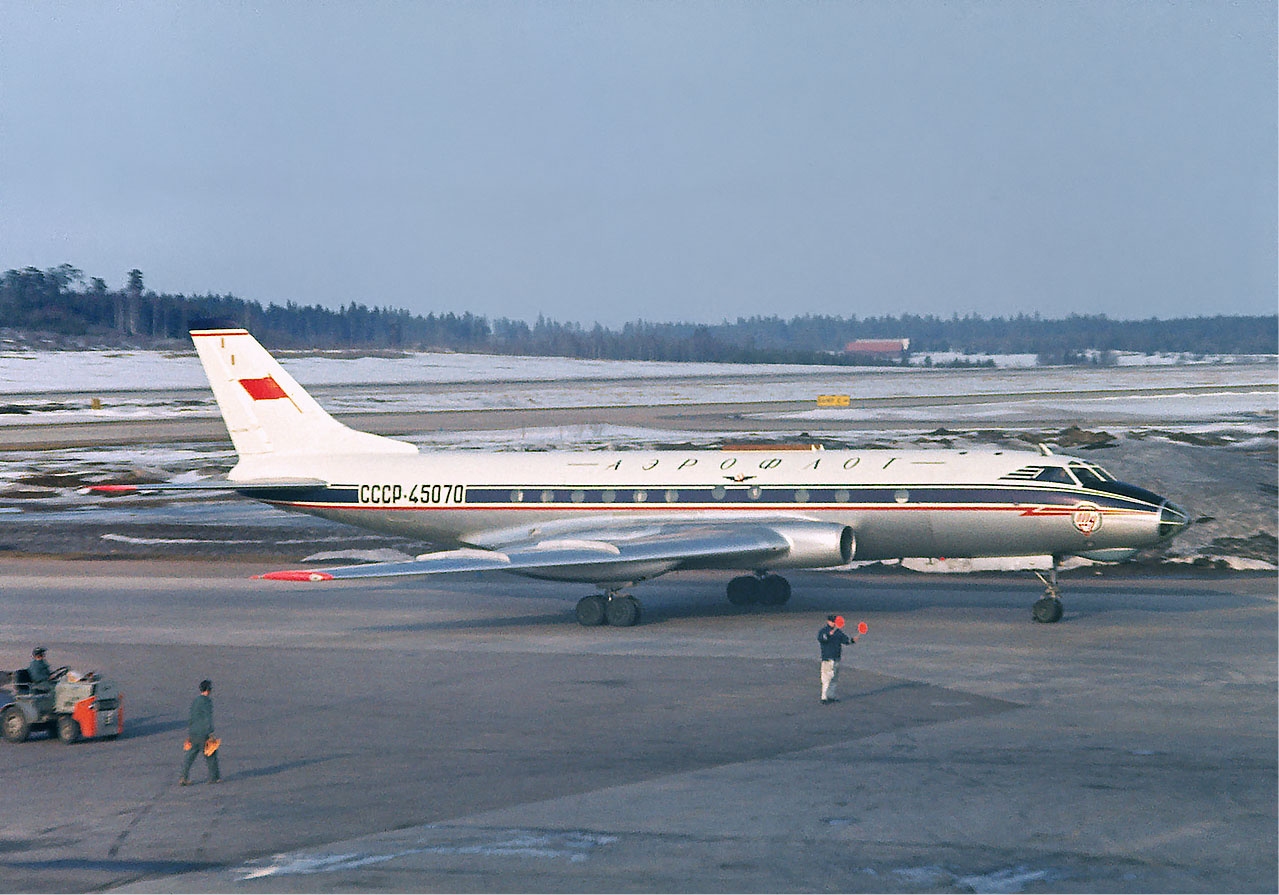
Historical Context & Origins
The Tupolev Tu-124, which first flew in 1960, emerged as a strategic response to the Soviet need for a more efficient and compact regional airliner. In an era of rapid expansion of air transport, demand for flights on short and medium-haul routes was constantly growing, pushing for innovative solutions.
<br>
Derived directly from the larger and more famous Tu-104, the Tu-124 represented a bold miniaturization and optimization. This engineering approach made it possible to capitalize on the experience gained with the first Soviet jetliner, accelerating the development process and ensuring familiarity for Aeroflot ground staff and pilots.
<br>
The primary objective was to replace the aging Il-14 and Li-2 on less busy domestic routes, offering passengers the comfort and performance of the jet age. The Tu-124 was designed to connect smaller cities and remote regions of the Soviet Union, consolidating the national air network.
Architecture & Technological Design
The technological heart of the Tu-124 was represented by its innovative Soloviev D-20P engines, the first turbofans ever used on a Soviet airliner. This pioneering choice guaranteed a significant improvement in terms of fuel efficiency and noise reduction compared to previous turbojets, a significant competitive advantage.
<br>
The aircraft's design inherited the elegant swept wing and configuration with engines integrated into the wing root from the Tu-104, but with smaller dimensions and a significantly lower operating weight. The pressurized fuselage was designed to accommodate between 44 and 56 passengers, providing adequate comfort for regional flights.
<br>
A crucial aspect of the Tu-124 was its ability to operate from semi-prepared or grass runways, a key feature of the Soviet airport infrastructure of the time. This was possible thanks to robust landing gear and an overall design that prioritized reliability in less than ideal operating conditions.
Onboard Specifications
- ◆Soloviev D-20P Turbofan Engines: The world's first regional airliner with turbofan engines.
- ◆Reinforced landing gear: Designed to operate on unpaved or poor quality runways.
- ◆Hot air anti-icing system: Essential for the severe climatic conditions of the Soviet northern regions.
Operational Career & Operators
The Tu-124 entered service with Aeroflot in 1962, quickly becoming a mainstay of domestic short-to-medium range routes. Its reliability and ability to operate on limited airport infrastructure made it irreplaceable for connecting less accessible cities and regions, carrying millions of passengers over the course of its career.
<br>
Although most examples served under the Aeroflot banner, the Tu-124 experienced limited export success. It was acquired by airlines such as Czechoslovak Airlines (CSA) and Interflug (East Germany), as well as Iraqi Airways, demonstrating its versatility and robustness in different operational and climatic contexts.
<br>
A notable accident was the emergency landing on the Neva River in Leningrad in 1963, where the crew, with remarkable skill, managed to save all passengers and crew after an engine failure. This event highlighted both the risks of pioneering aviation and the resilience of aircraft design.
Legacy & Cultural Impact
The Tupolev Tu-124 holds a significant place in aviation history as the world's first regional jetliner powered by turbofan engines. This technological innovation paved the way for a new generation of more efficient and quieter aircraft, influencing the development of future aircraft designs.
<br>
Its conception as the "mini-Tu-104" not only demonstrated the flexibility of Tupolev's basic design but also the Soviet ability to adapt advanced technologies to different market needs. The Tu-124 represented a crucial bridge between the turbojet era and the more advanced turbofan era in civil transport.
<br>
Despite its relatively short production and limited service compared to other models, the Tu-124 left an indelible impression. Its operational experience and lessons learned were crucial to the development of the successor, the Tupolev Tu-134, which inherited many of its features but with significant improvements, propelling Soviet engineering into the future of regional air transport.
Telemetria Specs (HUD)
Hangar Trivia & Curiosità
- 💡Il Tu-124 fu il primo aereo di linea sovietico ad essere alimentato da motori turbofan (i Soloviev D-20P).
- 💡La sua configurazione aerodinamica era una diretta derivazione in scala ridotta del più grande e noto Tupolev Tu-104.
- 💡Un incidente notevole avvenne nel 1963, quando un Tu-124 effettuò un atterraggio di emergenza sul fiume Neva a Leningrado, dopo un guasto ai motori e l'esaurimento del carburante.
Archivio Avvistamenti Spotter
Immagini scattate dalla community in tutto il mondo