Tu-104
Tupolev
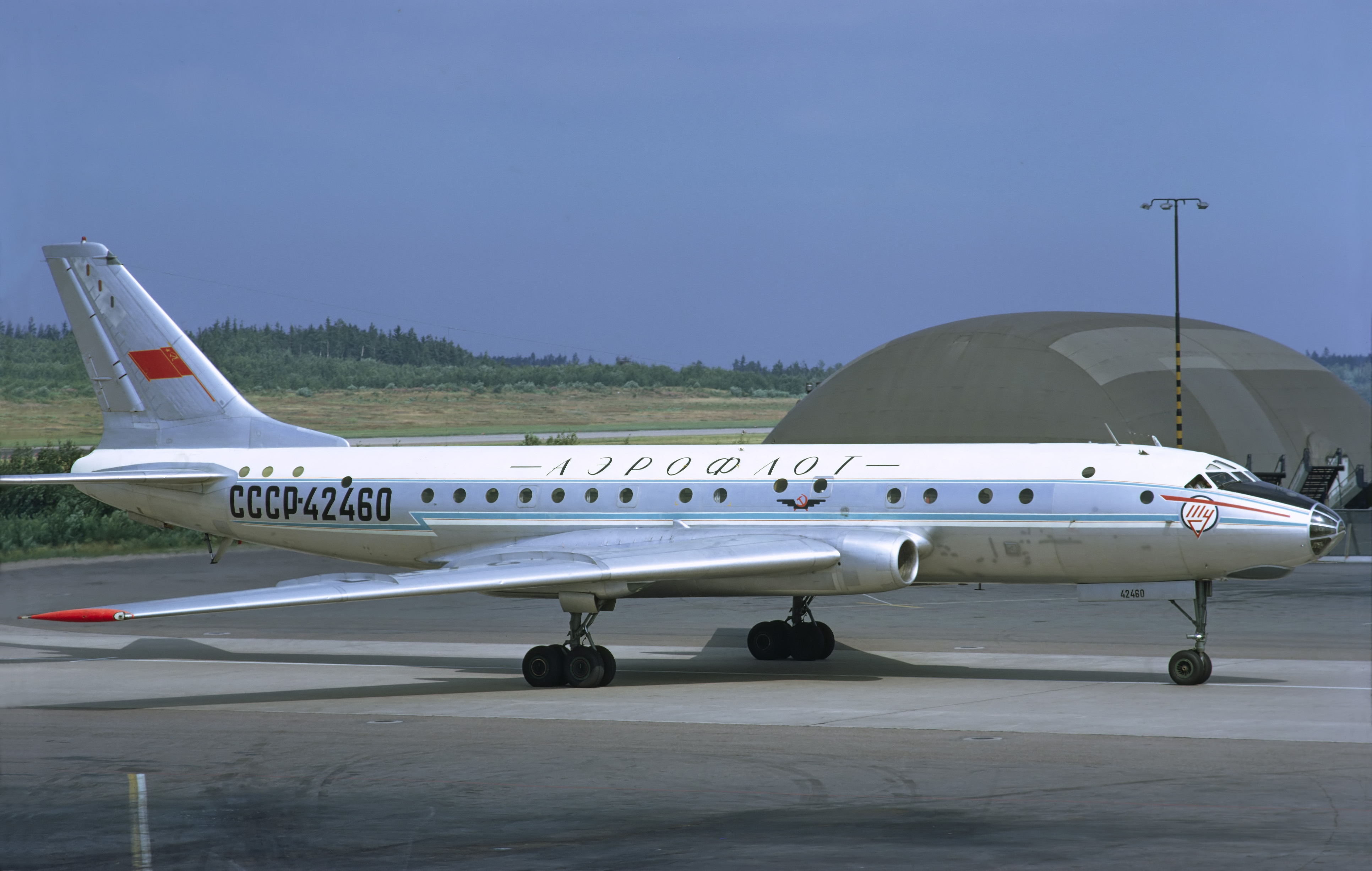
Historical Context & Origins
After World War II, the Soviet Union expressed an urgent desire to modernize its civilian air fleet and establish itself as a global technological power in the emerging jetliner industry. Unlike Western approaches, the USSR chose a pragmatic path, based on the adaptation of proven military technologies.
The Tupolev Tu-104 was born from this vision, leveraging the experience and components of the Tu-16 "Badger" strategic bomber in an era of intense Cold War competition. This engineering approach allowed for exceptionally rapid development, culminating in its maiden flight on June 17, 1955, an event destined to revolutionize air travel.
The Tu-104 was not simply a new aircraft; it was a bold declaration of Soviet technological superiority. It quickly became the world's first jetliner to enter regular service, ahead of its Western competitors and propelling the USSR to the forefront of commercial aviation.
Architecture & Technological Design
The Tu-104 design was a clear testament to Soviet engineering, albeit with the inevitable compromises resulting from adaptation from a military platform. It retained the Tu-16's 35-degree swept wings and horizontal tail, while adopting a wider, pressurized fuselage to accommodate passengers, a significant engineering challenge.
The beating heart of the Tu-104 were its two Mikulin AM-3M turbojet axial flow engines, mounted inside the wing root, a configuration common for bombers but unusual for airliners. These thrusters, powerful but voracious in terms of fuel, were capable of delivering a thrust of approximately 95.1 kN (21,400 lbf) each.
The choice of an architecture derived from a bomber entailed both advantages in terms of structural robustness and disadvantages in terms of efficiency and low-speed flight characteristics. The high wing loading and high thrust required highly skilled pilots to handle takeoff and landing.
Onboard Specifications
- ◆Pressurized and air-conditioned cabin: Revolutionary comfort for passengers, allowing flights at higher altitudes and significantly reducing travel times.
- ◆Advanced swept wing design: Optimized for high speeds, allowed the Tu-104 to reach a cruising speed of approximately 850-950 km/h (530-590 mph).
- ◆Hot air degiver system and rugged control surfaces: Designed to operate in the severe climatic conditions of the Soviet Union, ensuring reliability and safety in extreme environments.
Operational Career & Operators
The Tu-104 entered service with Aeroflot on September 15, 1956, inaugurating the Moscow-Irkutsk route. Its introduction was a propaganda triumph for the USSR, showing the world the Soviet ability to compete in civil aviation with unprecedented speed and luxury for the time.
For a short time, it was the only operational jetliner in the world, carrying between 50 and 100 passengers depending on configuration. Its presence in the skies, including flights to Western capitals, became a tangible symbol of Soviet technological might and its global ambitions.
Besides Aeroflot, only CSA Czechoslovak Airlines operated the Tu-104, cementing its image as a symbol of the Eastern Bloc. Although its beginning was marked by an initial high accident rate, linked to the novelty of the technology and the peculiarities of the design, the experience gained was invaluable for the entire industry.
Legacy & Cultural Impact
Despite its operational challenges, the Tupolev Tu-104 has left an indelible mark on aviation history. It paved the way for a generation of Soviet jetliners, such as the Tu-124, Tu-134 and the larger Tu-154, consolidating Tupolev's design expertise.
The Tu-104 is remembered as a courageous pioneer, a symbol of the Cold War technological race and Soviet determination not to be left behind. His audacity to transform a bomber into an airliner demonstrated the feasibility of jet air travel for the masses, defying the conventions of the time.
His legacy is not just technical; it is also cultural. It represents the era when aviation entered a new era of speed and accessibility, an era of wonder and progress that continues to inspire aviation enthusiasts around the world, celebrating a "first" in the history of aviation.
Telemetria Specs (HUD)
Hangar Trivia & Curiosità
- 💡Il Tu-104 derivava direttamente dal bombardiere strategico Tupolev Tu-16 'Badger', condividendo molte componenti chiave tra cui ali, motori e sezione di coda.
- 💡Fu il secondo aereo di linea a reazione ad entrare in servizio commerciale, dopo il de Havilland Comet, ma divenne il primo a mantenere un servizio di linea continuo e affidabile dopo i problemi iniziali del Comet.
- 💡A causa delle sue origini militari e dei potenti motori, il Tu-104 era noto per le sue alte velocità di atterraggio, richiedendo piste più lunghe rispetto a molti aerei ad elica contemporanei.
Archivio Avvistamenti Spotter
Immagini scattate dalla community in tutto il mondo