Trislander
Britten-Norman
Historical Context & Origins
The Britten-Norman Trislander, with its first flight in 1970, represents a bold evolution of the famous Britten-Norman Islander, one of the world's most successful STOL (Short Take-Off and Landing) aircraft. The British company sought to respond to growing demand for a regional aircraft with greater passenger capacity and greater range, while maintaining the robustness and operational simplicity that had made the Islander so popular.
The brilliant intuition was not to redesign an aircraft from scratch, but to apply a significant modification to an already tested platform. The Trislander was born from the need to transport 17 passengers instead of the Islander's 9, on routes that required greater autonomy without sacrificing the ability to operate from short, semi-prepared runways.
This strategic decision allowed Britten-Norman to quickly develop a new model, optimizing costs and taking advantage of the engineering experience and operational familiarity already acquired. The result was an aircraft with a unique configuration, immediately recognizable in the aeronautical panorama.
Architecture & Technological Design
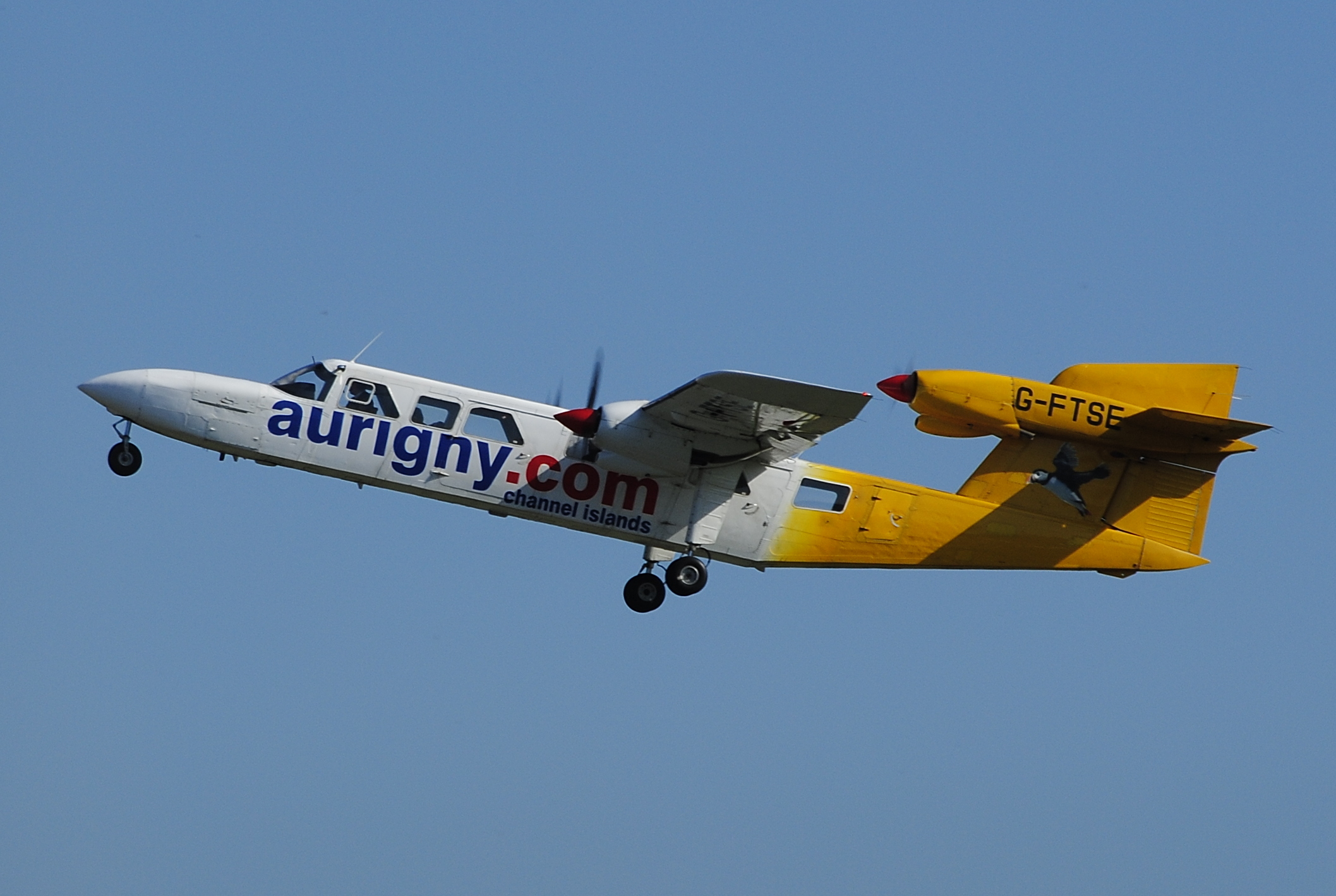
The most distinctive aspect of the Britten-Norman Trislander is undoubtedly its tri-engine configuration. This atypical design featured one engine mounted on the nose and two on the wing pylons, a technical choice aimed at maximizing the power available for take-off and ensuring excellent redundancy, crucial for operations in remote areas or on maritime routes.
To accommodate more passengers, the Islander's fuselage was stretched by more than two meters. This structural modification, combined with the addition of the third engine, required careful aerodynamic and structural redesign to maintain the aircraft's balance and its excellent STOL characteristics, pillars of the Britten-Norman philosophy.
The Trislander inherited the straight wing and fixed landing gear of the Islander, elements which contributed to its simplicity of construction and maintenance. Robustness was a priority, designed to withstand the wear and tear of intense operations on unprepared runways, a true "workhorse" of the air.
Onboard Specifications
- ◆Tri-Engine Configuration: Three Lycoming O-540 piston engines, providing redundant power and reliability.
- ◆Improved STOL Capability: Excellent ability to operate from short, unpaved runways, essential for regional service.
- ◆Elongated Fuselage: Allowed the carriage of 17 passengers or a significant payload, increasing operational versatility.
Operational Career & Operators
Il Britten-Norman Trislander trovò la sua nicchia ideale nel servizio aereo regionale e insulare, dove le sue capacità STOL e la sua robustezza erano insostituibili. Airlines such as Aurigny Air Services in the Channel Islands and Loganair in Scotland became iconic operators, leveraging the Trislander to connect small communities and islands.
Although not produced in huge numbers – with only 72 built – the Trislander has had an incredibly long and versatile operational career. It has been employed for passenger transport, cargo, medical evacuations and even in surveillance roles, demonstrating remarkable adaptability.
Its reliability in often extreme operating conditions and its ease of maintenance made it extremely valuable to airlines operating with limited resources in remote locations, keeping vital connections alive.
Legacy & Cultural Impact
The Britten-Norman Trislander, while not a mass-production aircraft, left an indelible mark on regional aviation. Its unmistakable silhouette, with the third engine on the nose, makes it immediately recognizable and symbolizes practicality and functional engineering.
Its history is that of an aircraft that favored efficiency and operational capacity over aesthetics or speed, becoming a true symbol of connectivity for isolated communities. Many examples continued to fly for decades, testifying to the solidity of the original design.
The Trislander's legacy lies in its ability to solve a specific problem with an innovative and reliable solution, demonstrating how a well-conceived design can ensure extraordinary operational longevity and significant social impact, well beyond its number of examples produced.
Telemetria Specs (HUD)
Hangar Trivia & Curiosità
- 💡It is easily recognizable by its unique three-engine configuration: one engine mounted on the tail fin and one on each wing.
- 💡The Trislander was designed for exceptional Short Take-Off and Landing (STOL) capabilities, making it ideal for island hopping and remote airstrips.
- 💡Only 72 Trislanders were built, making it a relatively rare sight compared to its more numerous two-engine predecessor, the Islander.
Archivio Avvistamenti Spotter
Immagini scattate dalla community in tutto il mondo