Superjet 100
Sukhoi
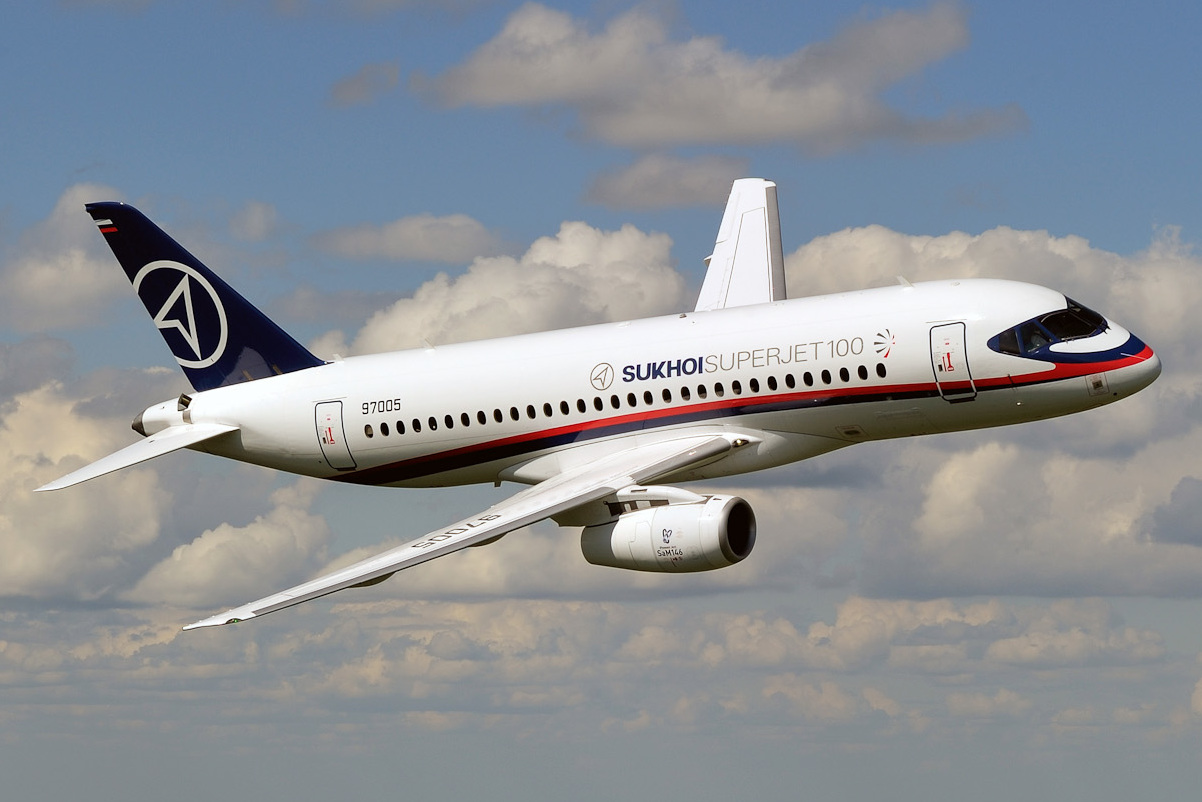
Historical Context & Origins
The Sukhoi Superjet 100, with its first flight in 2008, represented an ambitious initiative by the Russian Federation to regain a leading position in the global civil aviation sector. After the decline of the Soviet aerospace industry, the goal was to develop a modern regional jet that was efficient and internationally competitive.
The project, started in the early 2000s, saw significant collaboration with Western partners, an innovative approach for Russian industry. Companies such as Alenia Aermacchi (now Leonardo), Safran (through PowerJet for engines), Thales for avionics and Liebherr for control systems, have helped integrate the best available technologies.
This synergy aimed to create an aircraft that could meet international standards of safety, comfort and operational economy, offering itself as a valid alternative to the dominant Bombardier and Embraer models in the 90-100 seat regional jet segment. The aspiration was to offer a competitive solution for both the domestic and export markets.
Architecture & Technological Design
The Superjet 100 was conceived with a design philosophy based on efficiency and modernity. Its advanced aerodynamics, combined with the adoption of a full digital fly-by-wire flight control system, ensures precise handling and reduces pilots' workload while improving safety.
The choice of propulsion fell on the PowerJet SaM146 engines, developed in a joint venture between Safran Aircraft Engines (France) and NPO Saturn (Russia). These next-generation turbofans have been designed to offer high fuel efficiency, low noise emissions and low operating costs, which are crucial for airlines.
The fuselage and wings have been optimized to combine structural strength with lightness, using composite materials in different sections of the aircraft. The large passenger cabin has been carefully designed to maximize comfort, with generously sized windows and well-sized hand luggage spaces, often exceeding category standards.
Onboard Specifications
- ◆Full digital fly-by-wire control system: Improves piloting precision and operational safety.
- ◆Eco-efficient PowerJet SaM146 engines: Optimized for fuel efficiency and lower noise emissions.
- ◆Spacious passenger cabin with 2+3 configuration: Offers superior comfort, with wide seats and generous aisles for a regional jet.
Operational Career & Operators
The Superjet 100 entered commercial service in 2011 with the Russian company Armavia, quickly followed by Aeroflot, the main operator. In subsequent years, it also attracted international carriers, including Interjet (Mexico) and CityJet (Ireland), demonstrating its potential attractiveness beyond Russian borders.
However, the operational journey was punctuated by several challenges. Issues related to after-sales support, availability of spare parts and structural limitations of the Russian maintenance infrastructure have at times slowed its deployment and full operation with some foreign customers.
Despite these difficulties, the Superjet 100 has demonstrated its capabilities in different operating conditions, serving regional and medium-range routes. Its presence has helped modernize the fleets of many airlines in the post-Soviet area and in some emerging markets, providing a modern and cost-effective alternative.
Legacy & Cultural Impact
The Sukhoi Superjet 100 represents a significant symbol of Russia's ambition to develop a next-generation civil aviation industry capable of competing globally. It was the first passenger aircraft designed in Russia in the post-Soviet era and the first to benefit from such extensive international collaboration.
Despite the operational challenges and recent geopolitical vicissitudes that have strongly influenced its production and service, the experience gained with the Superjet 100 has been crucial. It provided Sukhoi and the entire Russian industry with valuable expertise in the design, certification and production of modern aircraft, laying the foundation for future projects.
Its presence in the skies, while not as widespread as its Western competitors, is a testament to the ingenuity and resilience of Russian aeronautical engineering. The Superjet 100 will remain an important chapter in the history of aviation, a reminder of the complexities and opportunities of an increasingly interconnected and competitive global market.
Telemetria Specs (HUD)
Hangar Trivia & Curiosità
- 💡È stato il primo aereo passeggeri civile russo post-sovietico sviluppato secondo gli standard di certificazione occidentali, con ampia collaborazione internazionale.
- 💡I suoi motori, i SaM146, sono il risultato di una joint venture tra la francese Safran Aircraft Engines e la russa NPO Saturn (PowerJet).
- 💡Ha subito una battuta d'arresto significativa dopo un incidente fatale durante un volo dimostrativo in Indonesia nel 2012, che ha pesantemente influenzato le sue prospettive di vendita internazionali.
Archivio Avvistamenti Spotter
Immagini scattate dalla community in tutto il mondo