Super VC10
Vickers
Historical Context & Origins
The Vickers Super VC10, with its first flight in 1964, emerged in an era of profound transformation. While American jets dominated the transatlantic skies, Britain aspired to have its own giant of the skies, capable of serving the long-haul routes of the then British Empire, often characterized by "hot and high" airports with shorter runways and challenging operating conditions.
The original VC10 was designed to excel in these challenging conditions, offering superior takeoff and landing performance. However, to compete effectively on major, high-density routes, a lengthened and upgraded version was needed, capable of taking on giants such as the Boeing 707 and Douglas DC-8.
Thus the Super VC10 was born: a refined and engineering-bold British answer, designed to raise standards of comfort and passenger capacity. This aircraft was not just an evolution, but an affirmation of British innovation in the global aeronautical landscape.
Architecture & Technological Design
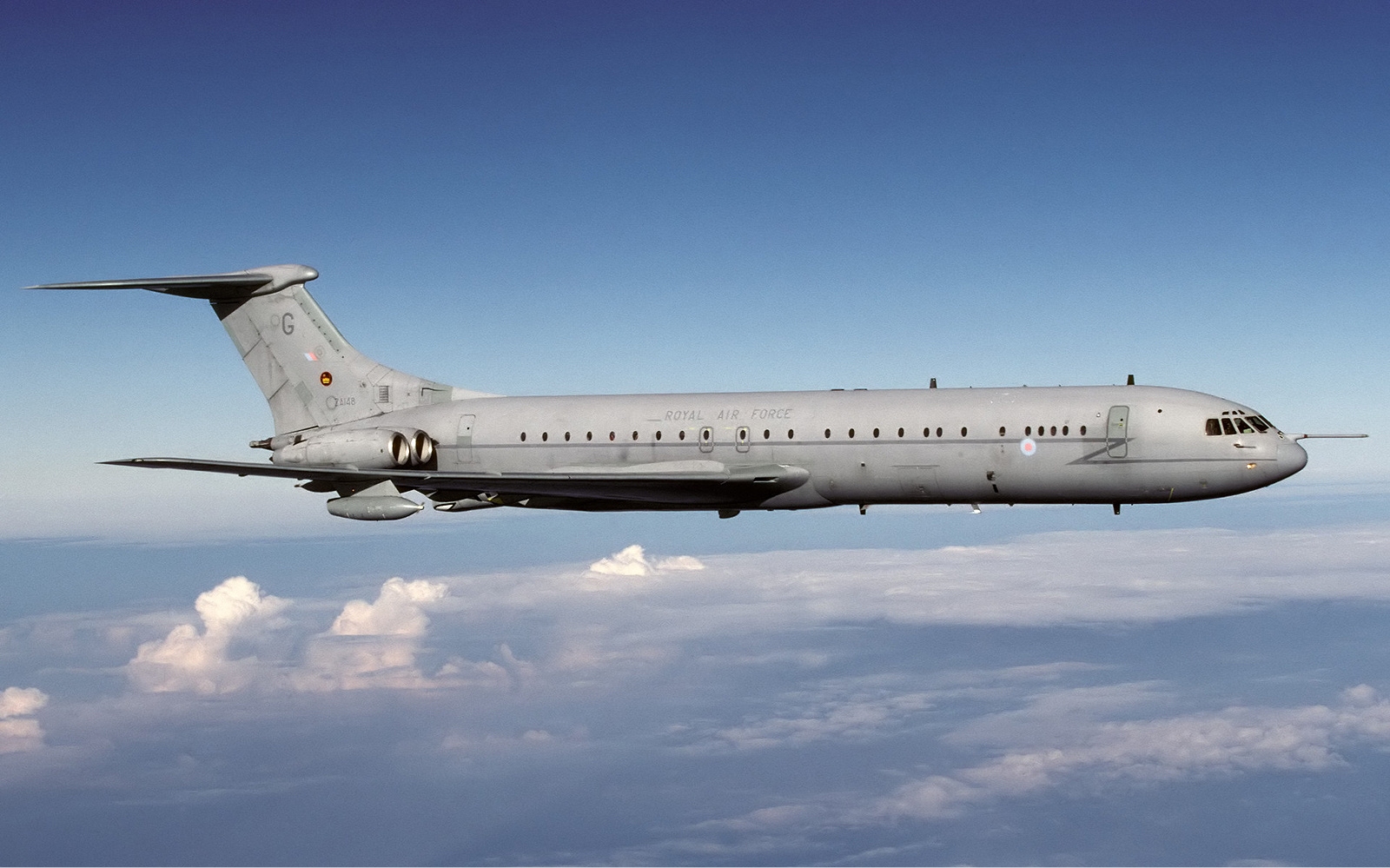
The Super VC10 was immediately notable for its four-engine tail architecture, a bold choice that freed the wings from bulky pylons, significantly reducing drag and cabin noise. This configuration allowed for a "clean" wing optimized for high-speed efficiency, but also equipped with exceptional high-lift devices for STOL (Short Take-Off and Landing) performance.
Its elegant silhouette hid an advanced technical heart. The Super VC10's lengthened fuselage accommodated more passengers and fuel, increasing its range and cargo capacity. The meticulous attention to detail extended to the interior, where passengers enjoyed a spacious and particularly quiet environment, a true luxury for the time.
Every aspect of the design, from the location of the Rolls-Royce Conway engines to the sophisticated aerodynamics, was designed to deliver a unique combination of power, efficiency and superior comfort, setting it apart from its contemporaries.
Onboard Specifications
- ◆Rear Rolls-Royce Conway quad-engine configuration: Unique and distinctive, reduced cabin noise and improved wing aerodynamics.
- ◆High-lift wing with triple-slot flap: Provided excellent take-off and landing performance, crucial for short and high-altitude runways.
- ◆Extra-large pressurized fuselage: Offered more interior space and greater cabin height than competitors, for unrivaled passenger comfort.
Operational Career & Operators
The Super VC10 quickly became the flagship of BOAC (British Overseas Airways Corporation), operating prestigious long-haul routes to Africa, the Middle East and the Far East. Passengers loved it for its superior comfort, remarkable quietness and stability in flight, often preferring it to other noisier and more vibrating jets.
Despite its technical excellence and popularity among passengers, it was produced in limited numbers due to fierce competition and political decisions. However, its robustness and versatility guaranteed it a second glorious life, demonstrating the validity of the original design.
The Royal Air Force (RAF) adopted several versions, converting them into tankers and strategic transports. These military aircraft, known as the VC10 K2, K3 and K4, have served with distinction for nearly fifty years, demonstrating longevity and adaptability of design.
Legacy & Cultural Impact
The Vickers Super VC10 is fondly remembered as Britain's "Queen of the Skies", an epithet that reflects not only its elegance but also its reputation as the aircraft of choice for passengers. It symbolizes a golden age of British engineering, a time when bold innovation was priority.
Despite not achieving the large-scale commercial success of its rivals, the Super VC10 remains a design icon and a testament to British ingenuity. Its emphasis on passenger comfort and exceptional performance continue to influence the design philosophy of modern aircraft.
Today, the Super VC10 is celebrated by aviation enthusiasts as a timeless classic, a masterpiece of aesthetics and functionality that served the United Kingdom with pride, first on civil and then military routes, leaving an indelible mark on aviation history.
Telemetria Specs (HUD)
Hangar Trivia & Curiosità
- 💡Il VC10 fu l'unico jet di linea britannico progettato e costruito specificamente per rotte a lungo raggio.
- 💡I passeggeri spesso preferivano volare sul VC10 rispetto ad altri aerei contemporanei per la sua cabina silenziosa e il volo confortevole, guadagnandosi il soprannome di 'Regina dei cieli' tra alcuni.
- 💡Nonostante le sue dimensioni, il VC10 possedeva eccellenti capacità di decollo e atterraggio corto (STOL), grazie ai potenti motori e all'avanzato design alare.
Archivio Avvistamenti Spotter
Immagini scattate dalla community in tutto il mondo