Super Electra (14)
Lockheed
Historical Context & Origins
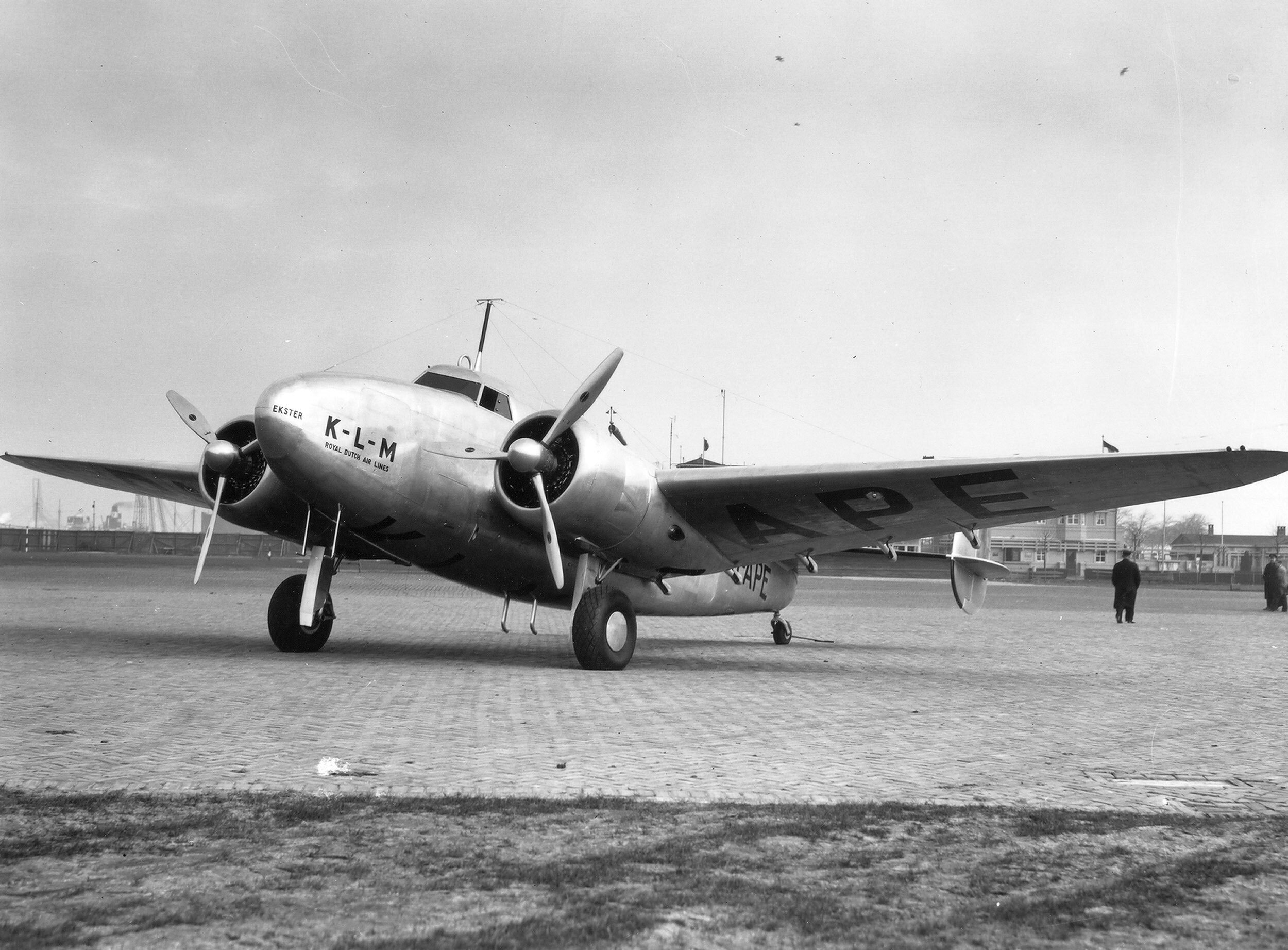
The late 1930s marked a time of fervent innovation in aviation, with growing demand for faster, safer and more comfortable airliners. In this dynamic landscape, the Lockheed Super Electra (Model 14) emerged as a bold response to the needs of a rapidly evolving market. It was positioned to overcome the limitations of previous models, promising superior performance and capacity.
Developed directly from the highly regarded Lockheed L-10 Electra, the Model 14 was not a simple evolution, but an ambitious design for a larger aircraft, capable of greater payload and autonomy. Its first flight, which took place in 1937, marked Lockheed's entry into a highly competitive market segment, dominated by giants such as Douglas and Boeing, with the aim of offering a cutting-edge alternative.
Architecture & Technological Design
The heart of the Super Electra's success lay in its revolutionary architecture for the time: an all-metal twin-engine monoplane, which combined lightness and robustness. The adoption of a "double-tapered" wing was not only aesthetically pleasing, but significantly improved aerodynamic efficiency, reducing drag and optimizing in-flight behavior.
Equipped with two powerful radial engines, often the Pratt & Whitney R-1830 Twin Wasp or the Wright Cyclone, the Model 14 guaranteed exceptional flight performance, reaching impressive cruising speeds. Cutting-edge features such as retractable landing gear and variable-pitch propellers helped maximize both speed and fuel efficiency, placing it at the forefront of civil aviation technology.
The expertly designed semi-monocoque aluminum alloy structure not only provided superior structural integrity, but also increased load capacity. This ingenious design allowed the Super Electra to carry more passengers and cargo than its predecessors, opening up new routes and opportunities for global airlines.
Onboard Specifications
- ◆Optimized aerodynamics: With carefully shaped airfoil and control surfaces to reduce drag and improve stability at high speeds.
- ◆Robust and lightweight construction: Semi-monocoque fuselage made of advanced aluminum alloys, ensuring high structural safety and operational durability even in severe conditions.
- ◆Advanced passenger comfort: Spacious cabin, soundproofed and equipped with efficient heating systems, offering a superior travel experience by the standards of the time.
Operational Career & Operators
The Lockheed Model 14 quickly found its place in the skies, being used by numerous world-class airlines. Carriers such as KLM, BOAC, Northwest Airlines and Trans-Canada Air Lines chose it for its performance and reliability on medium-haul routes, significantly helping to expand global airline networks in an era of rapid expansion.
Its versatility was further demonstrated by its adaptation for military purposes, becoming the basis for the famous Lockheed Hudson bomber and maritime reconnaissance aircraft, produced in thousands during the Second World War. This civil-military dualism testifies to the robustness and excellence of the Super Electra's original design, capable of adapting to extremely different operational requirements.
Legacy & Cultural Impact
The Lockheed Super Electra's impact on aviation was profound and long-lasting, setting new standards in airliner engineering and design. His aerodynamic and structural innovations were not simply individual achievements, but served as a platform for the development of subsequent and even more iconic aircraft produced by Lockheed.
Many of the technologies and concepts introduced with the Model 14, such as all-metal structures, advanced propulsion systems and attention to passenger comfort, quickly became standard practices in the aviation industry. This aircraft contributed significantly to the evolution of civil and military air transport in the crucial pre-war period.
In addition to its technical legacy, the Super Electra has left a cultural footprint as a symbol of progress and speed in an era of great change. Its elegant silhouette and cutting-edge performance made it an icon of American ingenuity, representing the promise of a future where the sky was within everyone's reach, a true engineering masterpiece of the 1930s that continues to inspire.
Telemetria Specs (HUD)
Hangar Trivia & Curiosità
- 💡Its military variant, the Lockheed Hudson bomber, was the first American-built aircraft to achieve a combat kill for the Royal Air Force in World War II.
- 💡The aircraft set several speed records and was one of the fastest commercial transports of its time, even surpassing many contemporary military aircraft.
- 💡Known for its advanced design features, including flush riveting and efficient NACA engine cowlings, which significantly contributed to its superior performance.
Archivio Avvistamenti Spotter
Immagini scattate dalla community in tutto il mondo