SpaceJet MRJ90
Mitsubishi
Historical Context & Origins
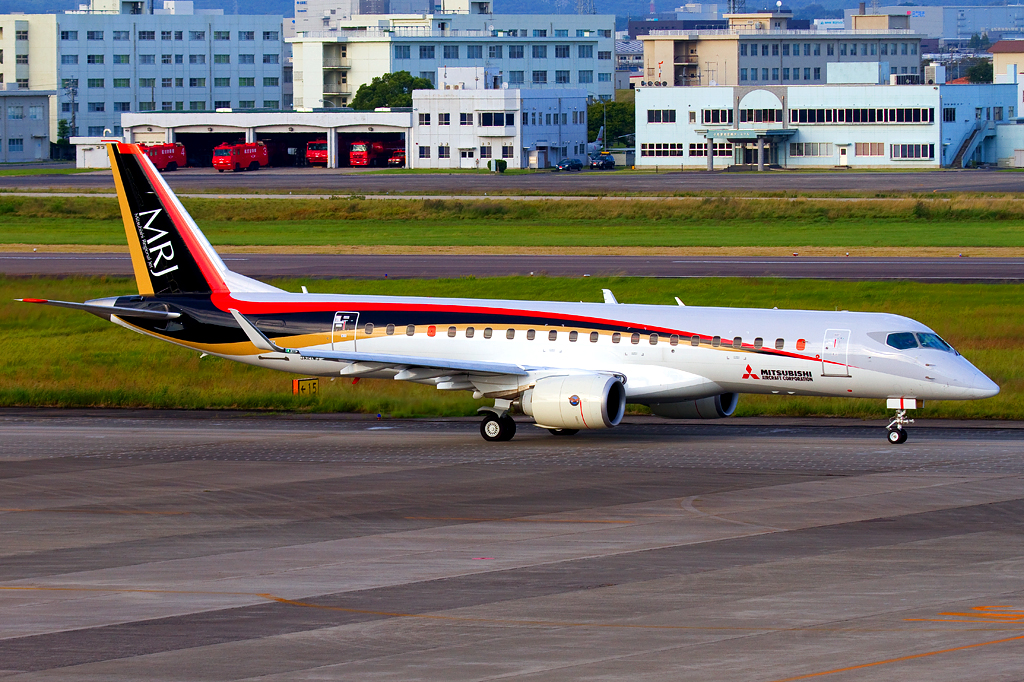
The Mitsubishi SpaceJet MRJ90 (Mitsubishi Regional Jet) represented Japan's, and in particular Mitsubishi Heavy Industries (MHI)'s ambitious attempt to re-enter the competitive commercial airliner market following the success of the YS-11 in the 1960s. Conceived in the early 2000s, the program aimed to develop a next-generation regional jet that could compete with industry giants such as Embraer and Bombardier.
The primary objective was to offer an aircraft with superior performance, particular attention to fuel efficiency and a reduced environmental impact, crucial elements for airlines operating on short and medium-haul routes. The project aimed to redefine the standards of comfort for passengers and operation for companies.
The prototype's first flight occurred on November 11, 2015, marking a historic moment for the Japanese aviation industry and raising high hopes for the future of Mitsubishi's aerospace division. This event symbolized the country's technological capability and precision engineering.
Architecture & Technological Design
The SpaceJet MRJ90 was designed with cutting-edge architecture that integrated the latest aeronautical innovations. The fuselage featured an optimized aerodynamic design, combined with a widespread adoption of advanced composite materials which contributed to a significant reduction in overall weight and, consequently, increased fuel efficiency.
The propulsive heart of the aircraft was made up of two Pratt & Whitney PW1200G engines, geared turbofans. This latest generation technology promised not only unrivaled efficiency and lower emissions, but also notable noise reduction, improving both the on-board experience and the acoustic impact on airport communities.
The cockpit was equipped with modern avionics and a fly-by-wire system, providing pilots with precise and intuitive control. The interior of the passenger cabin, nicknamed the "Mitsubishi Clean Cabin", was designed to offer more personal space, larger windows and large overhead bins, raising the level of comfort typical of regional jets.
Onboard Specifications
- ◆Pratt & Whitney PW1200G engines: For efficiency, silence and reduced emissions.
- ◆Extensive use of composite materials: Guaranteeing structural lightness and robustness.
- ◆Mitsubishi Clean Cabin: Designed for superior comfort, with wider seats and more space.
Operational Career & Operators
Despite the promising premises and an initial order book that included major carriers such as All Nippon Airways (ANA), the launch customer, and several North American companies such as SkyWest and Trans States Holdings, the SpaceJet's path was full of challenges. The program faced numerous delays due to ongoing design revisions, complexities in the certification process, and manufacturing difficulties.
These obstacles led to escalating development costs and extended delivery times, putting a strain on investor and customer confidence. Many orders were canceled or converted.
The peak of the difficulties was reached in 2020, when Mitsubishi announced the suspension of the program indefinitely, and then declared its permanent cancellation in 2023. No example of the Mitsubishi SpaceJet MRJ90 has ever entered commercial service, making it an ambitious project that has never fully materialized.
Legacy & Cultural Impact
Although the Mitsubishi SpaceJet MRJ90 never reached the operational stage, its legacy is far from insignificant. It represented a courageous attempt by Japan to reassert itself in the civil aviation sector on a global scale, demonstrating the country's high engineering and technological capabilities.
The program provided valuable lessons on the enormous complexity and costs associated with developing and certifying a modern airliner, especially when competing with established players. It highlighted the need for impeccable project management and a clear long-term strategic vision.
The SpaceJet experience could influence future Japanese aerospace initiatives, perhaps directing investments toward specific niches, international collaborations, or the development of innovative technologies for next-generation aviation. It remains a symbol of the aspirations and challenges in contemporary aeronautical engineering.
Telemetria Specs (HUD)
Hangar Trivia & Curiosità
- 💡The SpaceJet program, initially known as the Mitsubishi Regional Jet (MRJ), underwent a rebranding in 2019 to simplify its name and emphasize its advanced aspirations.
- 💡It was Japan's first attempt to design and build a commercial passenger jet entirely domestically since the NAMC YS-11, which first flew in 1962.
- 💡Despite billions of dollars invested and accumulating over 1,000 flight hours in testing, the SpaceJet never received its full type certification, leading to its cancellation in 2023.
Archivio Avvistamenti Spotter
Immagini scattate dalla community in tutto il mondo