SM-2 Junior
Stinson
Historical Context & Origins
By the late 1920s, the echoes of Lindbergh's transatlantic flight had ignited a global passion for aviation, pushing the industry to explore new frontiers, particularly in private aviation. In this dynamic scenario, the Stinson Aircraft Corporation, founded by the pioneer Edward "Eddie" Stinson, established itself as a key player, dedicating itself to the production of robust, comfortable and reliable aircraft, far from the austere military or competition machines.
It was in this context of growing demand that the Stinson SM-2 Junior saw the light of day, making its first flight in 1928. Designed as a refined evolution of previous Stinson models, such as the SM-1 Detroiter, the Junior aimed to offer a superior flying experience for passengers and private pilots, embodying a new standard of luxury and practicality in the multi-seat, single-engine aircraft segment.
Architecture & Technological Design
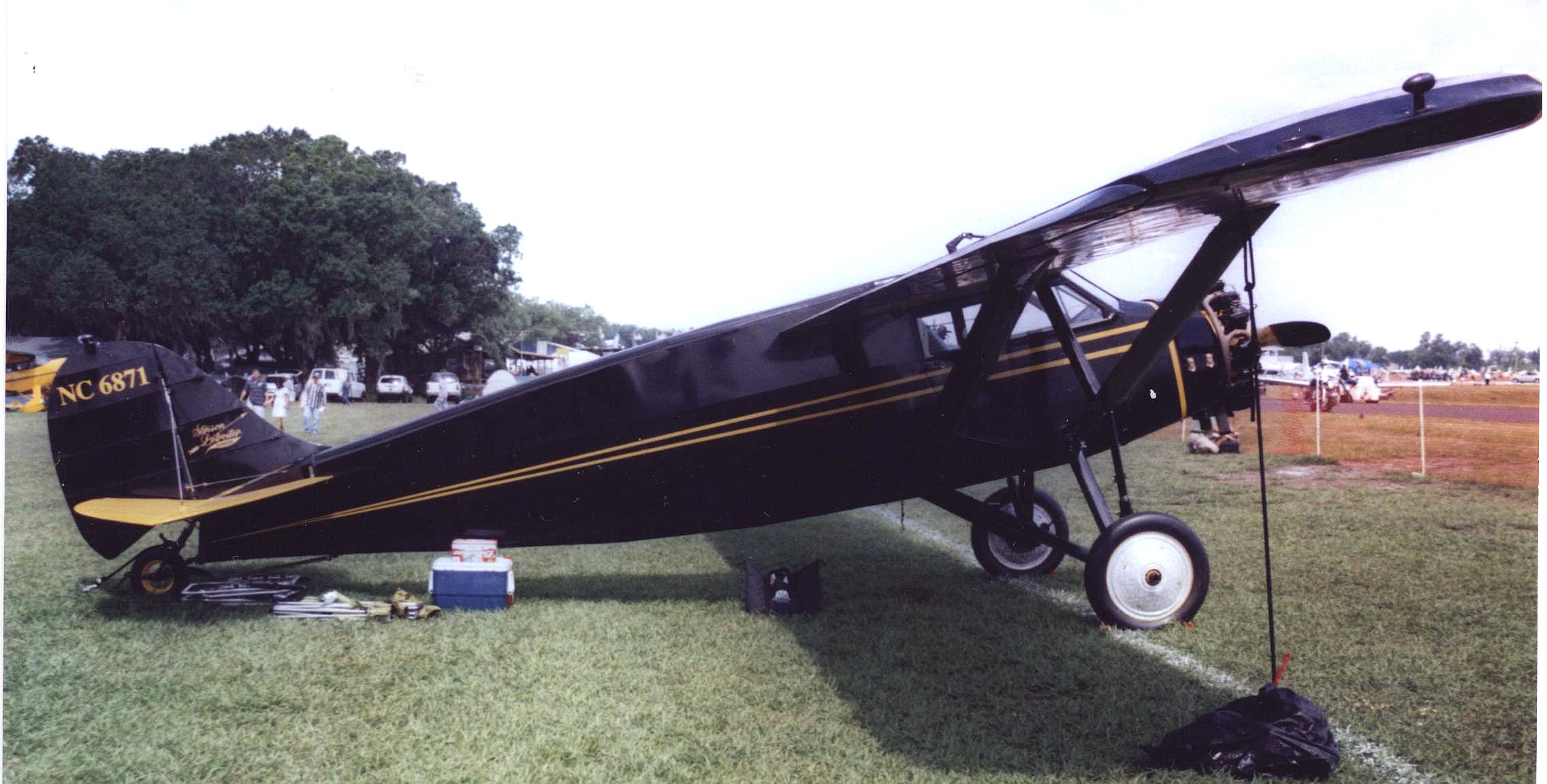
The SM-2 Junior was a cantilever high-wing monoplane, a configuration that provided excellent visibility and greater stability in flight, crucial to passenger safety and comfort. Its structure was an engineering masterpiece of the time: a welded steel tube fuselage, covered in fabric, combined with wooden wings with textile covering, which gave the aircraft considerable strength and durability, distinctive characteristics of the Stinson construction philosophy.
The design of the SM-2 was aimed at optimizing the onboard experience. The enclosed cabin, a luxury for its time, was carefully designed to comfortably accommodate four people, providing an environment protected from the elements and relatively quiet. This pioneering approach to comfort made the Stinson Junior a forerunner of modern private aircraft, a true luxury "air taxi" for the elite and business travellers.
Onboard Specifications
- ◆Fully enclosed and heated cabin: A significant innovation for passenger comfort in every season.
- ◆Reliable Lycoming R-680 radial engine: Provided consistent power and simplified maintenance, crucial for reliability.
- ◆Advanced flight instrumentation for its time: Including attitude and navigation indicators, which expanded operational capabilities.
Operational Career & Operators
The Stinson SM-2 Junior quickly earned a reputation as an extremely reliable and easy to fly aircraft, making it the ideal choice for a wide range of operators. It was widely adopted by private pilots, small air charter companies and "air taxi" operators who needed an aircraft capable of carrying passengers or cargo over medium distances with a high level of comfort and safety.
Its inherent ruggedness and ability to operate from unprepared runways made it a workhorse in many regions, helping to connect remote communities and facilitate trade. Numerous examples were also used by companies and businessmen as executive transport aircraft, cementing its image as a symbol of mobility and personal progress in the golden age of aviation.
Legacy & Cultural Impact
The Stinson SM-2 Junior was not just an airplane, but a real catalyst for the democratization of flight and for the development of general aviation. Its emphasis on comfort, safety and practicality set new standards and profoundly influenced the design of subsequent private aircraft, demonstrating that flying could be an accessible and enjoyable experience for a wider audience than pioneers and military aviators.
Even today, the Stinson SM-2 Junior is remembered as an icon of the "Golden Age of Aviation", an aircraft that embodied the spirit of innovation and optimism of an era in which the sky was seen not as a limit, but as a new frontier to explore. His legacy endures in modern aeronautical engineering, a testament to Edward Stinson's vision and his lasting contribution to the world of flight.
Telemetria Specs (HUD)
Hangar Trivia & Curiosità
- 💡It was one of the first successful private aircraft to feature a fully enclosed cabin, greatly enhancing passenger comfort and protection from the elements.
- 💡Often referred to simply as the 'Stinson Junior' or sometimes 'Stinson Detroit Junior', highlighting its manufacturing origin.
- 💡The SM-2 series evolved from Stinson's earlier successful cabin biplanes, marking a transition to monoplane designs in their popular line of private aircraft.
Archivio Avvistamenti Spotter
Immagini scattate dalla community in tutto il mondo