Shorts 330
Short Brothers
Historical Context & Origins
Born from the need for a robust aircraft capable of operating on short and unprepared runways, the Short Brothers Shorts 330 represented the natural evolution of the famous Short Skyvan. In the early 1970s, the regional aviation market needed a larger and more comfortable passenger aircraft, but one that maintained the reliability and versatility of its cargo predecessor.
The project, initially called SD3-30, aimed to combine the proven robustness of the Skyvan with increased capacity and a design optimized for regional passenger transport. Its first flight occurred on August 15, 1974, marking the beginning of a new era for Short Brothers in the commuter segment, focusing on operating economy and ease of maintenance.
Architecture & Technological Design
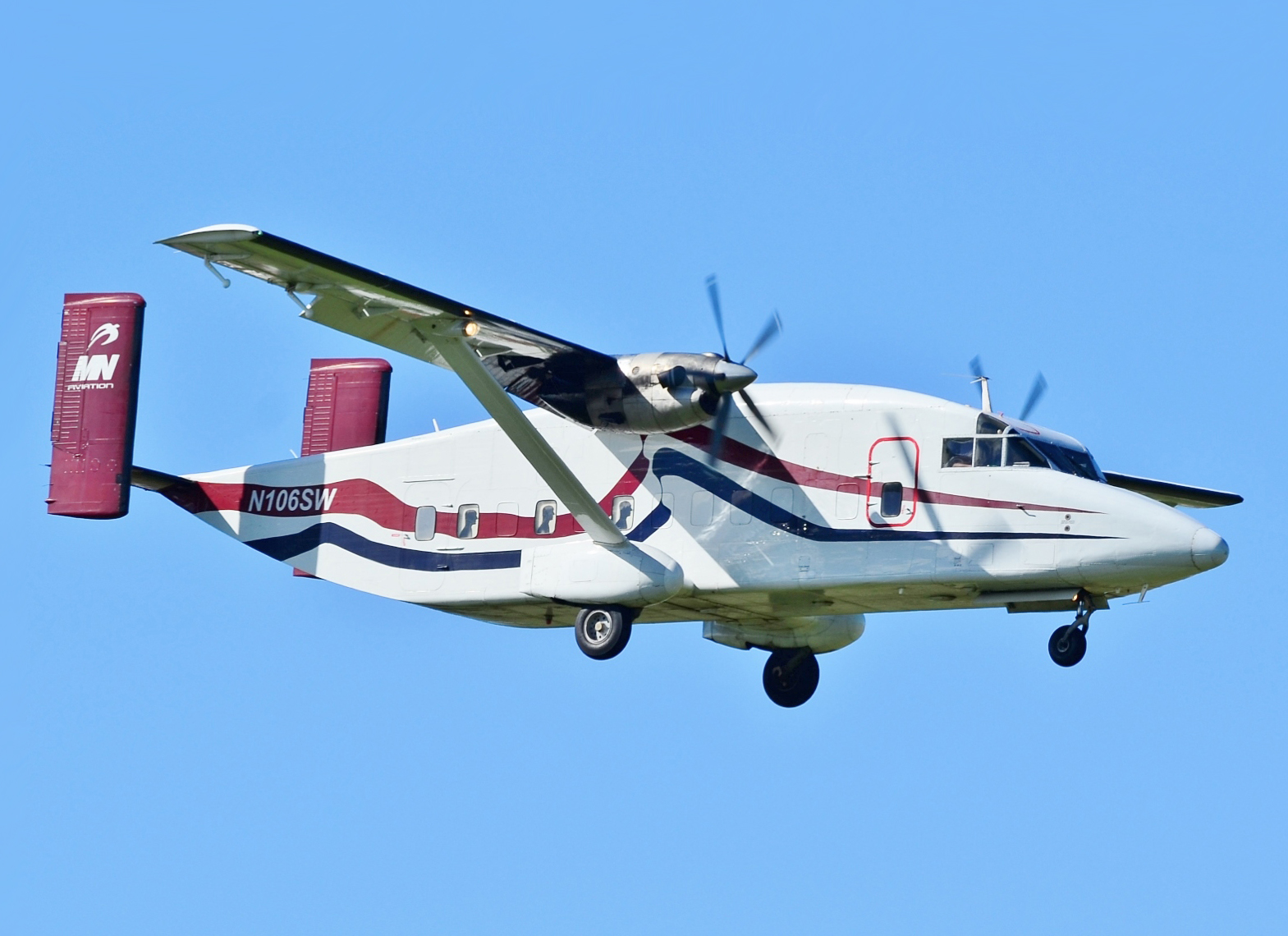
The Shorts 330 stands out for its unmistakable architecture: a high-wing monoplane with a rectangular, almost "box-like" cross-section fuselage that maximized interior space for passengers and cargo. This configuration, inherited from the Skyvan, guaranteed superior load capacity and considerable versatility in cabin configurations.
Powered by two reliable Pratt & Whitney Canada PT6A turboprops, the 330 excelled at short takeoff and landing (STOL) operations, making it ideal for connecting smaller airports and remote communities. Its fixed and robust landing gear contributed to structural simplicity, reducing maintenance costs and increasing its suitability for less maintained runways.
Onboard Specifications
- ◆Wide-section rectangular cabin: Maximized interior volume, offering ample space for passengers (up to 30) or generous cargo capacity.
- ◆High aspect ratio wings with thick profile: Optimized to generate lift at low speeds, providing excellent STOL capabilities and great stability.
- ◆Fixed and robust trolley: Chosen for its operational simplicity, reliability and durability, essential for frequent operations on regional runways with variable standards.
Operational Career & Operators
The Shorts 330 entered service in 1976, quickly becoming a mainstay for regional airlines around the world. Its ability to carry a significant number of passengers or a considerable volume of cargo, combined with low operating costs and remarkable reliability, made it a popular choice for commuter and cargo feeder flights.
Widely used by carriers in the United States, Canada, the United Kingdom and many other nations, the 330 has served in both civilian and military roles, demonstrating remarkable versatility. Its affectionate nickname, "The Shed", emphasized its distinctive shape but also its practicality and ability to get the job done without frills.
Legacy & Cultural Impact
The Shorts 330 has left an indelible mark on regional aviation, demonstrating the validity of a design focused on functionality and operational economy. It paved the way for the development of its successor, the Shorts 360, which further refined the concept, but also influenced the approach to regional aircraft design for decades.
This aircraft has significantly contributed to connecting communities and cities, supporting the growth of regional air transport in an era of great expansion. A symbol of Northern Irish aeronautical engineering, the 330 remains an example of how pragmatic and robust design can generate lasting success and profound cultural impact in the industry.
Telemetria Specs (HUD)
Hangar Trivia & Curiosità
- 💡It is unpressurized, meaning it typically flies at lower altitudes (below 4,500 meters) compared to most passenger aircraft, making it suitable for short regional hops.
- 💡The Short 330 was developed from the earlier, smaller Short Skyvan, inheriting its rugged design and excellent STOL (Short Takeoff and Landing) capabilities.
- 💡Its 'wide-body' (for its class) fuselage was specifically designed to accommodate large, bulky freight containers, making it very popular for cargo operations.
Archivio Avvistamenti Spotter
Immagini scattate dalla community in tutto il mondo