S.M.83
Savoia-Marchetti
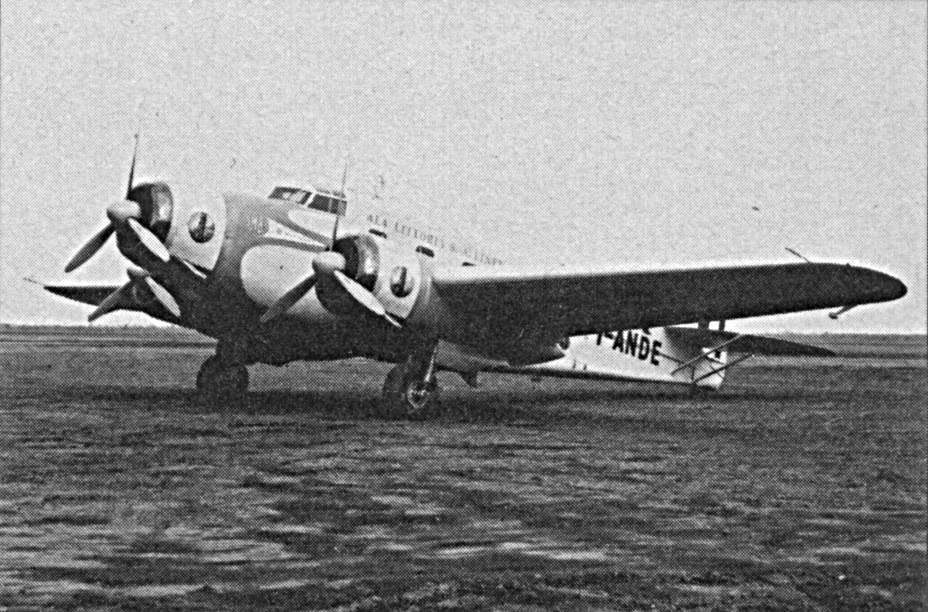
Historical Context & Origins
The Savoia-Marchetti S.M.83, whose first flight took place in 1938, emerged in an era of fervent aeronautical development and growing interest in long-range civil transport. Italy, under the fascist regime, aspired to project an image of technological progress and power, and civil aviation was a prime vehicle for this ambition.
The S.M.83 was a natural evolution of the successful Savoia-Marchetti family of three-engine transport and bomber aircraft, drawing inspiration in particular from the reliability and performance of the famous S.M.79 "Sparviero". The goal was to create a civil aircraft that combined speed, comfort and autonomy, suitable to compete on emerging European and colonial routes.
Architecture & Technological Design
The architecture of the S.M.83 maintained the three-engine configuration, typical and distinctive of Savoia-Marchetti production, which offered greater operational safety and optimal power distribution. It was a low-wing monoplane with a mixed structure, which cleverly combined wood and light alloy elements, a common and proven solution to balance lightness and strength.
Its aerodynamic fuselage and tapered wings were the result of studies aimed at maximizing efficiency and speed, crucial characteristics for a commercial transport aircraft. The engines, usually Alfa Romeo 126 RC.34 or Piaggio P.X RC.35, delivered significant overall power, allowing the S.M.83 to achieve remarkable performance for its time.
Onboard Specifications
- ◆Passenger capacity: Designed to carry 10-12 passengers in a comfortable and well-appointed environment, placing it among the luxury aircraft in its category.
- ◆Operational autonomy: A remarkable autonomy of approximately 2,000 km (or more with auxiliary tanks), which made it ideal for trans-European air links and towards the Italian colonies in Africa.
- ◆Cruising speed: A cruising speed of approximately 360-380 km/h, which ensured quick and efficient travel, significantly reducing journey times.
Operational Career & Operators
The S.M.83 found its main use at Ala Littoria, the Italian national airline, which used it to inaugurate and serve prestigious routes. Destinations included European cities such as London and Berlin, but also vital links to Italian East Africa, underlining its ability to tackle long-haul flights.
Production, although limited to approximately 22 examples, was sufficient to leave a significant mark on the panorama of Italian civil aviation. At the outbreak of the Second World War, several S.M.83s were requisitioned and converted for military tasks, mainly as high-value personnel and material transport aircraft, demonstrating their versatility and reliability even in war contexts.
Legacy & Cultural Impact
The Savoia-Marchetti S.M.83 represents an important chapter in the evolution of Italian civil aviation, a symbol of an era in which the country's aeronautical engineering was at the forefront. Although less famous than other Savoia-Marchetti trimotors, it contributed to consolidating the Italian reputation in the design of fast and safe transport aircraft.
Its elegance and performance made it a prestigious aircraft, capable of symbolizing Italian ambition in dominating the skies. The S.M.83 embodied the aspiration to connect the world, foreshadowing the future needs of increasingly global commercial aviation and underlining the importance of innovation in aeronautical design and technology.
Telemetria Specs (HUD)
Hangar Trivia & Curiosità
- 💡The S.M.83 shared its fundamental aerodynamic design with the famous S.M.79 Sparviero bomber, but boasted a significantly larger and more comfortable fuselage tailored for passenger transport.
- 💡It was instrumental for LATI (Linee Aeree Transcontinentali Italiane), establishing and maintaining crucial long-range air links across the South Atlantic, especially during the early stages of World War II, connecting Italy with South America.
- 💡Despite its civil origins, many S.M.83s were pressed into military service by the Regia Aeronautica during World War II, primarily for transport and liaison missions across the Mediterranean and North Africa.
Archivio Avvistamenti Spotter
Immagini scattate dalla community in tutto il mondo