S.M.75
Savoia-Marchetti
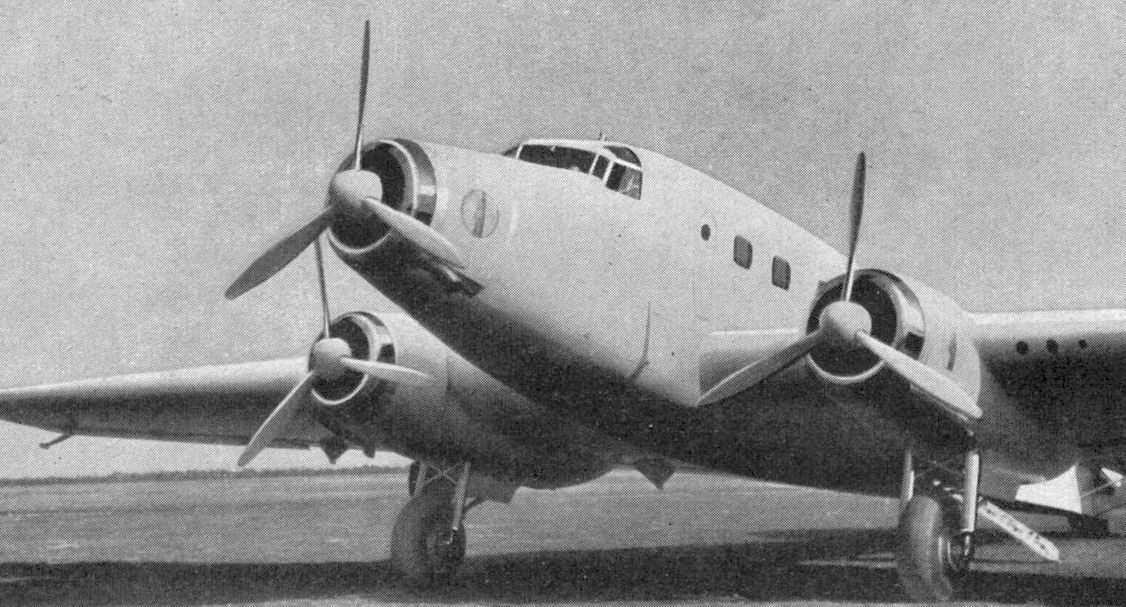
Historical Context & Origins
Born in an era of fervent aeronautical development and expansionist ambitions for fascist Italy, the Savoia-Marchetti S.M.75 emerged as a crucial pillar for civil and military routes. Its first flight in 1937 marked the introduction of a robust and versatile aircraft, destined to connect Italy with its colonies and beyond.
The need for a modern transport aircraft, capable of tackling long distances with significant loads, pushed Savoia-Marchetti to capitalize on the experience accumulated with previous three-engined aircraft, such as the famous S.M.79. The S.M.75 was designed to be a "giant of the skies" of its time, balancing reliability, capability and advanced flight performance.
Architecture & Technological Design
The S.M.75 presented itself as an elegant three-engine low-wing monoplane, a configuration that maximized aerodynamic efficiency and stability. Its structure, typically Italian for the time, was a clever mix of metal and wood, with the fuselage frame in welded steel tubes and the wings in wood, all covered in canvas and plywood.
Propulsion was entrusted to three radial engines, generally Alfa Romeo 126 R.C.34 with 750 HP each, or later the Alfa Romeo 128 R.C.21 with 860 HP. These engines, famous for their reliability, guaranteed the SM75 excellent performance for its category, including a maximum speed of approximately 360 km/h and a remarkable range. The adoption of retractable landing gear was a further step forward in aerodynamics and efficiency.
Onboard Specifications
- ◆High load capacity and versatility: It could carry up to 24 passengers or a significant volume of cargo and mail.
- ◆Intercontinental range: With a range of over 2,000 km, it was ideal for long routes to Italian East Africa and beyond.
- ◆Structural robustness: Designed to operate from poorly prepared runways and in difficult weather conditions, demonstrating great resilience.
Operational Career & Operators
The SM75 found its primary use in the ranks of Ala Littoria, the Italian national airline, becoming the backbone of its long-haul routes. These aircraft connected Rome with strategic cities in East Africa, such as Addis Ababa, and even with South America, a symbol of Italian colonial and civil ambitions.
With the onset of World War II, the S.M.75 was rapidly militarized, demonstrating surprising adaptability. It operated as a troop transport, heavy cargo and long-range reconnaissance aircraft for the Regia Aeronautica, providing vital support to the most distant fronts, including those in Russia and North Africa. His ability to operate in extreme conditions made him a valuable "mule".
Legacy & Cultural Impact
The Savoia-Marchetti S.M.75 represents a significant chapter in the history of Italian aviation, testimony to the country's engineering and production capacity. Its robustness and versatility allowed it to face the challenges of both pioneering civilian routes and arduous war tasks, often in extreme conditions.
Although not among Savoia-Marchetti's most famous aircraft, the S.M.75 had a lasting impact, proving that the Italian industry could produce cutting-edge transport aircraft. It was a forerunner of larger and more complex transport aircraft, consolidating the reputation of Savoia-Marchetti and leaving a legacy of reliability and ingenuity in the world aeronautical scene.
Telemetria Specs (HUD)
Hangar Trivia & Curiosità
- 💡It was nicknamed 'Marsupiale' (Marsupial) due to its impressive cargo capacity and ability to carry diverse loads.
- 💡Many S.M.75s were captured and operated by German forces following the Italian armistice in 1943, primarily for transport duties.
- 💡A highly modified long-range variant, the S.M.75RT, undertook a remarkable propaganda flight from Rome to Tokyo and back in 1942, showcasing Axis capabilities.
Archivio Avvistamenti Spotter
Immagini scattate dalla community in tutto il mondo