S.M.73
Savoia-Marchetti
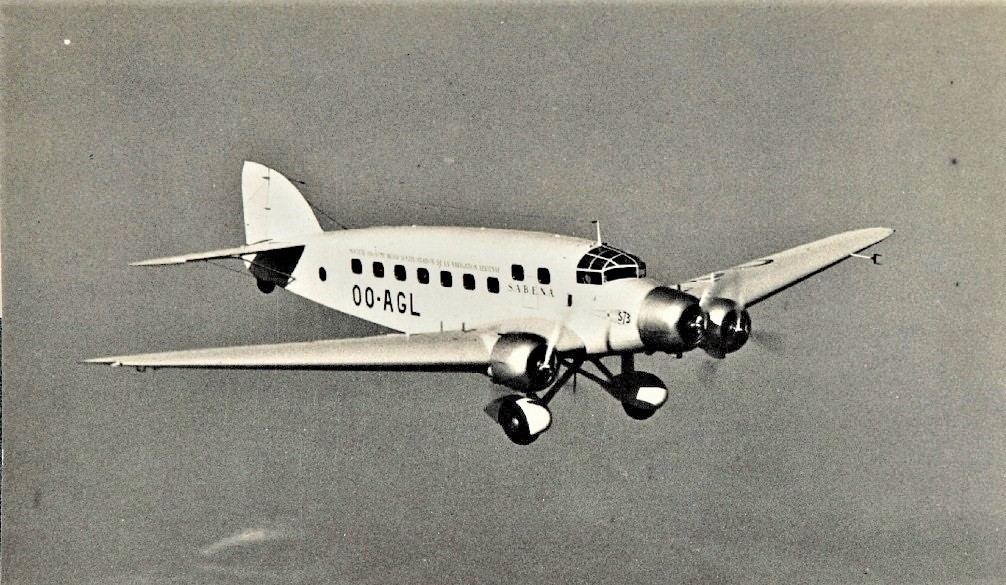
Historical Context & Origins
The Savoia-Marchetti S.M.73, with its first flight in 1934, emerged in an era of rapid expansion for civil aviation, when the demand for robust and reliable transport aircraft was constantly growing. Italy, under the pressure of the fascist regime, aspired to project its technological and logistical power also through a modern commercial air fleet.
The SM73 was conceived to respond to this need, embodying the excellence of Italian aeronautical engineering of the time and the consolidated experience of Savoia-Marchetti in the multi-engine sector. Its development represented a significant step towards larger and more capable airliners, intended to connect not only European cities but also nascent colonial empires.
Designed by engineer Alessandro Marchetti, the S.M.73 was proposed as a multi-purpose aircraft, capable of offering a high standard of comfort and safety for passengers, while maintaining competitive operating costs. It was the archetype of a generation of trimotors that would profoundly mark the history of Italian scheduled flight.
Architecture & Technological Design
The S.M.73 stood out for its low-wing triple-engine architecture, a configuration that guaranteed not only redundancy and safety in the event of an engine failure, but also notable performance in terms of payload and autonomy. The choice of three engines, generally Alfa Romeo 126 R.C.10 or Bristol Pegasus under licence, gave the aircraft an impressive overall power for the time.
Its structure was a brilliant example of mixed construction, where the rectangular-section fuselage, with a wooden structure covered in plywood and canvas, merged with wooden wings and a robust metal framework for the control surfaces and the landing gear. This approach ensured an excellent combination of lightness, resistance and ease of repair in the field.
The aerodynamic design, while not revolutionary by modern standards, was extremely efficient for its time, featuring clean lines and fixed, but efficiently faired, landing gear to reduce drag. Attention to construction details reflected an engineering philosophy aimed at reliability and operational longevity.
Onboard Specifications
- ◆Tri-Engine Configuration for Safety: The three-engine arrangement guaranteed crucial propulsive redundancy, allowing the aircraft to continue flight even with one or two engines failing, a fundamental safety factor for scheduled flights of the time.
- ◆Versatile Passenger Cabin: The S.M.73 could typically accommodate 12-18 passengers, in a surprisingly spacious environment and equipped with rudimentary but appreciable comforts for the period, such as padded seats and large windows.
- ◆Mixed Robust Structure: The use of a combination of wood for the wing surfaces and part of the fuselage, combined with reinforced metal elements, gave the aircraft considerable structural strength, essential to deal with the often difficult operating conditions.
Operational Career & Operators
The Savoia-Marchetti S.M.73 quickly became the backbone of the fleet of Ala Littoria, the Italian national airline. It was used intensively on national routes, connecting the main Italian cities, and on international ones, reaching destinations in Europe, North Africa and the Middle East.
Its robustness and reliability made it particularly suitable for long and demanding connections with Italian East Africa, where airport infrastructures were often rudimentary. The S.M.73 demonstrated a remarkable ability to operate in different climatic conditions, earning it a reputation as a true "workhorse" of civil aviation.
Other nations, such as Belgium (Sabena) and Czechoslovakia (CSA), also acquired and operated the S.M.73, testifying to its validity and versatility on the international market. During the Second World War, many civilian examples were militarized and used for troop and material transport tasks, although its main mission remained civilian.
Legacy & Cultural Impact
The S.M.73 was not just an airplane, but a tangible symbol of Italian ambition in the field of civil aviation and a precursor to even greater successes. Its ability to operate over long distances with good carrying capacity contributed significantly to the development of air routes and the perception of air travel as a practical and safe option.
Paving the way for future Savoia-Marchetti multi-engine aircraft, such as the famous S.M.79 "Sparviero" and the S.M.81 "Pipistrello", the S.M.73 contributed to forging the identity of the Italian aeronautical industry. Many of the technical solutions and operational experiences accumulated with the S.M.73 found application in the manufacturer's subsequent projects.
The legacy of the S.M.73 lies in its pioneering role, an aircraft that, while not the fastest or most technologically advanced of its time, provided a solid and reliable foundation for the growth of scheduled air travel. It cemented Savoia-Marchetti's reputation as a manufacturer of robust and capable aircraft, leaving an indelible mark on the history of Italian and international aviation.
Telemetria Specs (HUD)
Hangar Trivia & Curiosità
- 💡Despite being designed as a civilian airliner, many S.M.73s were pressed into military service as transports by the Regia Aeronautica during World War II.
- 💡Its trimotor configuration, featuring one engine in the nose and two on the wings, was a common design choice in the 1930s, offering enhanced safety and power redundancy.
- 💡The S.M.73 could typically carry up to 18 passengers, making it a competitive medium-haul transport for its time, operating routes across Europe and North Africa.
Archivio Avvistamenti Spotter
Immagini scattate dalla community in tutto il mondo