PC-12
Pilatus
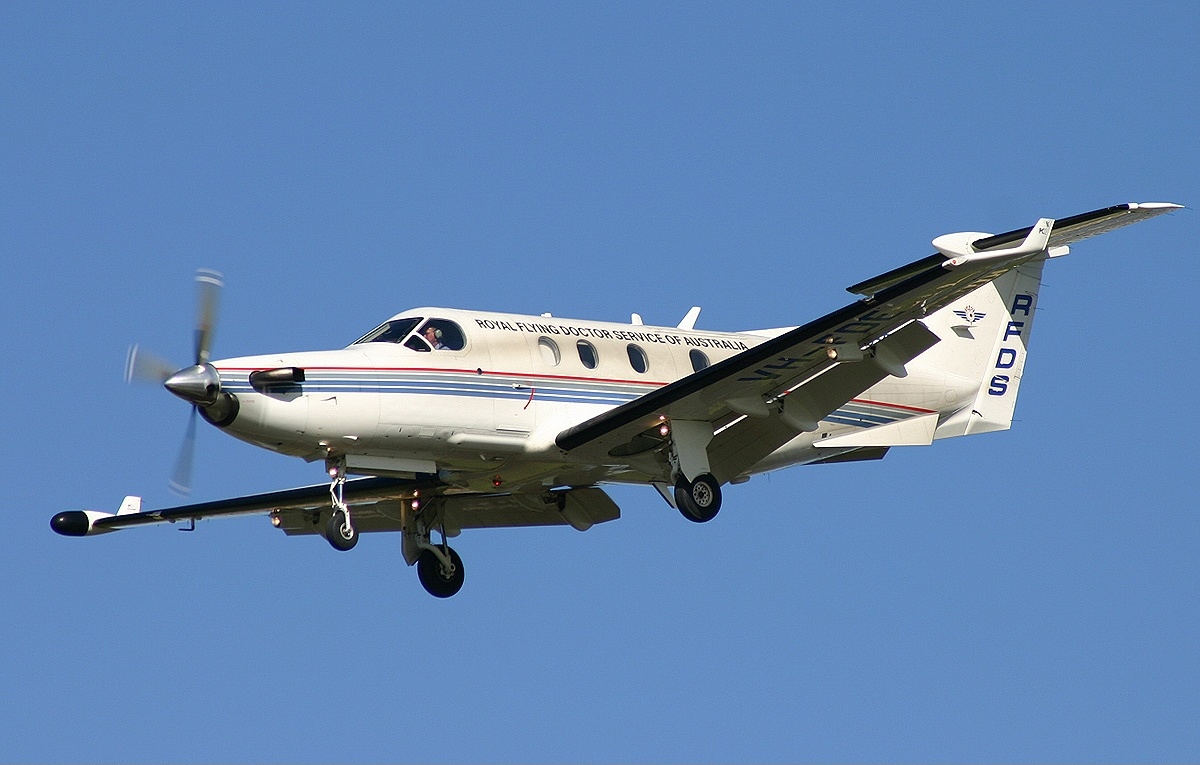
Historical Context & Origins
The Pilatus PC-12 emerges as a bold and forward-thinking response from Pilatus Aircraft, a Swiss company renowned for its precision engineering. In the 1980s, the market felt the need for a single-engine turboprop aircraft that combined operating economy with the performance and versatility typical of twin-engines, but with lower costs and greater robustness. The goal was to create a safe, efficient and multi-purpose aircraft for a wide range of operators.
The project took shape with the aim of offering a modular platform, capable of adapting to a wide range of roles: from executive transport to cargo, from air ambulance to special missions. The first flight, which occurred on May 31, 1991, marked the beginning of a new era, promising efficiency without sacrificing safety and the ability to operate on unprepared runways.
Architecture & Technological Design
At the heart of the PC-12's design is its single-engine turboprop architecture, powered by the legendary Pratt & Whitney Canada PT6A engine, recognized globally for its unmatched reliability and exceptional performance. This configuration, initially seen with a certain skepticism for passenger transport, proved to be successful thanks to the intrinsic robustness of the engine and simplified maintenance.
The fuselage, constructed predominantly of aluminum alloy, is designed to withstand high stress cycles and harsh operations in demanding environments. A distinctive element is the large rear cargo door, a fundamental feature that enhances its versatility, allowing the easy loading of bulky goods or medical stretchers, transforming it into a true multi-role workhorse.
The pressurized cabin offers a comfortable and silent environment, adaptable to different internal configurations, from the luxurious executive version to the one for freight transport. The wing design, optimized for STOL (Short Take-Off and Landing) performance, grants the PC-12 the ability to operate from short, semi-prepared runways, significantly expanding its range to remote destinations otherwise inaccessible to other aircraft.
Onboard Specifications
- ◆Pratt & Whitney Canada PT6A-67P/E engine: A guarantee of reliability, high power and efficiency, fundamental for performance in all operating conditions.
- ◆Spacious, pressurized cabin with large cargo door: Maximum versatility to comfortably transport passengers, bulky loads or equipment for medical missions.
- ◆Advanced integrated avionics (e.g. Honeywell Primus Apex or Garmin G3000 NGX): State-of-the-art digital flight systems for greater situational awareness, increased safety and reduced pilot workload.
Operational Career & Operators
Since its introduction, the Pilatus PC-12 has established itself as a mainstay in a multitude of industries, earning the trust of operators in every corner of the globe. Its inherent versatility has made it the preferred choice for corporate fleets, charter operators and air ambulance services, where the ability to land in remote locations and speed are crucial.
It has also found use in less conventional roles, as a surveillance and reconnaissance (ISR) aircraft for government agencies and armed forces, demonstrating its adaptability to special missions thanks to its stable platform and long endurance. Its reputation for high operational safety, with over 10 million flight hours accumulated and an enviable record, has helped consolidate its success.
Today, over 1,900 examples have been delivered worldwide, operating in over 70 different countries. This is testament to its robustness, operational cost efficiency and ability to maintain high utilization rates, making it a valuable and indispensable asset for any operator, from the North Pole to Australia.
Legacy & Cultural Impact
The Pilatus PC-12 is not just an airplane; it is a symbol of Swiss engineering and a successful model in general and business aviation. It redefined the concept of high performance single-engine turboprop, demonstrating that a single engine can offer safety, efficiency and capability comparable, if not superior, to many twin-engine aircraft in the same category.
His legacy lies in his ability to democratize access to aviation, connecting isolated communities and providing vital services where others cannot reach. It continues to evolve with updated versions such as the PC-12 NGX, which integrates the latest technologies in avionics, propulsion and on-board comfort, ensuring its relevance for decades to come.
The PC-12 set a new standard for the category, inspiring other manufacturers and solidifying its position as one of the best-selling and most popular aircraft in its class. Its reputation for reliability, versatility and low operating costs makes it a true "game changer" in the modern aeronautical landscape.
Telemetria Specs (HUD)
Hangar Trivia & Curiosità
- 💡Con oltre 2.000 unità consegnate, il PC-12 è uno dei turboelica monomotore più venduti al mondo.
- 💡È caratterizzato da un'ampia porta di carico posteriore, che facilita il caricamento di oggetti di grandi dimensioni, una caratteristica chiave per le sue capacità multi-missione.
- 💡L'aeronautica militare degli Stati Uniti impiega il PC-12 con la designazione U-28A Draco per varie missioni di operazioni speciali.
Archivio Avvistamenti Spotter
Immagini scattate dalla community in tutto il mondo