PA-31-350 Chieftain
Piper
Historical Context & Origins
In the 1970s, the general aviation market required higher-performance and more versatile twin-engine aircraft. Piper Aircraft, building on the success of the PA-31 Navajo, recognized the need for an aircraft with greater load capacity, superior comfort and extended range to accommodate both executive flying and cargo transport.
The Piper PA-31-350 Chieftain was the answer to this need, a direct evolution of the Navajo family. With its first flight in 1972, the Chieftain was not just a variant, but a focused expansion, designed to raise the standards of comfort and performance in the twin-engine piston segment.
This new iteration aimed to solidify Piper's position, offering a more spacious cabin and a substantial increase in power. It was strategically positioned to compete in a dynamic market, promising reliability and operational efficiency.
Architecture & Technological Design
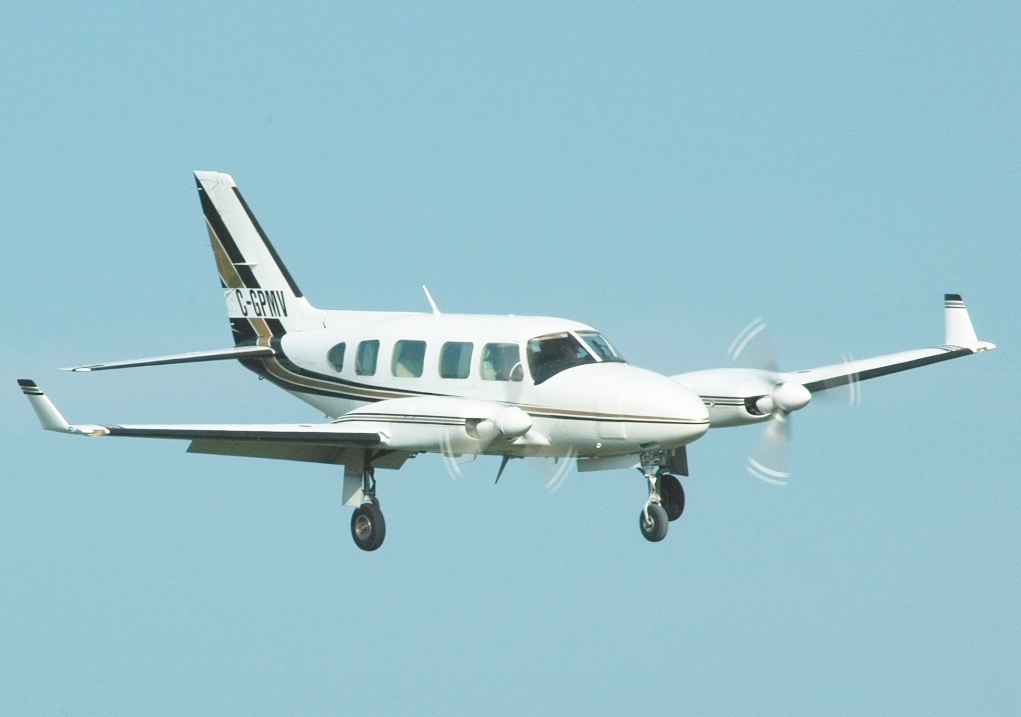
The PA-31-350 Chieftain presents itself as an elegant low-wing monoplane, with a robust metal structure for durability and easy maintenance. Its lengthened fuselage compared to the standard Navajo and larger windows improved aesthetics and provided a more comfortable and spacious interior environment.
At the heart of the Chieftain beat two Lycoming TIO-540-J2BD six-cylinder opposed, turbo-supercharged engines, capable of delivering 350 horsepower each. This considerable power, combined with the triple-propeller constant-speed propellers, ensured excellent climb performance, high cruising speed and the ability to operate effectively even from short runways or at high altitudes.
A key innovation was the introduction of a sophisticated cabin pressurization system, a luxury for aircraft of this category at the time. It allowed flights at higher altitudes, overcoming bad weather and ensuring a quiet and comfortable cabin environment, reducing fatigue.
Onboard Specifications
- ◆Cabin Pressurization System: Critical to comfort at high operating altitudes, maintaining an internal pressure equivalent to approximately 8,000 feet as the aircraft flies up to 25,000 feet.
- ◆Integrated and redundant avionics: Included dual VORs, ADFs, transponders and a reliable autopilot, supporting IFR (Instrument Flight Rules) operations with high safety.
- ◆350 HP Lycoming TIO-540-J2BD turbo-supercharged engines: These engines provided an extraordinary combination of power and reliability, crucial for long hauls and optimal performance in variable conditions.
Operational Career & Operators
The Piper PA-31-350 Chieftain has quickly established itself as a versatile workhorse. Its ability to carry up to nine passengers or significant cargo made it ideal for small scheduled airlines and air taxi services, connecting smaller urban centers or remote destinations.
In addition to passenger transport, the Chieftain has found use in light cargo transport, aerial surveillance and as a platform for special missions, such as air rescue. Its reputation for reliability and relatively low operating costs have ensured a long and honored career with countless global operators.
Even today, decades later, numerous Chieftains continue to fly, testifying to the solidity of their design and construction robustness. Their constant presence at general aviation airports is a clear indication of their continued usefulness and effectiveness.
Legacy & Cultural Impact
The impact of the Piper PA-31-350 Chieftain on general aviation has been profound. It set new standards for twin-engine pistons, influencing later Piper models and the development of competing aircraft. Its combination of power, pressurized comfort and multi-role capability has made it a benchmark.
The Chieftain is a recognized icon, associated with the resourcefulness of small aviation businesses and the freedom of corporate flight. Its rugged silhouette and reliable performance have cemented its reputation as one of the most successful and beloved twin-engine aircraft Piper has ever produced.
Its legacy is manifested not only in active examples, but also in how it has shaped the expectations of the regional aviation market. The Piper PA-31-350 Chieftain remains a symbol of practical engineering and strategic vision, a true pillar of general aviation that continues to inspire.
Telemetria Specs (HUD)
Hangar Trivia & Curiosità
- 💡Il Chieftain è una versione allungata e più potente del PA-31 Navajo originale, offrendo una maggiore capacità di passeggeri e carico.
- 💡Data la sua robustezza e capacità di carico, molti Chieftain sono stati ampiamente utilizzati per operazioni di trasporto merci regionali, inclusi servizi di feeder per FedEx.
- 💡Era una scelta popolare per i servizi di aeroambulanza e il trasporto esecutivo grazie alle dimensioni della cabina, alla velocità e alla disponibilità dell'opzione di pressurizzazione.
Archivio Avvistamenti Spotter
Immagini scattate dalla community in tutto il mondo