O/10
Handley Page
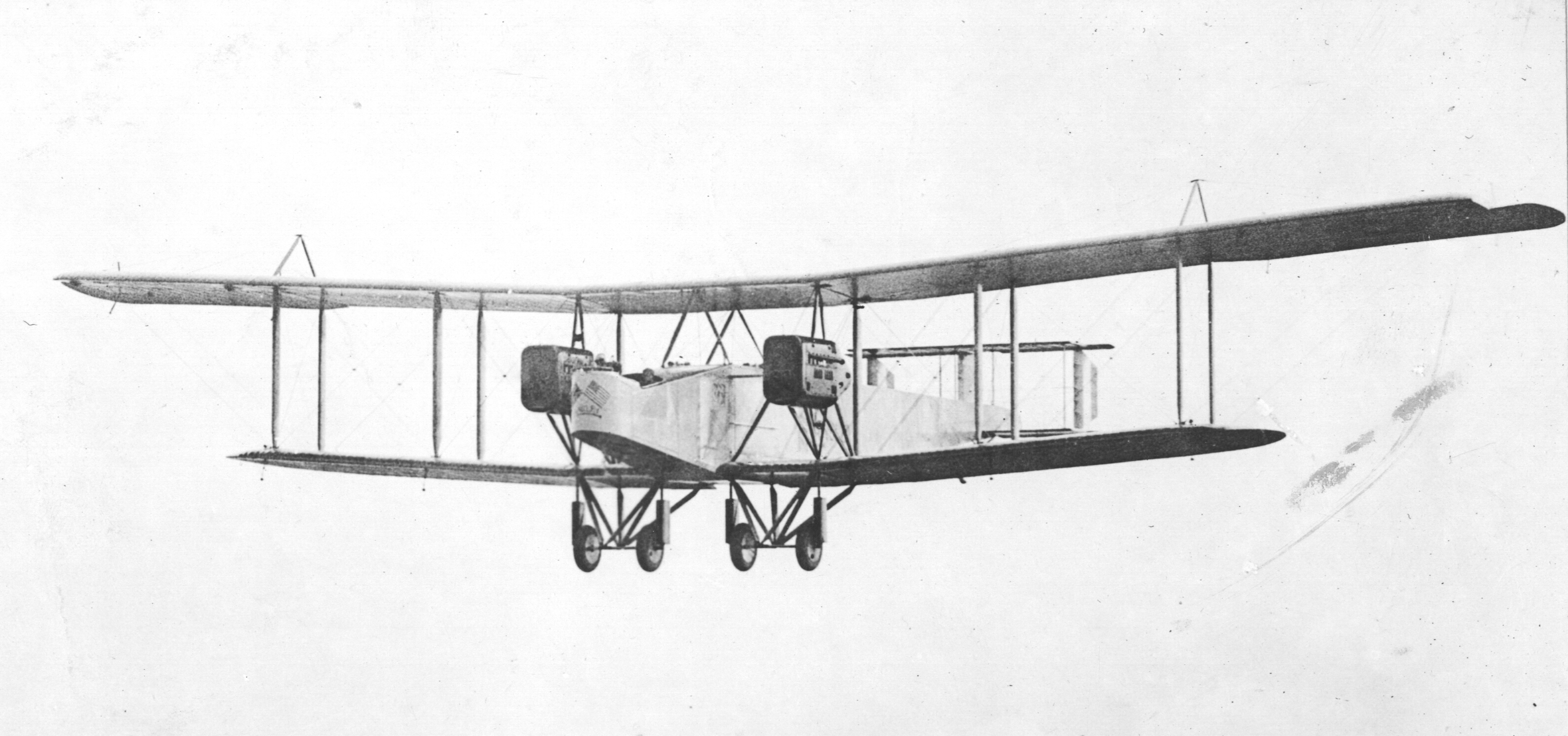
Historical Context & Origins
After the Great War, the aviation industry faced a rapid conversion: from bombers to pioneering airliners. In this fermenting scenario, Handley Page, thanks to its experience with its large O series bombers (such as the O/400), saw the opportunity to adapt these robust platforms for the nascent civil air transport.
The Handley Page O/10, with its first flight in 1919, was not a completely new project, but rather a clever evolution designed for new needs. It represented one of the first and most successful conversions of a heavy military aircraft into a versatile commercial carrier, marking an epochal transition for British aviation.
Architecture & Technological Design
The O/10 retained the impressive twin-engine biplane configuration of its military predecessors, characterized by a solid wood and canvas structure and large span wings. This structural strength, essential for bombers, proved to be an invaluable advantage in dealing with the unknowns of early commercial air routes.
At the heart of its design were two powerful Rolls-Royce Eagle VIII engines, each delivering 360 horsepower, providing not only the necessary propulsive force but also vital redundancy for long-range flight. Their reliability was crucial to instilling confidence in first-timers, skeptics, passengers and operators.
Onboard Specifications
- ◆Closed Passenger Cabin: One of the first solutions to offer comfort and protection from the elements to passengers, essential for scheduled flights.
- ◆High Load Capacity: It allowed the simultaneous transport of passengers and a significant amount of mail or goods, optimizing operating costs.
- ◆Trans-Channel Range: With a range of over 600 km, it was ideal for emerging international routes such as the famous London-Paris.
Operational Career & Operators
The Handley Page O/10 was instrumental in the opening of some of the first regular international air routes. It entered service with pioneer companies such as Handley Page Transport Ltd., operating flights between London and Paris, and later also Brussels.
These aircraft demonstrated the feasibility of commercial air transport, carrying passengers, mail and cargo across the English Channel with impressive regularity for the time. Their daily use helped establish operational standards and overcome the technical and logistical challenges of the nascent air force.
Legacy & Cultural Impact
The Handley Page O/10, although not produced in very large numbers, had a monumental impact on the perception and development of civil aviation. It was one of the first true airliners, helping to lay the foundations for the modern commercial aero industry.
Its reliability and ability to operate on international routes inspired confidence in the public and investors, demonstrating that the aircraft was no longer just an instrument of war or a toy for adventurers, but a practical and potentially profitable future means of transportation. Its legacy is visible in subsequent generations of British and global airliners.
Telemetria Specs (HUD)
Hangar Trivia & Curiosità
- 💡Known as the "Bloody Paralyser" by its crews, a testament to its imposing size and destructive potential.
- 💡Early models were among the first true heavy bombers, capable of striking targets deep behind enemy lines.
- 💡After the war, several O-type aircraft were converted for civilian use, serving as early passenger and cargo transports.
Archivio Avvistamenti Spotter
Immagini scattate dalla community in tutto il mondo