Nord 262
Nord Aviation
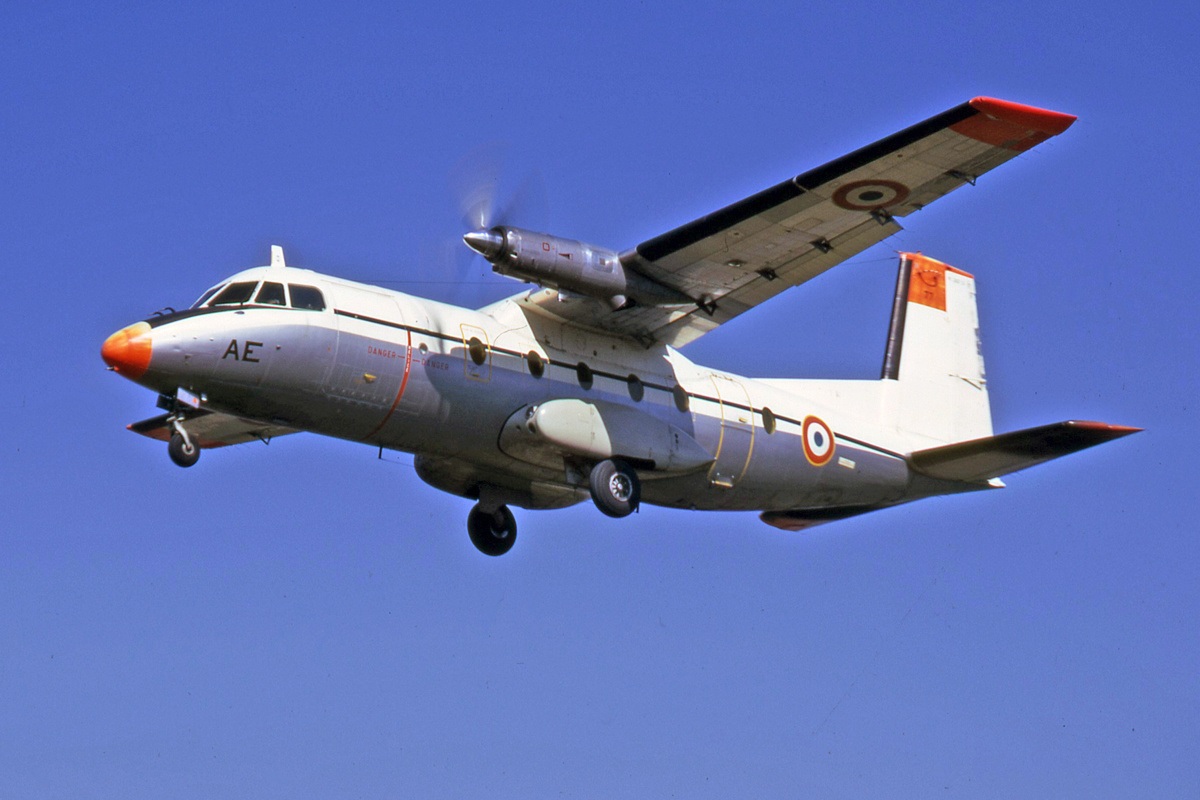
Historical Context & Origins
In the 1950s, the European civil aviation landscape required robust and economical aircraft for short-haul regional routes. France, in particular, was looking for a modern, pressurized successor to the successful but unpressurized Max Holste MH.220 Broussard.
From this need the Nord 260 was born, a pressurized evolution of the Max Holste MH.250 Super Broussard, which however did not obtain certification. The project was then reworked by Nord Aviation, giving life to the Nord Aviation Nord 262, whose first flight took place on 24 December 1962.
This twin-jet turboprop was proposed as an ideal solution for connecting smaller communities, offering significantly superior passenger comfort thanks to its pressurized cabin, a rare luxury for regional aircraft of the time.
Architecture & Technological Design
The Nord 262 stands out for its conventional but extremely functional architecture, designed for maximum efficiency in short-range operations. It features a high wing configuration, a design choice that guaranteed numerous advantages.
The high wing allowed excellent visibility for passengers, a greater distance of the propellers from the ground for safety and less risk of ingesting debris, and facilitated loading and unloading operations thanks to the lower height of the fuselage from the ground. The robust structure was optimized for frequent flight cycles and landings on less well-equipped runways.
The propulsion heart of the Nord 262 was made up of two reliable Turbomeca Bastan VI C turboprop engines, capable of delivering approximately 1085 HP each. This engine, combined with an efficient aerodynamic design, gave the aircraft notable operating economy and a good cruising speed for its category. Its capacity generally ranged between 24 and 29 passengers.
Onboard Specifications
- ◆Advanced Pressurized Cabin: A distinctive feature that significantly elevated passenger comfort over its non-pressurized predecessors and competitors, allowing for higher, smoother flights.
- ◆High-wing configuration: Provided excellent STOL (Short Take-Off and Landing) performance, facilitating operation at regional airports with short runways and providing greater safety on the ground.
- ◆Turbomeca Bastan VI C engines: Robust and proven engines, known for their reliability and ease of maintenance, crucial characteristics for an aircraft intended for intensive use.
Operational Career & Operators
The Nord 262 found use in both the civil and military sectors, demonstrating its versatility. Among the first and best-known civil operators were Air Inter in France and Lake Central Airlines in the United States, which marketed it as the Mohawk 298 following a modification to use Pratt & Whitney PT6 engines.
In the military sphere, the French Armée de l'Air and Aéronautique Navale used it extensively for light transport, liaison, training and, in some versions, also for maritime surveillance missions. Its robustness and ease of maintenance made it a precious asset.
Although it has not reached the production numbers of other giants, the Nord 262 has successfully served for several decades in various fleets, earning a reputation as a reliable "workhorse" for regional routes and utility operations.
Legacy & Cultural Impact
The Nord 262, while not as iconic an aircraft as others, has left a significant legacy in the regional transport segment. It demonstrated the effectiveness of pressurized turboprop aircraft for short-haul routes, paving the way for future developments in this area.
It is an example of French engineering prowess in the post-war period, contributing to the reputation of the country's aviation industry. Its concept, focused on reliability and economy, influenced the design of subsequent regional aircraft.
Today, few examples of the Nord 262 remain in service or are preserved in museums, testament to an era when regional air connectivity was beginning to take shape. It remains an important chapter in the history of European civil and military aviation.
Telemetria Specs (HUD)
Hangar Trivia & Curiosità
- 💡It was developed directly from the unpressurized Nord 260 Super Broussard, primarily by incorporating a new pressurized fuselage section.
- 💡The aircraft featured a distinctive high-wing configuration, which provided excellent ground clearance for its turboprop engines and propellers.
- 💡One of its more unusual military roles included service as a maritime surveillance and search-and-rescue aircraft with the French Navy.
Archivio Avvistamenti Spotter
Immagini scattate dalla community in tutto il mondo