Model A
Stinson
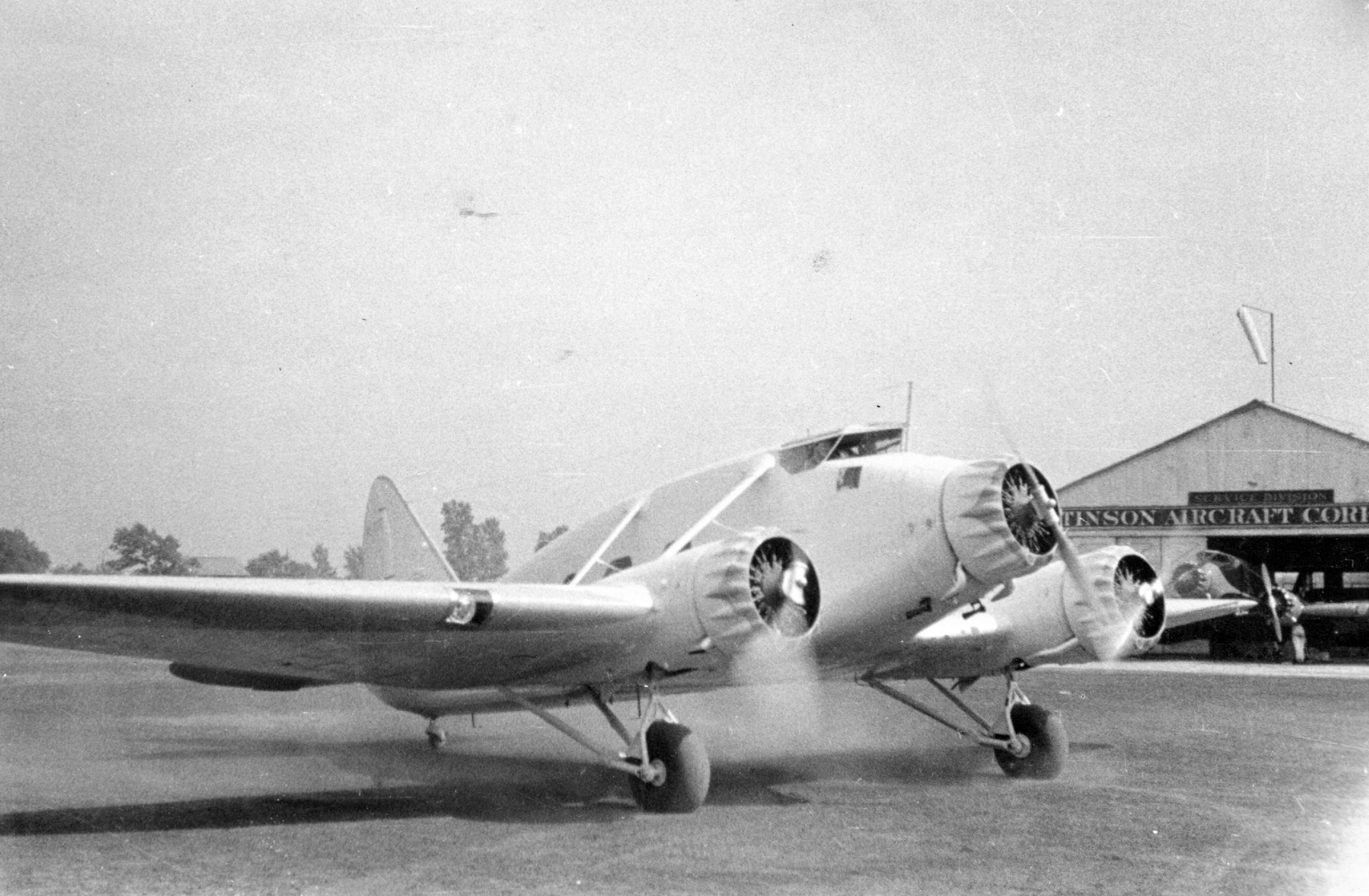
Historical Context & Origins
In the turbulent decade of the 1930s, characterized by the Great Depression and rapid technological evolution, commercial aviation was looking for innovative solutions for regional transportation. In this scenario, the Stinson Aircraft Company, already known for its reliable cabin aircraft, conceived an ambitious project: the Model A. Its first flight occurred in 1934.
The Stinson Model A was born from the need to offer airlines an efficient and safe aircraft for short and medium range routes, acting as a "feeder" for large hubs. It was one of the first American airliners to be designed specifically for this purpose, combining solid performance with modest but economically viable passenger capacity.
Architecture & Technological Design
The Stinson Model A stood out for its avant-garde architecture for its time, configuring itself as a low-wing tri-engine civil transport. This design choice aimed to ensure maximum reliability and operational safety, a crucial factor in gaining passenger trust in an era when flying was still perceived as adventurous.
The construction was an ingenious mix of technologies. The fuselage had a welded steel tube covered in fabric structure, while the wings were made of wood and also covered. Each Stinson Model A was powered by three Lycoming R-680-5 radial engines rated at 260 horsepower each, ensuring redundant power and adequate performance even with one engine idle.
A particularly innovative and distinctive design element was the adoption of retractable landing gear. This feature, unusual for an aircraft of this size and intended use, contributed significantly to improving the aerodynamics of the aircraft, increasing its cruising speed and overall efficiency.
Onboard Specifications
- ◆Tri-engine configuration: Guarantee of reliability and safety, crucial for public acceptance and for operations on less well-equipped runways.
- ◆Retractable landing gear: Aerodynamic innovation that significantly improved in-flight performance compared to competitors with fixed landing gear.
- ◆Spacious, windowed cabin: Designed to accommodate 8 passengers (or 6 with additional cargo space), it offered unexpected comfort and excellent visibility, enhancing the travel experience.
Operational Career & Operators
The Stinson Model A found use with some of the major American airlines of the time, including American Airlines, Delta Air Lines, and Northwest Airlines. These carriers used it mainly for "feeder routes", connecting smaller cities to their main hubs, proving the validity of the regional transport concept.
Despite its intrinsic qualities, the Model A's production was relatively limited, with approximately 30 examples built. The fierce competition from larger and faster models such as the Douglas DC-2 and DC-3, although intended for different routes, affected their large-scale commercial success. However, the Model A earned a reputation as a rugged and reliable aircraft.
Legacy & Cultural Impact
The Stinson Model A, while not a resounding sales success, left an indelible mark on civil aviation. He was a pioneer in the concept of regional air transportation, demonstrating the economic and operational viability of serving smaller communities, a model that would inform the industry's future development.
Its three-engine architecture and retractable landing gear positioned the Model A as a trendsetter, influencing subsequent generations of aircraft designed for efficiency and safety. It's a testament to Stinson's engineering vision, which sought to balance technological innovation and commercial practicality. His legacy lies in helping to define the future of flight, making aviation accessible to a broader segment of the population.
Telemetria Specs (HUD)
Hangar Trivia & Curiosità
- 💡It was a tri-motor aircraft, a popular configuration in the early 1930s for enhanced safety and redundancy over single-engine designs.
- 💡The Model A was primarily used by American Airlines and Eastern Air Lines for short-range routes, linking smaller cities.
- 💡Its robust design, including fixed landing gear and powerful engines, allowed it to operate from less-developed airfields common at the time.
Archivio Avvistamenti Spotter
Immagini scattate dalla community in tutto il mondo