Model 9 Orion
Lockheed
Historical Context & Origins
The Lockheed Model 9 Orion entered the history of civil aviation in the early 1930s as the last aircraft with an all-wood structure designed and built by Lockheed. Developed by designer Richard A. von Hake, the Orion made its first flight in 1931 during a period of rapid technological transition.
The aircraft represented the perfect synthesis of Lockheed's previous commercial successes: it combined the monocoque fuselage of the Vega, the low wing and retractable landing gear introduced on the Altair, and the aerodynamic NACA cowling tested on the Air Express.
Thanks to its exceptional speed, the aircraft achieved immediate success with early US and European passenger airlines seeking to accelerate travel times.
Architecture & Technological Design
Technologically, the Lockheed Orion holds a fundamental record: it was the first commercial airliner in history to feature retractable landing gear. The hydraulically operated system allowed the wheels to retract into the wings, drastically reducing aerodynamic drag.
The aircraft's structure made extensive use of molded plywood for the fuselage and wood for the cantilever wing. Propulsion was provided by a Pratt & Whitney R-1340 Wasp radial engine producing 450 horsepower, enclosed in a low-drag NACA cowling.
The fully enclosed and soundproofed passenger cabin offered a high level of comfort for its time, accommodating 5 to 6 passengers in addition to a single pilot in a separate cockpit.
On-Board Specifications
- ◆Hydraulically retractable landing gear, a technological milestone for commercial aviation.
- ◆Pratt & Whitney Wasp engine of 450 hp enclosed in an aerodynamic NACA cowling.
- ◆Enclosed and soundproofed cabin for passenger thermal and acoustic comfort.
Operational Career & Airlines
Upon its introduction in 1931, the Lockheed Orion was so fast that it outperformed even contemporary US Army military fighters. It was used by pioneering carriers such as Northwest Airlines, Bowen Air Lines, and Varney Speed Lines.
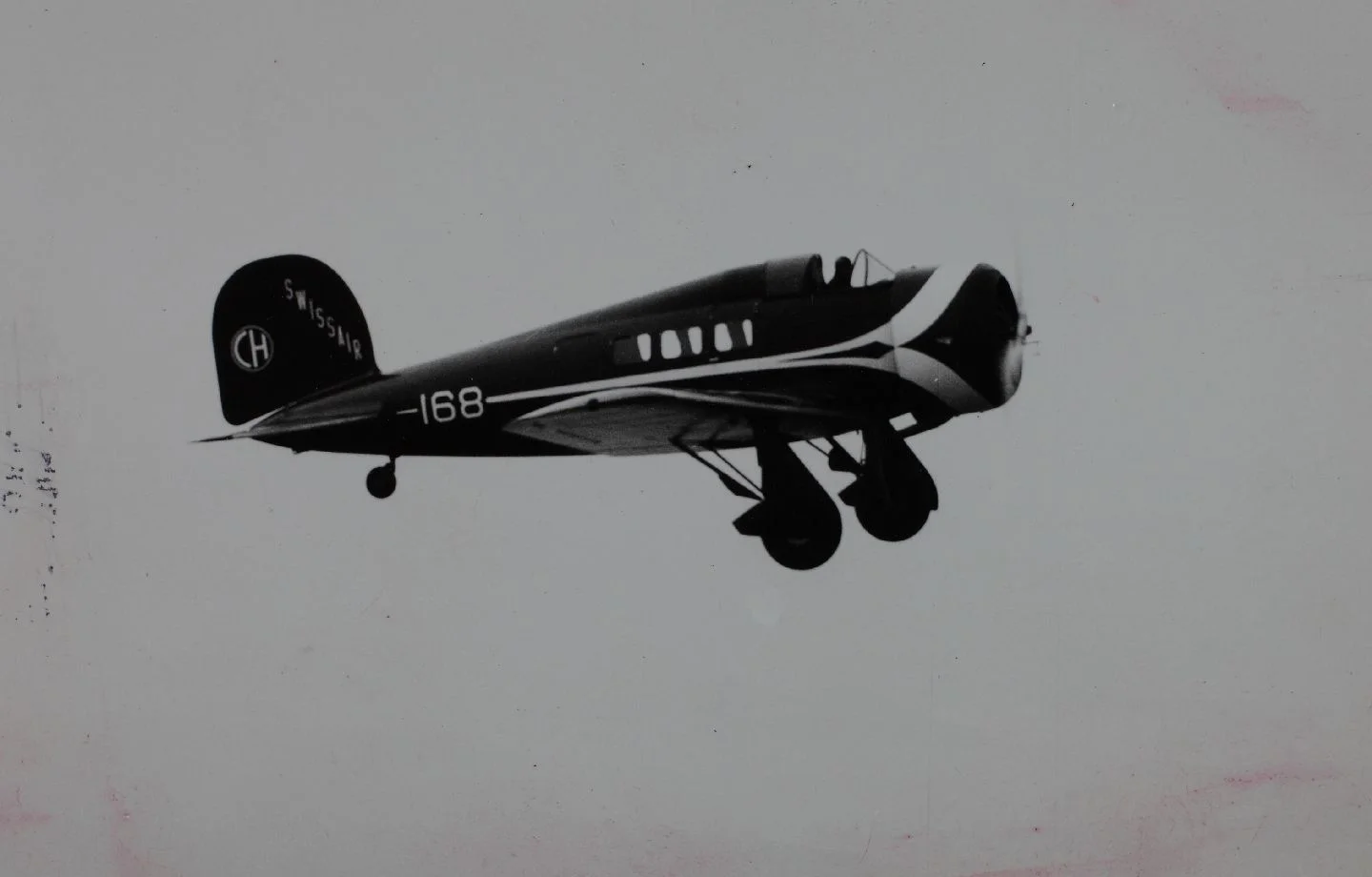
In Europe, the Orion achieved fame with Swissair, which purchased several aircraft to launch the first express scheduled services between Zurich, Munich, and Vienna, halving flight times compared to competitors.
Some examples saw military action during the Spanish Civil War. A famous modified floatplane Orion was unfortunately involved in the tragic 1935 crash in Alaska that killed pilot Wiley Post and famous humorist Will Rogers.
Legacy & Cultural Impact
The Lockheed Orion marked both the pinnacle and the end of the wooden airliner era. Despite its unmatched aerodynamic efficiency, the advent of all-metal airliners like the Douglas DC-2 rendered wooden construction obsolete.
Today, only one complete original example of the Lockheed Orion survives, restored and preserved as a silent witness to an era when speed and streamlined design began to dominate the skies.
Telemetry Specs (HUD)
Hangar Trivia & Facts
- 💡Completed its maiden flight in 1931 before entering active service.
- 💡Designed specifically as a Aereo di linea monomotore leggero to meet the requirements of contemporary airlines.
- 💡Features a configuration with 1 × Pratt & Whitney R-1340 Wasp ensuring excellent high-altitude flight performance.
Archivio Avvistamenti Spotter
Immagini scattate dalla community in tutto il mondo