Model 8 Sirius
Lockheed
Historical Context & Origins
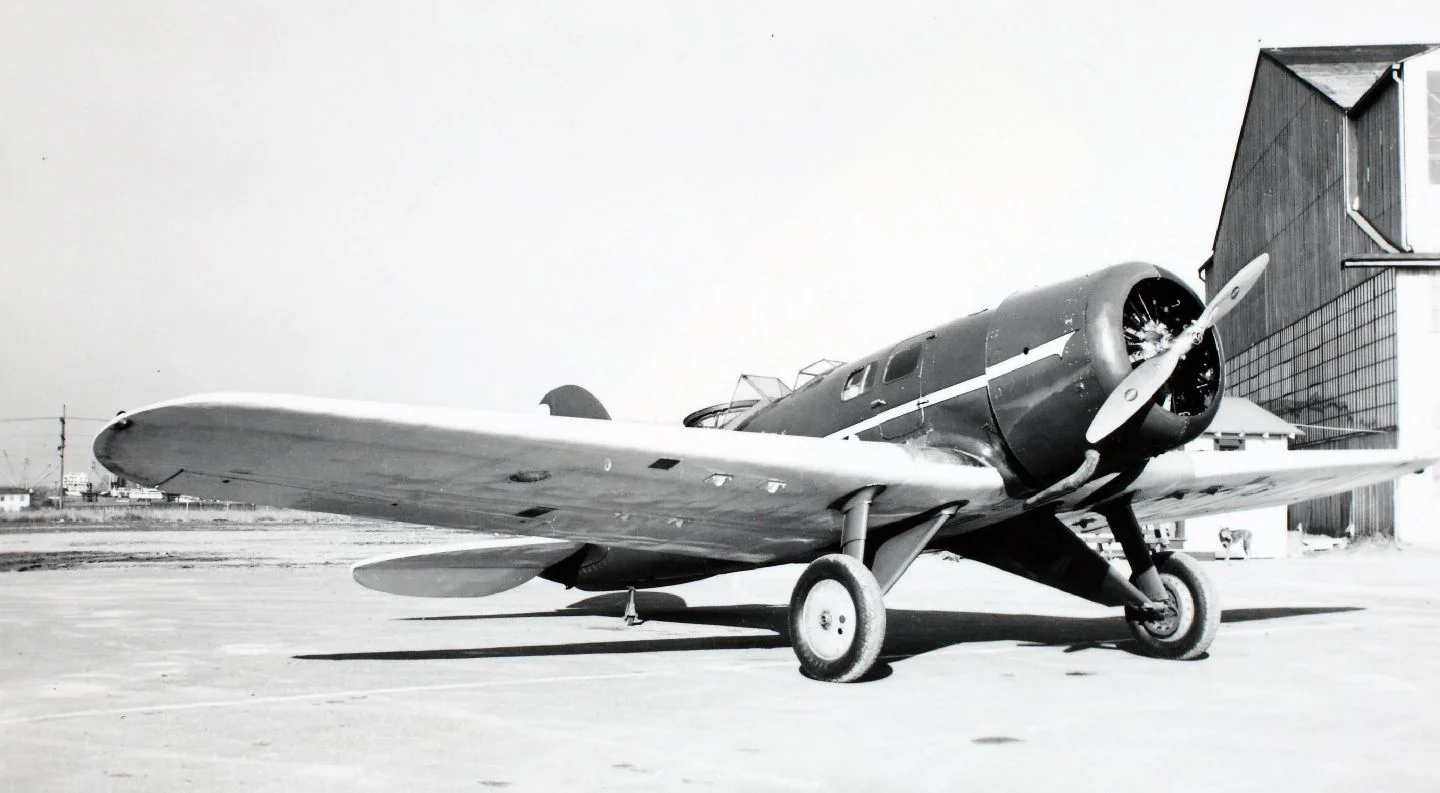
The Lockheed Model 8 Sirius was developed in the late 1920s at the specific request of famed aviator Charles Lindbergh, who sought a high-performance aircraft to conduct long-range survey flights and chart new commercial routes for Pan American Airways. Designed by legendary engineers Gerard Vultee and Jack Northrop, the aircraft made its first flight in 1929.
Lockheed responded to Lindbergh's requirements by combining the proven monocoque wooden fuselage of the famous Vega with a brand-new low cantilever wing. A total of only 15 aircraft were built, but the model quickly became a pioneering icon of global exploration flights.
Lindbergh's personal aircraft, registered as NR-211, was fitted with floats and named Tingmissartoq (meaning "one who flies like a big bird" in the Inuit language) during a survey expedition in Greenland.
Architecture & Technological Design
From an engineering standpoint, the Lockheed Sirius stood out for its clean aerodynamics and robust molded plywood construction. The cockpit originally accommodated two people in tandem in an open configuration, which was later modified with a protective sliding canopy.
The aircraft was powered by a powerful Wright Cyclone radial engine producing over 700 horsepower, offering exceptional speed and heavy-lift performance. In the floatplane configuration, the large metal floats provided excellent hydrodynamic stability.
The plane implemented state-of-the-art navigation systems for its era, including radio direction finders and precision compasses, which were essential for crossings over uncharted territories lacking ground support.
On-Board Specifications
- ◆Wright Cyclone radial engine producing 710 hp for outstanding thrust under full load.
- ◆Molded wooden monocoque fuselage providing extraordinary lightness combined with structural strength.
- ◆Optional floatplane configuration with large metal floats for oceanic takeoff and landings.
Operational Career & Airlines
The operational history of the Lockheed Sirius is inextricably linked to the flights of Charles Lindbergh and his wife, Anne Morrow Lindbergh. Between 1931 and 1933, the couple used the aircraft to map new commercial routes from America to East Asia via Alaska, and later across the North and South Atlantic.
Beyond the Lindberghs, other aviators used the Sirius to establish coast-to-coast speed records across the United States. An aircraft named *Justice for Hungary* completed a historic non-stop transatlantic flight in 1931.
Lindbergh's aircraft, the *Tingmissartoq*, was donated in 1933 to the American Museum of Natural History and later transferred to the Smithsonian National Air and Space Museum in Washington, D.C., where it remains on display today.
Legacy & Cultural Impact
The Lockheed Sirius stands as one of the symbols of the golden age of pioneering aviation. Through its historic achievements, it proved the feasibility of long-range transoceanic commercial routes that would connect the globe in the decades to follow.
Its elegant low-wing silhouette inspired subsequent military fighters and fast mail planes of the 1930s. It is celebrated today in both museums and literature as a landmark achievement of daring spirit and classic aviation engineering.
Telemetry Specs (HUD)
Hangar Trivia & Facts
- 💡Completed its maiden flight in 1929 before entering active service.
- 💡Designed specifically as a Aereo da trasporto leggero / da esplorazione to meet the requirements of contemporary airlines.
- 💡Features a configuration with 1 × Wright R-1820 Cyclone ensuring excellent high-altitude flight performance.
Archivio Avvistamenti Spotter
Immagini scattate dalla community in tutto il mondo