Model 6000
Travel Air
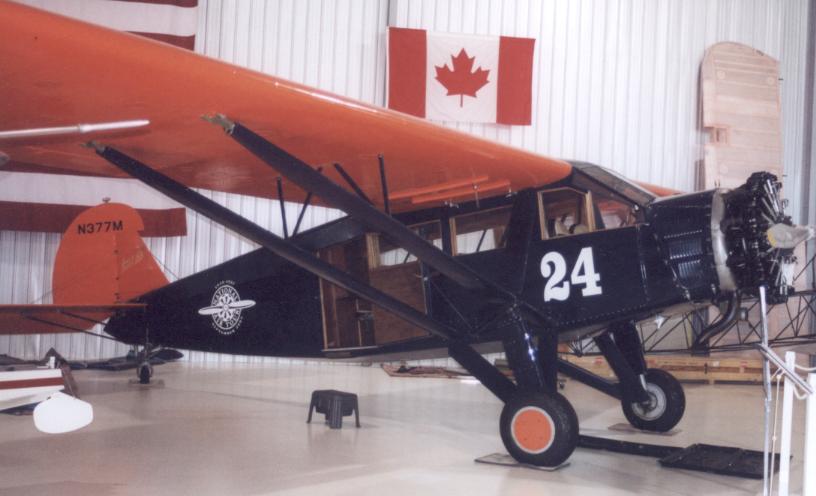
Historical Context & Origins
The aeronautical epic of the 1920s was a period of incredible excitement and innovation, spurred in large part by growing public confidence in flight following legendary feats such as Lindbergh's Atlantic flight. In this vibrant environment, the Travel Air Manufacturing Company of Wichita, Kansas, emerged as a key manufacturer of reliable, high-performance aircraft for both sporting and commercial purposes.
The Travel Air Model 6000, with its first flight in 1928, was born from the need for an aircraft capable of offering greater comfort and capacity for passenger transport. Although the company was already renowned for its racing and touring biplanes, the Model 6000 marked a significant evolution towards aviation more oriented towards public service and private business, anticipating the needs of an expanding market.
This high-wing monoplane was intended to bridge the gap between small two-seat biplanes and future, larger airliners, offering a superior travel experience. The objective was to combine the robustness and construction simplicity typical of Travel Air with unprecedented attention to passenger well-being.
Architecture & Technological Design
The Travel Air Model 6000 stood out for its solid architecture and its innovative configuration for its time. It was a high-wing monoplane, featuring a rectangular-section fuselage that housed a spacious and comfortable passenger cabin, a clear step forward from the open or semi-enclosed cockpits of its predecessors and contemporaries.
The construction included a welded steel tube fuselage, covered in fabric, which guaranteed lightness but at the same time exceptional structural resistance. The wings, of monoplane configuration with bracing struts, were typically made of wood with fabric covering, a design that balanced aerodynamic efficiency and production costs.
Generally powered by reliable radial engines such as the Wright J-5 or the more powerful Wright J-6, the Model 6000 offered stable flight performance and a reasonable cruising speed for carrying 4-5 passengers in addition to the pilot. Its robustness also made it suitable for operation in unprepared fields, significantly expanding its operational versatility.
Onboard Specifications
- ◆Robust welded steel tube construction: Critical to durability and safety in a pioneering era.
- ◆Enclosed and heated cabin: A significant luxury for passengers, which significantly increased travel comfort.
- ◆Large panoramic windows: Offered exceptional visibility, making travel a more immersive and less claustrophobic experience.
Operational Career & Operators
The Travel Air Model 6000 enjoyed a successful operational career, quickly becoming a mainstay for small regional airlines and air taxi services across the United States. Its reliability and ability to carry a considerable number of passengers in relative comfort made it a popular choice for short- and medium-haul routes.
Numerous examples were also used by wealthy businessmen or celebrities of the time as personal aircraft, underlining its status as an elite aircraft. Its versatility was further demonstrated by use in light cargo services and even bush flying missions in remote areas, thanks to its ruggedness and ability to operate from improvised runways.
The Travel Air 6000 helped define the first standards of passenger air transportation, serving as a test bed for public acceptance of air travel. Although it was not produced in massive numbers like military aircraft, its impact was profound in demonstrating the feasibility and attractiveness of civilian commercial flight.
Legacy & Cultural Impact
The legacy of the Travel Air Model 6000 is significant, having represented a crucial step in the evolution of civil air transport. It helped shape public expectations in terms of aviation comfort and safety, laying the foundation for future developments in scheduled and business aviation.
A symbol of 1920s American engineering, the 6000 embodied the optimism and drive for innovation of an era. He demonstrated that planes could be more than just flying machines for daring pilots, transforming them into practical and comfortable vehicles for transporting people and goods.
Even today, several restored examples of the Travel Air Model 6000 fly in air shows and are housed in museums, testifying to its enduring importance. It is remembered as a pioneer, an aircraft that tangibly contributed to making aviation accessible and fascinating to an ever-wider audience.
Telemetria Specs (HUD)
Hangar Trivia & Curiosità
- 💡The Model 6000 was often powered by the reliable Wright J-5 or J-6 Whirlwind radial engines, leading to its nickname 'The Whirlwind Biplane'.
- 💡Many Model 6000 aircraft found diverse uses, including conversions into air ambulances, executive transports, and even early bush planes due to their robust design.
- 💡Travel Air, the manufacturer, was co-founded by aviation legends Walter Beech, Clyde Cessna, and Lloyd Stearman, who each later established their own iconic aircraft companies.
Archivio Avvistamenti Spotter
Immagini scattate dalla community in tutto il mondo