Metroliner
Swearingen
Historical Context & Origins
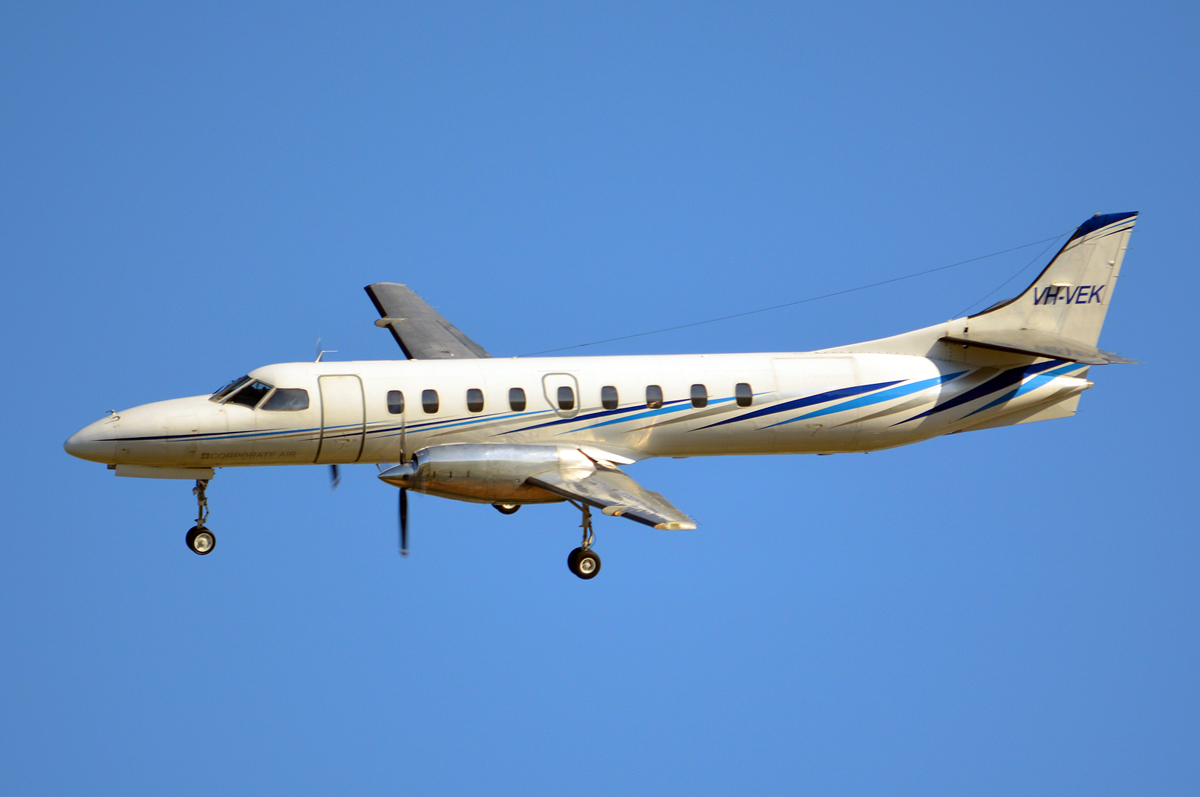
The Swearingen Metroliner, with its first flight in 1969, emerged as an innovative and robust response to the growing needs of the regional aviation and commuter markets in the United States and beyond. Designed by visionary Ed Swearingen, this aircraft was intended to bridge the gap between small corporate aircraft and larger jetliners.
Its genesis is rooted in the Swearingen Merlin turboprop business family, a proven design that already guaranteed reliability and performance. The Metroliner, however, was specifically optimized to carry 19 passengers or a significant cargo load, becoming a pioneer in the multi-role aircraft category. The goal was to create an efficient, economical and versatile aircraft for short and medium-range routes.
Architecture & Technological Design
The Metroliner stands out for its high wing architecture and an all-metal structure, characteristics that give it remarkable robustness and the ability to operate even from unprepared or shorter runways. The fuselage, thin but spacious for its category, is pressurized, a significant advantage for passenger comfort during high-altitude flights.
Under each wing, the Metroliner is equipped with two powerful Garrett AiResearch TPE331 turboprop engines, later Honeywell. These thrusters are known for their efficiency, reliability and ability to generate considerable thrust, allowing the aircraft to achieve class-competitive cruise speeds and operate in a variety of weather and environmental conditions.
Onboard Specifications
- ◆Pressurized cabin: Ensures high comfort for passengers and crew, allowing operations at higher altitudes.
- ◆Garrett TPE331 Engines: Deliver rugged performance, economy and a reputation for legendary reliability.
- ◆Robust landing gear and high wing: Allows versatile operations on short, unpaved runways, broadening its usefulness.
Operational Career & Operators
Since its introduction, the Metroliner has enjoyed an extremely prolific operational career, becoming a workhorse for countless regional airlines and cargo operators around the world. Its multi-role ability to carry passengers or cargo with quick configuration changes made it incredibly attractive.
Airlines such as Air Wisconsin, Key Airlines and Federal Express (FedEx) in its early stage, extensively used the Metroliner to expand their regional networks or express transportation operations. Its reliability and relatively low operating costs have helped solidify its presence in the skies for decades, with many examples still active today.
Legacy & Cultural Impact
The Swearingen Metroliner has left an indelible mark on aviation, serving as an essential bridge for the development of modern regional air services. Its longevity and ubiquity testify to an exceptionally successful design, capable of adapting to constantly evolving market needs.
It helped define the 19-seat segment, demonstrating the economic feasibility of connecting small communities and secondary airports. The cultural impact of the Metroliner lies in its image as a tireless worker of the skies, a plane that has democratized access to air transport for millions of people, becoming a symbol of resilience and functionality in the aeronautical landscape.
Telemetria Specs (HUD)
Hangar Trivia & Curiosità
- 💡It evolved directly from the Swearingen Merlin series of business turboprops, sharing many design elements and a similar fuselage.
- 💡The Metroliner was extensively used by military forces, notably as the C-26 Metroliner for the U.S. Air Force and Army for transport and surveillance roles.
- 💡Its distinctive long, slender fuselage and high-aspect-ratio wing contribute to its efficient regional performance but also give it a unique appearance on the tarmac.
Archivio Avvistamenti Spotter
Immagini scattate dalla community in tutto il mondo
Vettori Rilevati (Flotta Attiva)


Hahn Air
In Flotta: x8 u.

Perimeter Aviation
In Flotta: x2 u.

Ameriflight
In Flotta: x7 u.
Key Lime Air
In Flotta: x15 u.
Luxair
In Flotta: x7 u.
Horizon Air
In Flotta: x3 u.
Northern Air Cargo
In Flotta: x12 u.
Aeronaves TSM
In Flotta: x2 u.
WDL Aviation
In Flotta: x13 u.
Bin Air
In Flotta: x8 u.Vettori Rilevati (Flotta Storica / Dismessa)


European Aviation
Stato: Dismesso
Southern Airways
Stato: Dismesso

Crossair
Stato: Dismesso
Air Regional
Stato: Dismesso
PAL Airlines
Stato: Dismesso
Naske Air
Stato: Dismesso
Abacus Air
Stato: Dismesso
HADAG Air
Stato: Dismesso
Hössl & Winkler
Stato: Dismesso
RFG – Regionalflug
Stato: Dismesso
Delta Air Lines
Stato: Dismesso
Ratioflug Luftfahrtunternehmen
Stato: Dismesso
Dauair
Stato: Dismesso
Nürnberger Flugdienst
Stato: Dismesso
City-Flug
Stato: Dismesso

Holiday Airlines
Stato: Dismesso
Luftfahrtgesellschaft Walter
Stato: Dismesso