MD-90
McDonnell Douglas
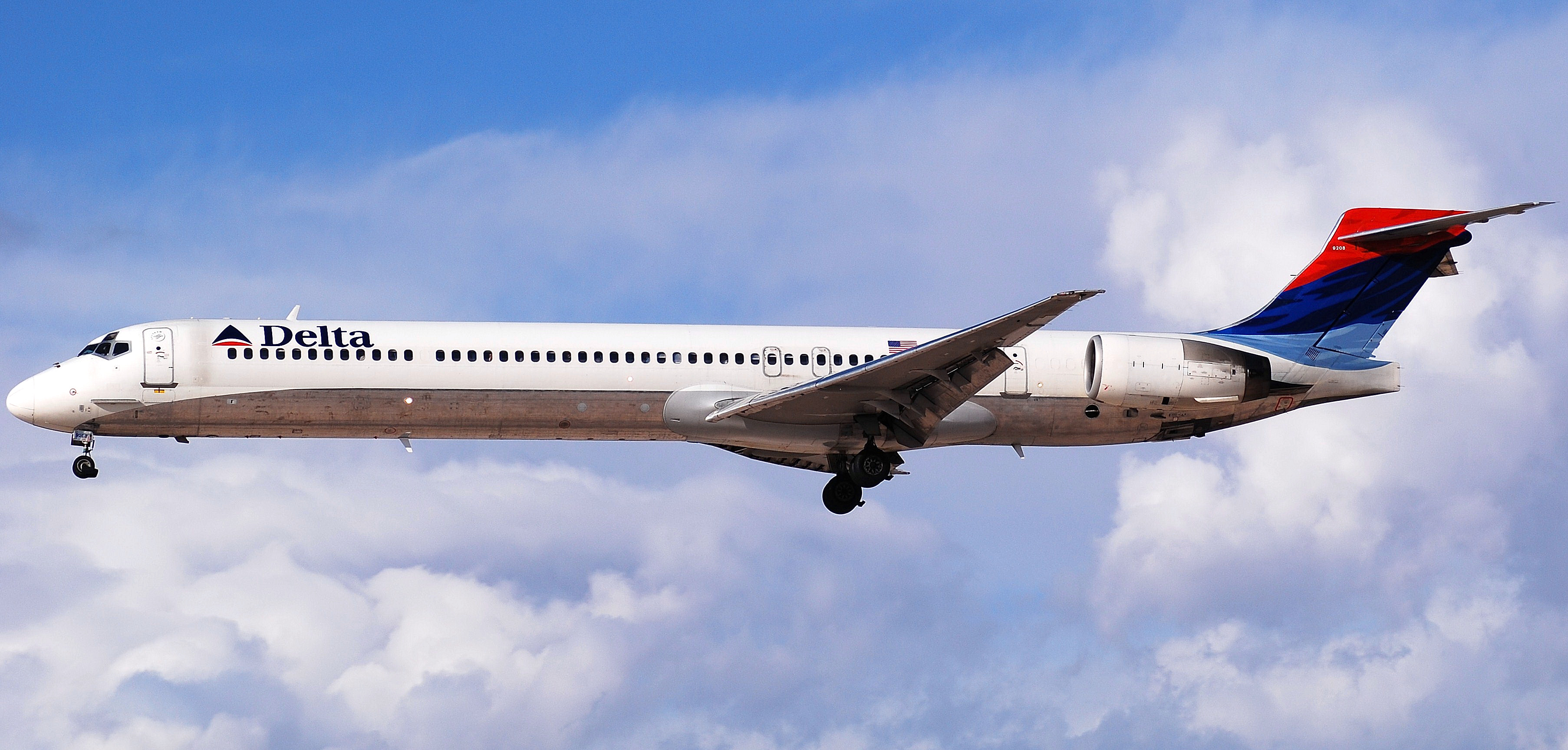
Historical Context & Origins
In the late 1980s, the aviation industry was in turmoil, driven by the growing need for quieter, more efficient and environmentally friendly aircraft. In this scenario, McDonnell Douglas, thanks to the success of its long-lived MD-80 series (in turn derived from the legendary DC-9), understood the need for a radical evolution to remain competitive.
The McDonnell Douglas MD-90 was born as a direct response to these challenges. Not a simple variant, but a profound renovation that aimed to overcome the noise and fuel consumption limits of the Pratt & Whitney JT8D turbofan engines of the MD-80 series. The goal was to create a short-to-medium range airliner that combined proven reliability with cutting-edge technologies.
The project took shape with unwavering determination, culminating in first flight on February 22, 1993, a historic moment that marked the introduction of a new generation within the DC-9/MD-80 family, propelling McDonnell Douglas into the new millennium with a bold and innovative proposition.
Architecture & Technological Design
The heart of the MD-90's innovation lay in its revolutionary engine choice: the adoption of the International Aero Engines (IAE) V2500 turbofans. These high-bypass-ratio engines represented a significant technological leap, providing a dramatic reduction in noise emissions and far superior fuel efficiency compared to their predecessors, transforming the MD-90 into a significantly "greener" aircraft.
Despite its propulsive modernity, the MD-90 maintained a marked structural continuity with its lineage. The fuselage, although lengthened to accommodate more passengers and optimize operating costs, retained the proven cross-section of the DC-9/MD-80, ensuring robustness and familiarity. The cockpit, however, underwent a major modernization, adopting an advanced digital glass cockpit which improved the ergonomics and situational awareness of the pilots.
Onboard Specifications
- ◆IAE V2500-D5 engines: Guarantee of efficiency, low emissions and reduced noise pollution.
- ◆Updated Digital Avionics: Liquid crystal screens for intuitive and complete flight management.
- ◆Elongated Fuselage: Increased passenger carrying capacity, offering greater flexibility to carriers.
Operational Career & Operators
The MD-90 entered commercial service in 1995, with Delta Air Lines establishing itself as the world's leading operator of this model. Other leading carriers, such as Japan Airlines (JAL) and Saudi Arabian Airlines, recognized its qualities, particularly appreciating its quiet cabin and operational reliability, which helped improve the travel experience of passengers.
Despite its excellent technical qualities, the MD-90 faced stiff market competition. The simultaneous rise of fierce rivals such as the Boeing 737 Next Generation and the Airbus A320 significantly limited its market shares and production volumes, which stood at a relatively modest number of 116 examples built.
Boeing's acquisition of McDonnell Douglas in 1997 effectively marked the beginning of the end for the MD-90 line. With Boeing's priority turned to its own products, production of the MD-90 finally ceased in 2000, making it one of the last aircraft to be entirely designed and marketed under the auspices of the historic McDonnell Douglas.
Legacy & Cultural Impact
The MD-90 represents a significant bridge in the history of commercial aviation, embodying McDonnell Douglas' attempt to marry proven design with future environmental needs. Although its operational career was relatively short in terms of production numbers, its pioneering role in re-powering an existing platform to achieve ecological benefits is undeniable and influential.
This aircraft concretely demonstrated the feasibility of an evolutionary approach that prioritized sustainability, anticipating by decades the current emphasis on fuel efficiency and noise reduction. It left an indelible mark, influencing subsequent generations of aircraft and airline development strategies.
The MD-90 remains a symbol of McDonnell Douglas' engineering tenacity and one of the last glorious chapters of its independence. Its elegance, combined with its vocation for innovation, makes it an object of study and admiration for aeronautics enthusiasts, bearing witness to an era of great changes and challenges for the aerospace industry.
Telemetria Specs (HUD)
Hangar Trivia & Curiosità
- 💡The MD-90 was the first McDonnell Douglas derivative of the DC-9 to feature the advanced IAE V2500 turbofan engines, replacing the older Pratt & Whitney JT8D series.
- 💡It was equipped with a modern 'glass cockpit' system, a significant upgrade from the analog instrumentation found in earlier MD-80 variants, reducing pilot workload.
- 💡Production of the MD-90 ceased after only 116 units were built, largely due to the merger of McDonnell Douglas with Boeing in 1997, which led to the prioritization of Boeing's own aircraft programs.
Archivio Avvistamenti Spotter
Immagini scattate dalla community in tutto il mondo