MD-83
McDonnell Douglas
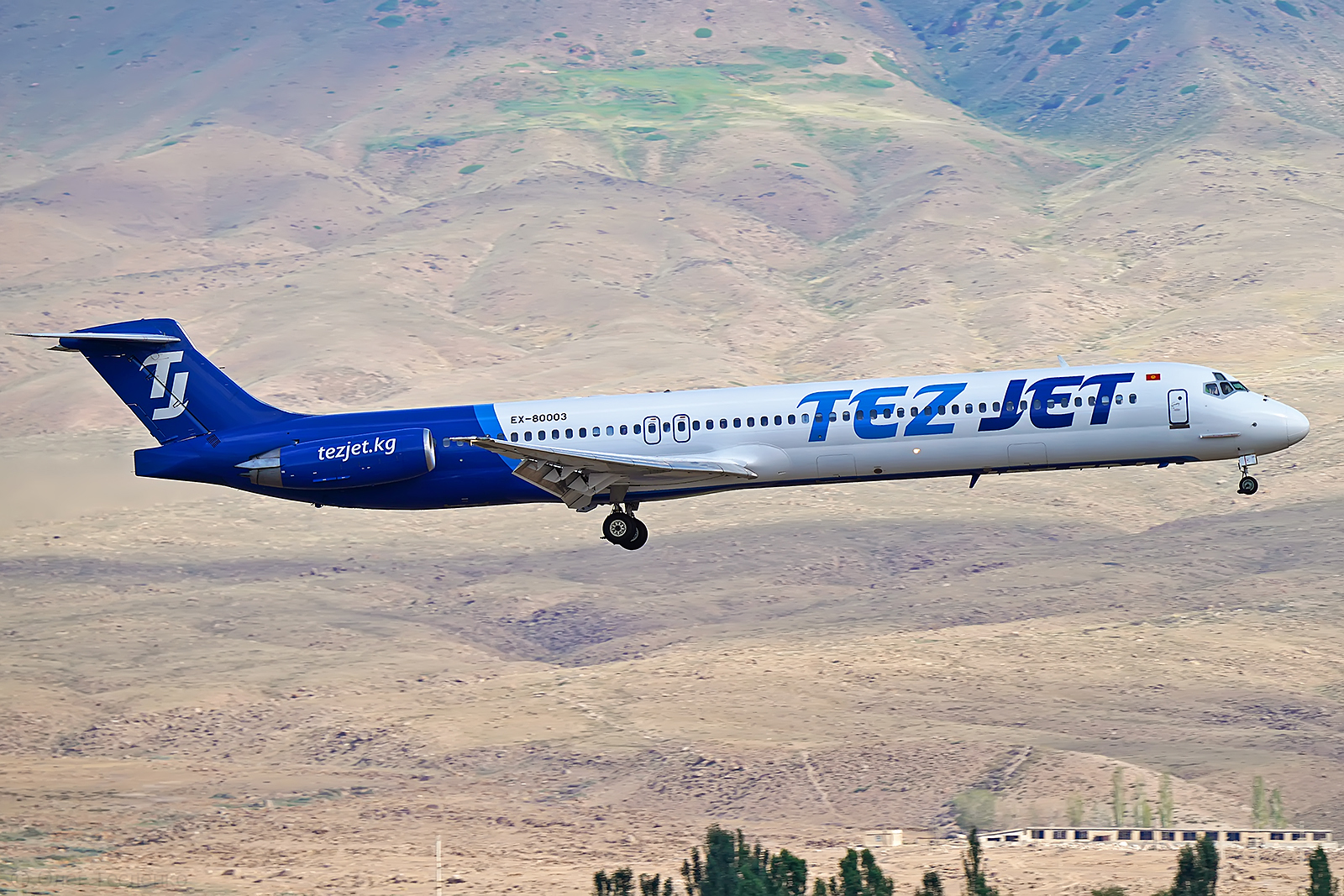
Historical Context & Origins
The McDonnell Douglas MD-83 represents a crucial evolution of the famous MD-80 series, which in turn was derived from the legendary DC-9. Born in a period of intense innovation and growing demand for efficiency in the airline industry, the MD-80 aimed to offer greater capacity, comfort and significant improvements in performance over its predecessor, while maintaining established reliability.
The MD-83 stood out within the MD-80 family as the long-range variant, designed to meet the needs of airlines that needed an aircraft capable of covering longer distances with a high payload. Its first flight occurred in 1984, marking the introduction of a highly competitive aircraft for medium to long-haul routes.
This version cemented McDonnell Douglas's reputation as a supplier of rugged, high-performance aircraft, positioning it as a key pillar of global airline operations in an era of booming and deregulated aviation. The MD-83 inherited the T-tail configuration and tail-mounted engines typical of the DC-9 design, but with substantial upgrades.
Architecture & Technological Design
The MD-83 design was based on refined aerodynamics and solid engineering, hallmarks of the MD-80 family. Its structure featured a longer fuselage compared to the original DC-9 models, increasing passenger capacity and cargo area. Placing the Pratt & Whitney JT8D-200 engines in the rear of the fuselage contributed to a quieter cabin and clean wing design.
To give the MD-83 its distinctive long-range capability, McDonnell Douglas implemented several key modifications. The most significant aspect was the increase in fuel tank capacity, including auxiliary tanks in the center section, and the introduction of strengthened landing gear to handle the extra take-off weight.
The MD-83's avionics were cutting-edge for its time, with a redesigned cockpit incorporating digital elements, although it retained a "pointers" interface in several versions. This balance between proven technologies and innovations offered operators proven reliability and greater efficiency in flight operations.
Onboard Specifications
- ◆Pratt & Whitney JT8D-219 engines: modernized, more powerful and fuel-efficient versions of the famous turbofan, optimized for efficiency and noise reduction.
- ◆Increased Fuel Capacity: Additional auxiliary tanks that significantly extended the aircraft's range, making it ideal for transcontinental or long-distance routes.
- ◆Reinforced Undercarriage Structure: to support the increased take-off weight (MTOW) due to the increase in fuel and payload, ensuring operational safety and robustness.
Operational Career & Operators
The MD-83 quickly established itself as a true workhorse for numerous airlines around the world. Its combination of capacity, efficiency and reliability made it particularly popular for long-haul domestic and regional routes. Carriers like American Airlines, Delta Air Lines and Alaska Airlines made it a mainstay of their fleets.
In particular, Alaska Airlines extensively exploited the MD-83's long-range capabilities, operating flights between Alaska and Hawaii, demonstrating the aircraft's versatility and endurance under challenging operating conditions. Its reputation as a reliable and relatively economical aircraft to operate contributed to its commercial success.
Despite advancing technologies and the introduction of more modern and efficient aircraft, many MD-83s have continued to fly for decades, a testament to the robustness of their design and versatility. The progressive decommissioning began only in recent years, after having faithfully served the skies for over thirty years.
Legacy & Cultural Impact
The MD-83, and the MD-80 series in general, has left an indelible mark on the history of commercial aviation. It represented a crucial bridge between the early jet era and the advent of modern narrow-body aircraft, demonstrating how a proven design could be successfully updated to meet contemporary needs.
Its distinctive sound of the JT8D engines, although quieter than previous versions, has remained iconic for entire generations of travelers and aviation enthusiasts, evoking the flying experience of the 80s and 90s. The MD-83 helped democratize air travel, making longer, more direct routes possible at an affordable cost.
Today, the MD-83 is remembered as a symbol of robust engineering and operational reliability, an aircraft that served millions of passengers with merit and allowed countless airlines to expand their networks. His legacy lies not only in the skies he soared, but also in the influence he had on the development and evolution of regional and transcontinental air transport.
Telemetria Specs (HUD)
Hangar Trivia & Curiosità
- 💡L'MD-83 si distingueva per la sua maggiore capacità di carburante e peso lordo superiore, consentendo un'autonomia estesa fino a circa 4.600 km, rendendolo adatto per operazioni transcontinentali.
- 💡Ha ereditato la robusta e comprovata cellula del Douglas DC-9, incorporando avionica modernizzata e motori più efficienti (della serie Pratt & Whitney JT8D-200).
- 💡Nonostante l'ultima consegna sia avvenuta nel 1999, molti MD-83 sono rimasti in servizio attivo per decenni, una testimonianza della loro durabilità e dei costi operativi relativamente bassi rispetto a progetti più recenti.
Archivio Avvistamenti Spotter
Immagini scattate dalla community in tutto il mondo