MD-11
McDonnell Douglas
Historical Context & Origins
The McDonnell Douglas MD-11 emerged in an era of fervent aeronautical innovation, positioning itself as the natural successor to the legendary DC-10. In the late 1980s, with growing demand for more efficient long-range aircraft, McDonnell Douglas sought to modernize its successful tri-jet design. The goal was to offer greater autonomy, load capacity and superior operational efficiency.
This ambitious project took shape to compete directly with new proposals from Boeing and Airbus, aiming to meet the needs of airlines looking for a versatile machine for transcontinental routes. The program was officially launched in 1986 and the first flight took place on January 10, 1990, inaugurating a new era for the American manufacturer.
Architecture & Technological Design
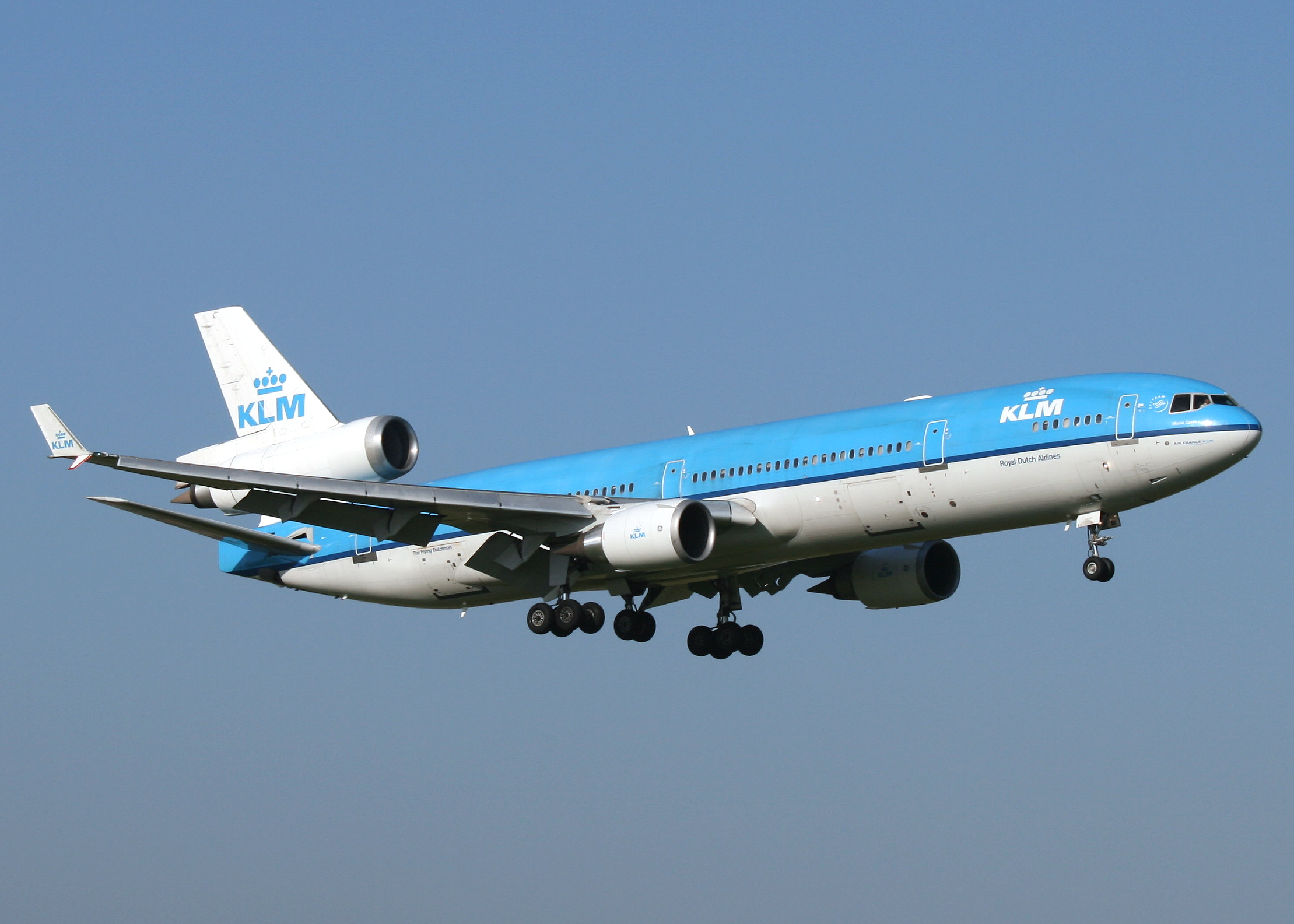
The MD-11 retained the iconic three-engine configuration, with two turbofans under the wings and one integrated into the base of the vertical fin, a distinctive choice that differentiated it from emerging twin-engine aircraft. However, it featured a stretched fuselage of 5.71 meters compared to the DC-10, offering greater passenger and cargo capacity, and an increased wingspan of 3.35 meters.
The design incorporated significant aerodynamic and avionic innovations. The new winglets in composite material, the redesigned wing with a supercritical profile and the optimized aerodynamics contributed to a reduction in fuel consumption and an increase in autonomy. These modifications made it a more performing and economical aircraft, in line with market demands.
Onboard Specifications
- ◆Advanced EFIS (Electronic Flight Instrument System) cockpit, with color screens that dramatically reduced crew workload, eliminating the need for a third pilot (flight engineer).
- ◆Digital Fly-by-Wire for trim control of the horizontal stabilizer and spoilers, improving control precision and aerodynamic efficiency.
- ◆Optimized wing structure with composite winglets, for increased lift, reduced induced drag and improved fuel efficiency by up to 3%.
Operational Career & Operators
The MD-11 entered service with Finnair in December 1990, followed by major global carriers such as Delta Air Lines, KLM Royal Dutch Airlines and Japan Airlines. It was appreciated for its remarkable autonomy and load capacity, characteristics that made it ideal for connecting distant cities without intermediate stops.
Although its sales as a passenger aircraft did not reach expected numbers, the MD-11 found a second life and resounding success in the air cargo sector. Companies such as FedEx Express, UPS Airlines and Lufthansa Cargo adopted it en masse, taking advantage of its robustness, large cargo volume and excellent autonomy for intercontinental freight routes, remaining a fundamental pillar of these fleets today.
Legacy & Cultural Impact
The MD-11 represents one of the last large tri-jets to take to the commercial skies, a symbol of McDonnell Douglas' aeronautical engineering before its merger with Boeing. Its unmistakable silhouette, with the third engine in the tail, evokes an era of design that gave way to the more popular new generation twin-engine aircraft, but maintains a strong link with the history of aviation.
Although its passenger career is almost over, its prolonged and successful existence as a cargo aircraft demonstrates the validity and adaptability of the design. The MD-11 is not just an aircraft; it is a testament to engineering resilience and a bridge between aircraft generations, keeping the fascination of tri-engine configuration jets alive in the hearts of enthusiasts.
Telemetria Specs (HUD)
Hangar Trivia & Curiosità
- 💡È stato uno degli ultimi aerei di linea trimotore prodotti per il servizio commerciale, prima che il design bimotore dominasse il mercato per voli a lungo raggio.
- 💡Nonostante fosse stato concepito come aereo passeggeri, la maggior parte degli esemplari è stata convertita per il trasporto merci, dove continua ad operare estensivamente per aziende come FedEx e UPS.
- 💡È stato il primo aereo di linea a disporre di un 'glass cockpit' completamente digitale che richiedeva solo due piloti, eliminando la necessità dell'ingegnere di volo presente nel suo predecessore, il DC-10.
Archivio Avvistamenti Spotter
Immagini scattate dalla community in tutto il mondo