MC-21-300
Irkut
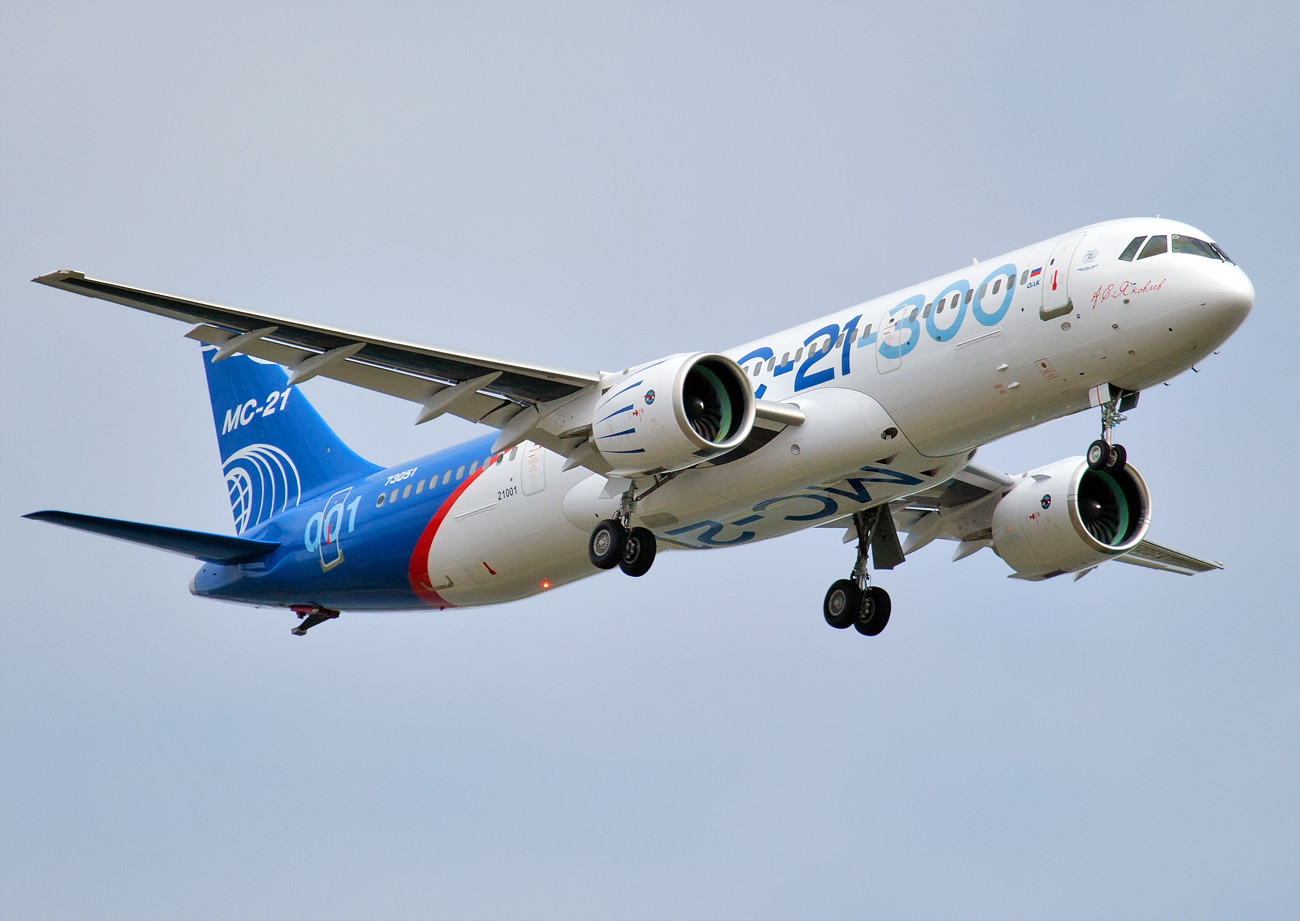
Historical Context & Origins
The Irkut MC-21 ("Magistralny Samolyot 21 Veka") program was born from the Russian ambition to reassert itself in the global civil aviation market. After the Soviet era, the industry found itself dependent on Western aircraft. The MC-21 was designed to compete directly with the Airbus A320 and Boeing 737, offering a modern, independent alternative.
The project, led by United Aircraft Corporation (UAC) and Irkut Corporation, took shape in the early 2000s. The goal was to develop a technologically advanced and competitive narrow-body airliner that would be a mainstay for Russian airlines. The first flight of the MC-21-300 prototype took place on 28 May 2017, marking a fundamental milestone.
Architecture & Technological Design
The Irkut MC-21-300 embodies a modern design philosophy, focused on aerodynamic efficiency and comfort. A revolutionary feature is the extensive use of composite materials in the wings, made with innovative Russian technologies. This optimizes the airfoil, reducing drag and increasing fuel efficiency.
Propulsion offers Pratt & Whitney PW1400G-JM (initially) and Russian Aviadvigatel PD-14 engines, both high-bypass turbofans for efficiency and low emissions. On board, a digital cockpit "glass cockpit" and the fly-by-wire system improve safety and precision. The passenger cabin is designed to offer large spaces and greater comfort.
Onboard Specifications
- ◆Advanced Composite Wings: Aerodynamically optimized for greater efficiency and weight reduction.
- ◆Pratt & Whitney PW1400G-JM / Aviadvigatel PD-14 engines: New generation high bypass engines, for reduced consumption and lower noise impact.
- ◆Digital fly-by-wire control system: Guarantees piloting precision, operational safety and maneuvering agility.
Operational Career & Operators
Since its thrilling first flight on May 28, 2017, the MC-21-300 has undertaken a rigorous testing and certification program. The path has been marked by significant challenges, including international sanctions that have hindered access to Western components, accelerating the integration of all-Russian systems such as PD-14 engines.
The first deliveries are expected for Russian airlines such as Aeroflot and Rossiya, which are essential for the renewal of the Russian civil airline fleet. The introduction into service represents a crucial test for the Russian aviation industry, demonstrating its ability to produce modern and competitive aircraft even in the face of considerable external pressure.
Legacy & Cultural Impact
The Irkut MC-21-300 is a tangible symbol of Russian technological ingenuity and resilience. It represents the desire to develop autonomous capabilities in the strategically vital civil aerospace sector. Its development history, full of challenges and innovations, makes it a point of reference for future generations of engineers.
The success of the MC-21 program, despite the adversities, could redefine the dynamics of the narrow-body aircraft market, offering a concrete alternative. His legacy will lie in demonstrating that it is possible, even in difficult circumstances, to design and build a next-generation aircraft, laying the foundation for the evolution of Russian civil aviation.
Telemetria Specs (HUD)
Hangar Trivia & Curiosità
- 💡Il MC-21 è il primo aereo commerciale russo a utilizzare su larga scala ali in materiali compositi di produzione nazionale, ottenute tramite un processo di infusione sottovuoto.
- 💡È progettato per avere la fusoliera più larga nella sua categoria di aerei a corridoio singolo, offrendo ai passeggeri più spazio per le gambe, corridoi più ampi e finestrini più grandi rispetto ai suoi concorrenti diretti.
- 💡L'aereo offre la possibilità di scegliere tra due motori: il Pratt & Whitney PW1400G di produzione americana o il motore russo Aviadvigatel PD-14, una mossa strategica per ridurre la dipendenza da un singolo fornitore.
Archivio Avvistamenti Spotter
Immagini scattate dalla community in tutto il mondo