MB.220
Bloch
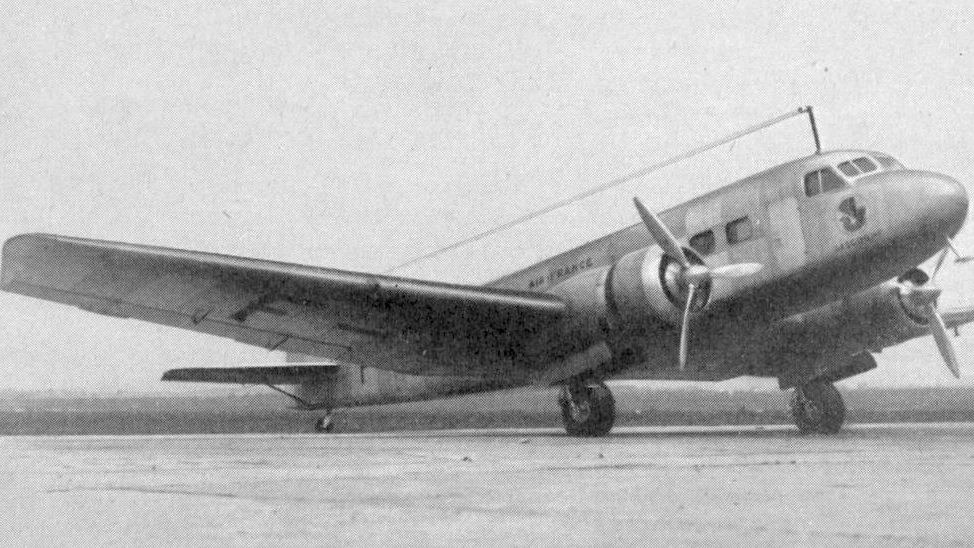
Historical Context & Origins
In the fervent aeronautical climate of the 1930s, commercial aviation was experiencing a phase of extraordinary expansion, requiring increasingly efficient and comfortable aircraft. France, eager to assert its leadership in the sector, saw Marcel Bloch (the future Dassault) emerge with a clear vision: to build robust and reliable aircraft, capable of competing with American giants such as the Douglas DC-2.
The Bloch MB.220 was born from this ambition, designed to meet the growing demand for fast and elegant air connections across Europe. Its first flight, which took place in 1936, marked a turning point for the Société des Avions Marcel Bloch, projecting it into the arena of modern, high-performance airliner manufacturers.
It positioned itself as a direct competitor to the more famous German tri-engines and US twin-engines, offering a versatile solution for medium-range routes. The MB.220 epitomized French ingenuity, aiming to combine operational reliability with a superior travel experience for passengers.
Architecture & Technological Design
The MB.220 was a twin-engine low-wing monoplane aircraft, characterized by an all-metal construction which gave it exceptional robustness for the time. Its aerodynamic design, the result of advanced studies, included retractable landing gear and an airfoil designed to optimize lift and reduce drag.
Powered by two Gnome-Rhône 14N radial engines of 950 HP each, the MB.220 could reach a cruising speed of approximately 300 km/h, with a range useful for connecting the main European capitals. This engine configuration guaranteed it not only notable performance but also a certain redundancy in terms of operational safety.
The interiors were designed to offer maximum comfort to 16 passengers, with large windows, an efficient heating system and advanced soundproofing. Marcel Bloch firmly believed that passenger well-being was as important as technical performance, a principle that guided the entire design process.
Onboard Specifications
- ◆All-metal construction: Guaranteed structural strength and ease of maintenance.
- ◆Retractable landing gear: Significantly improved aerodynamic performance, increasing speed and efficiency.
- ◆Advanced passenger comfort: Heating, soundproofing and large spaces for a superior flight experience.
Operational Career & Operators
The main operator of the Bloch MB.220 was Air France, which ordered a significant number of examples to modernize its fleet. Entering service in 1937, the MB.220 quickly became a mainstay of European routes, connecting cities such as Paris, London, Marseille, Rome and Berlin with regularity and reliability.
Before the outbreak of the Second World War, these aircraft earned an excellent reputation for their punctuality and the comfort they offered, helping to spread the image of a cutting-edge French air force. They were used intensively, becoming a symbol of progress in civil air transport.
With the invasion of France in 1940, the operational career of the MB.220 suffered a setback. Some examples were requisitioned by the Luftwaffe or continued to fly under the Vichy administration, often in secondary roles or as liaison transport aircraft, far from their glorious original use.
Legacy & Cultural Impact
The Bloch MB.220, although not reaching the iconic fame of other contemporaries, left an indelible mark on French aviation. It demonstrated the transalpine industry's ability to design and build competitive airliners, laying the foundation for Marcel Bloch/Dassault's subsequent post-war successes.
Its emphasis on ruggedness, comfort and balanced performance influenced the design philosophy of many subsequent aircraft. Although its production and service were limited by wartime events, the MB.220 represents an important chapter in the history of commercial aviation, a precursor to modern airliners.
Today, the Bloch MB.220 is remembered as an eloquent example of French aeronautical innovation and engineering, an aircraft that, in its brief period of splendor, helped set the standards for air travel in Europe and elevated the image of aviation as a vector of progress and connection.
Telemetria Specs (HUD)
Hangar Trivia & Curiosità
- 💡Fu concepito come un diretto concorrente e potenziale sostituto dei più anziani trimotori Wibault 282/283 utilizzati da Air France.
- 💡Molti MB.220 furono camuffati e utilizzati per il trasporto militare durante la Seconda Guerra Mondiale, sia dall'Aeronautica Militare francese che, in seguito, dalla Luftwaffe dopo la caduta della Francia.
- 💡Una significativa modifica post-bellica portò alla versione MB.221, che presentava nuovi motori (Gnome-Rhône 14N-16/17 anziché 14N-7/8) e interni aggiornati, estendendone la vita operativa fino ai primi anni '50.
Archivio Avvistamenti Spotter
Immagini scattate dalla community in tutto il mondo

