Martin 4-0-4
Martin
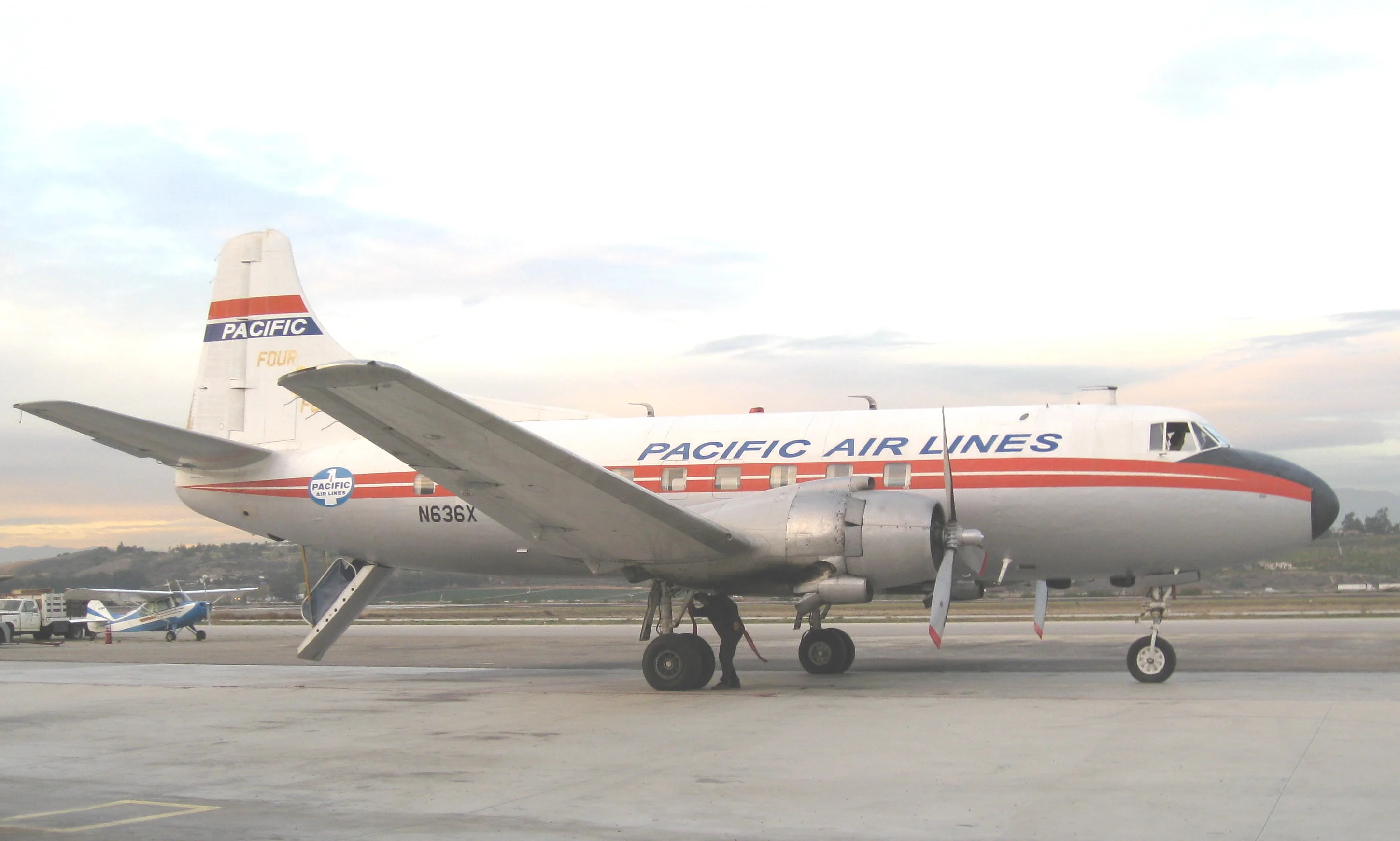
Historical Context & Origins
The Martin 4-0-4 was developed in the early 1950s as a direct and refined evolution of the earlier Martin 2-0-2. Designed by the Glenn L. Martin Company, this pressurized twin-engine aircraft was introduced to compete with the successful Convair airliners. Its first flight took place on October 21, 1950.
The aircraft featured significant structural improvements over the 2-0-2, including a lengthened fuselage, reinforced wing spars, and a fully pressurized cabin—a feature by then demanded by all major airlines to fly above weather disturbances.
A total of 103 aircraft were built, enjoying decent success and partially restoring Martin's commercial reputation in the short and medium-haul civil sector.
Architecture & Technological Design
From an aeronautical engineering perspective, the Martin 4-0-4 was an all-metal, low-wing monoplane. The primary technological innovation was the automatic cabin pressurization system, which enabled a service ceiling of 8,800 meters.
Propulsion was provided by two powerful Pratt & Whitney R-2800-CB16 Double Wasp radial engines producing 2,400 horsepower each, paired with three-bladed variable-pitch propellers featuring reverse thrust for quick stops on the runway.
A distinctive design feature was the built-in retractable passenger boarding ramp (airstair) located under the tail, allowing rapid loading and unloading of passengers without requiring external airport stairs.
On-Board Specifications
- ◆Fully pressurized passenger cabin for a comfortable high-altitude flight above weather.
- ◆Retractable rear boarding ramp (Airstair) integrated into the tail for quick ground operations.
- ◆Two Pratt & Whitney Double Wasp radial engines equipped with reversible three-bladed propellers.
Operational Career & Airlines
The Martin 4-0-4 was heavily utilized by two of the leading US carriers of the era: TWA (Trans World Airlines) and Eastern Air Lines, which used them as the backbone of their regional and domestic route networks.
The model was also purchased in small numbers by the US military, specifically by the United States Coast Guard and Navy (designated RM-1G and later VC-3A) for VIP transport and liaison roles.
Following its retirement from major carriers in the early 1960s with the onset of the jet age, many 4-0-4s continued to fly with small charter companies, sports charters, or private operators until the late 1970s.
Legacy & Cultural Impact
The Martin 4-0-4 represents the technological pinnacle of Martin's twin-engine piston commercial airliner development. Although it did not outsell Convair, it demonstrated exceptional reliability and superb cabin comfort.
Today, several examples of the Martin 4-0-4 are preserved in various aviation museums across the United States, including the *Planes of Fame Air Museum* in California and the *Mid-Atlantic Air Museum* in Pennsylvania, preserving the memory of this refined classic post-war airliner.
Telemetry Specs (HUD)
Hangar Trivia & Facts
- 💡Completed its maiden flight in 1950 before entering active service.
- 💡Designed specifically as a Aereo di linea pressurizzato a medio raggio to meet the requirements of contemporary airlines.
- 💡Features a configuration with 2 × Pratt & Whitney R-2800-CB16 Double Wasp ensuring excellent high-altitude flight performance.
Archivio Avvistamenti Spotter
Immagini scattate dalla community in tutto il mondo
Detected Operators (Historic / Retired Fleet)


Southern Airways
Status: Retired
Air South
Status: Retired
Air Florida
Status: Retired
Ozark Air Lines
Status: Retired
TWA (Trans World Airlines)
Status: Retired
Pacific Air Lines
Status: Retired
Southeast Airlines
Status: Retired
Provincetown-Boston Airlines
Status: Retired
Piedmont Airlines
Status: Retired
Mohawk Airlines
Status: Retired