Li-2
Lisunov
Historical Context & Origins
In the late 1930s, the Soviet Union urgently needed to modernize its fleet of transport aircraft to support both growing civilian and military needs. The solution was found in a historic agreement with the Douglas Aircraft Company for the licensed production of the famous DC-3.
This agreement allowed the USSR to acquire the designs and start local production. Aeronautical engineer Boris Pavlovich Lisunov was tasked with leading the ambitious adaptation project, transforming the DC-3 into an aircraft suited to Soviet standards, materials and production specifications.
The Soviet prototype, initially designated PS-84 (Putilov-Sovetskiy 84, after the production plant), made its first flight in 1939. It wasn't a simple copy: Lisunov and his team implemented hundreds of modifications to convert American imperial measurements to metrics, strengthen the structure, and replace components with Soviet equivalents.
Architecture & Technological Design
The architecture of the Lisunov Li-2 was intrinsically based on the structural and aerodynamic excellence of the Douglas DC-3, a masterpiece of transportation engineering. However, the modifications made by Lisunov's team were so pervasive that they made the Li-2 an aircraft with its own distinctive identity and unparalleled resilience for Soviet needs.
Crucial modifications included the adoption of Soviet Shvetsov ASh-62IR 9-cylinder radial engines, capable of producing 1,000 horsepower each, in place of the American Wright Cyclones. This transition required significant redesign of the engine nacelles and fuel systems, as well as general chassis strengthening.
The Li-2 was designed to be extremely robust and versatile, fundamental characteristics for operating in extreme environmental conditions and with rudimentary airport infrastructure. Its ability to adapt to multiple roles, from passenger to cargo transport, from medical aircraft to improvised bomber, was a testament to its exceptional flexibility.
Onboard Specifications
- ◆Shvetsov ASh-62IR engines: Powerful and reliable, they were the beating heart of the Li-2, ensuring solid performance in a wide range of operating conditions.
- ◆Large cargo door: A key change from the DC-3, designed to facilitate loading bulky cargo and dropping paratroopers.
- ◆Defensive armament (on some versions): The integration of machine guns, often a 7.62 mm ShKAS or a 12.7 mm UBT, transformed the Li-2 into a more resilient aircraft for conflict zones.
Operational Career & Operators
The Lisunov Li-2 became the real workhorse of the Soviet Union, especially during the Great Patriotic War. Intensely used by the VVS (Soviet Air Forces) and the civil airline Aeroflot, it played an irreplaceable role in the transport of troops, equipment, vital supplies and wounded.
Its robustness and reliability made it ideal for operations in often prohibitive conditions, including night flights and landings on improvised or snow-covered runways. Not only did it transport men and materials, but it was also modified for light night bombing, dropping paratroopers and resupplying partisan units behind enemy lines.
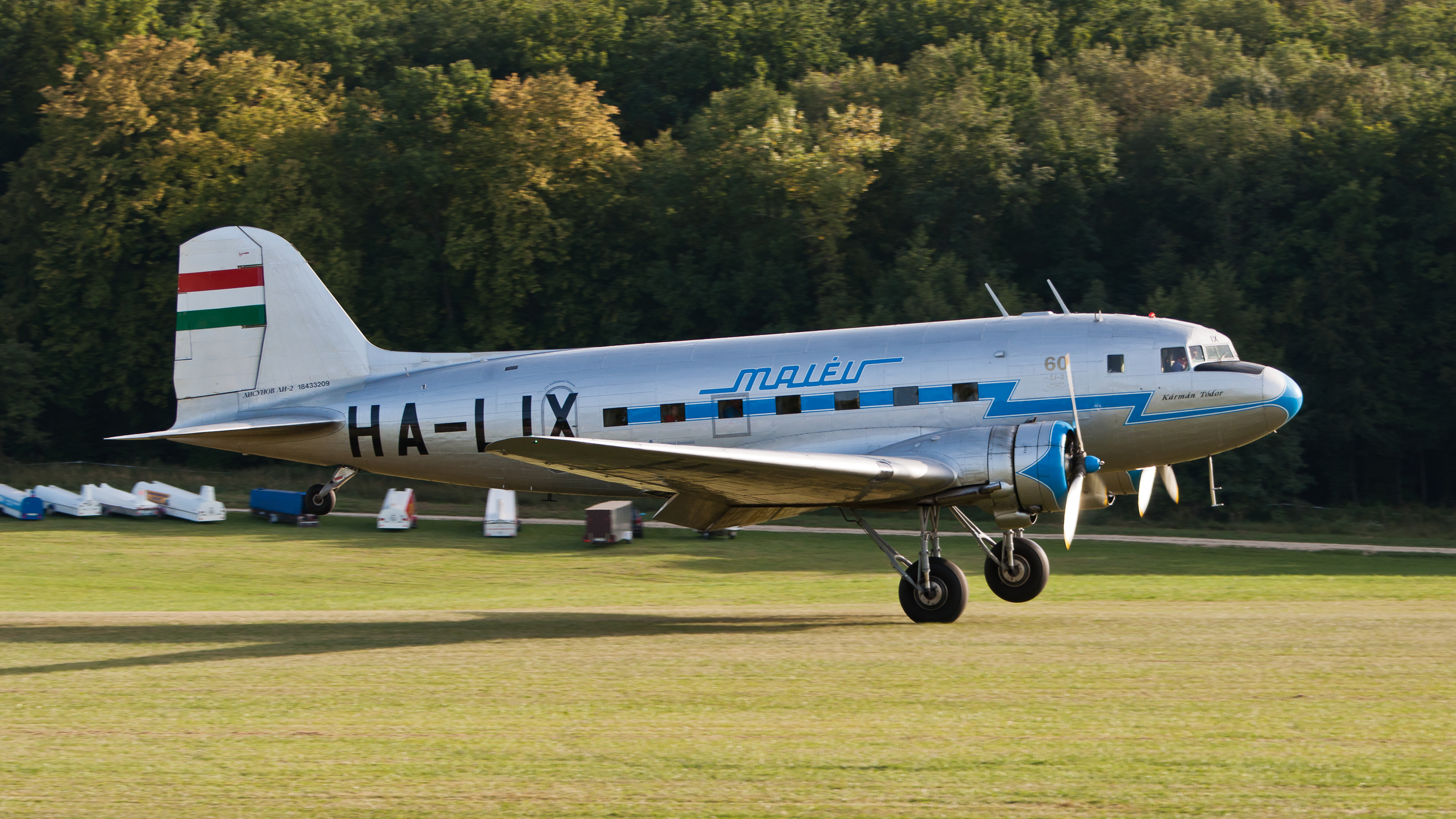
After the war, the Li-2 continued to serve for decades in the Soviet Union and numerous Eastern Bloc countries, including Poland, Czechoslovakia, Hungary, and China. Its operational longevity and versatility are legendary, testament to a solid fundamental design and extraordinary adaptability.
Legacy & Cultural Impact
With over 6,000 produced, the Lisunov Li-2 was not simply an aircraft, but a pillar of Soviet aviation and a tangible symbol of its industrial and engineering capacity. It represented the desire for technological self-determination and adaptation to one's specific requirements, distinguishing itself from its American counterpart.
His image is inextricably linked to the Soviet victory in World War II and post-war reconstruction. The Li-2 is remembered as a tireless aircraft, often operating in extreme conditions with brave crews, a true silent hero of the Soviet skies.
Even today, restored examples of the Li-2 are kept in museums and are the object of admiration, representing a fundamental page in aeronautical history. Its legacy endures as a testament to how foreign design can be transformed and assimilated to create a national icon of resilience and engineering.
Telemetria Specs (HUD)
Hangar Trivia & Curiosità
- 💡Over 6,100 units of the Li-2 were built in the USSR, incorporating metric system specifications and Soviet engines.
- 💡During World War II, Li-2s were famously adapted for various combat roles, including night bombing, troop transport, and supplying partisan forces.
- 💡The Li-2 remained in active service with many countries of the Eastern Bloc and China for decades after WWII, with some examples flying into the 1980s.
Archivio Avvistamenti Spotter
Immagini scattate dalla community in tutto il mondo