L-410 Turbolet
LET
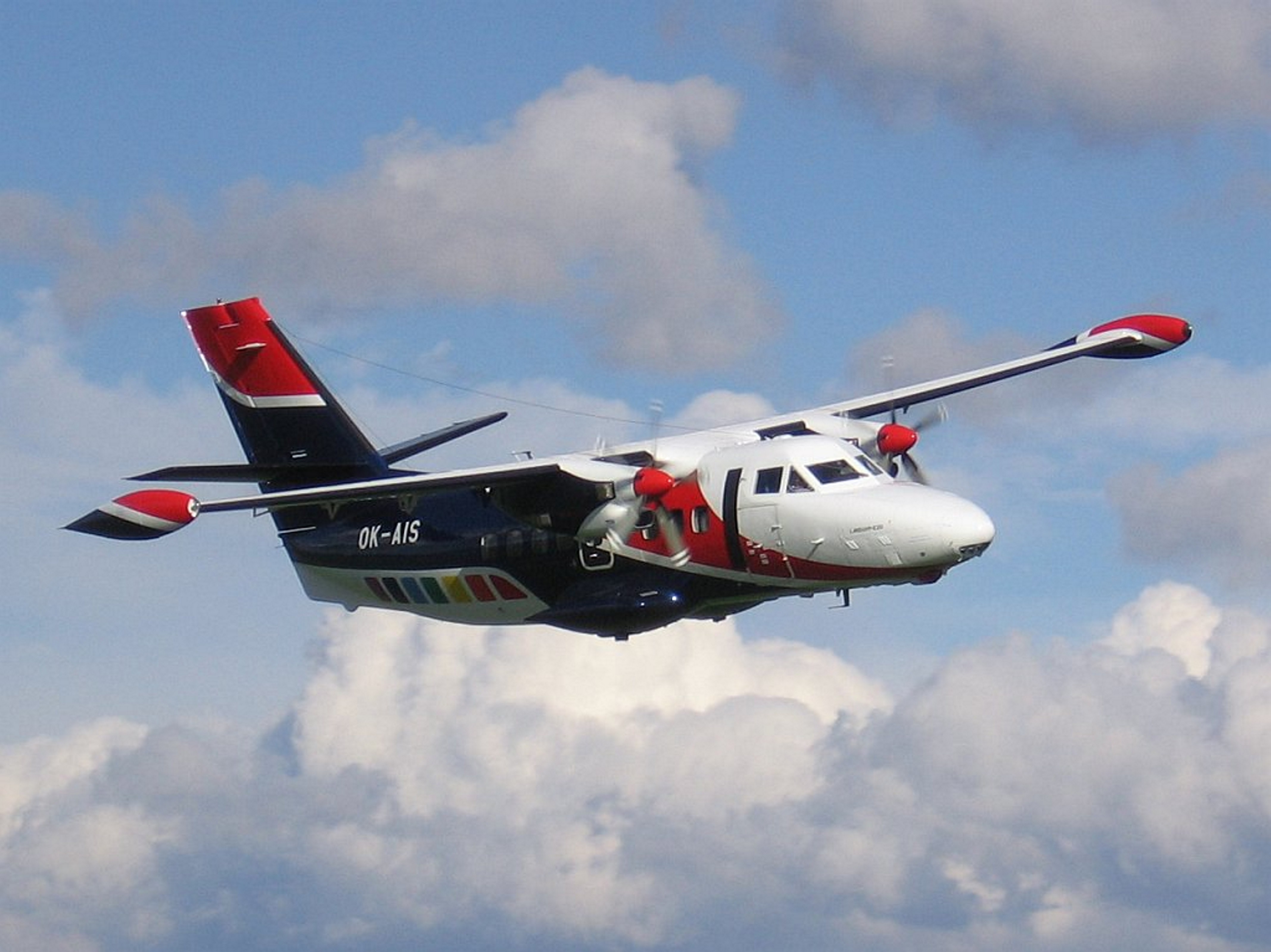
Historical Context & Origins
Initiated in the late 1960s, the LET L-410 Turbolet project responded to the Eastern Bloc countries' urgent need for a rugged and reliable regional airliner. The goal was to replace the existing fleet and effectively connect smaller airports, often without paved infrastructure, uniting urban centers and remote regions.
The Czechoslovakian consortium Let Kunovice took on the task of developing an aircraft that could operate in extreme conditions, characterized by short and unprepared runways. The request for a Short Take-Off and Landing (STOL) aircraft was a priority, ensuring operational versatility in geographically complex regions.
The first flight occurred in 1969, ushering in an era of unprecedented regional air travel for Eastern Europe and beyond. The Turbolet quickly became the backbone of numerous airlines, quickly demonstrating its potential as a tireless "workhorse".
Architecture & Technological Design
The L-410 was designed as a twin-turbine high-wing, a configuration that provided aerodynamic stability, excellent visibility for pilots and protection of the propellers from debris on unprepared runways. Its rugged structure and fixed landing gear were designed to maximize reliability and minimize maintenance in hostile operating environments.
Initially equipped with Walter M601 turboprop engines, the aircraft demonstrated remarkable efficiency and durability, becoming synonymous with reliable performance in adverse conditions. Subsequent versions saw the adoption of modernized engines, such as the GE H80, further improving operational capabilities and reducing operating costs.
The L-410's design emphasized simplicity and functionality, with an optional large cargo door increasing flexibility. This allowed rapid reconfiguration from passenger to cargo transport, making it extremely adaptable to the different needs of air carriers and military operators.
Onboard Specifications
- ◆Multi-role capability: Designed to carry up to 19 passengers or a significant cargo volume, optimizing the power-to-weight ratio for regional routes.
- ◆Exceptional STOL performance: Requires runways of only 450-500 meters for take-off and landing in optimal conditions, ensuring access to remote locations and smaller airports.
- ◆Modular and Upgraded Avionics: Newer versions, such as the L-410NG, integrate a modern glass cockpit, advanced navigation systems and ergonomic improvements for safe and efficient operations.
Operational Career & Operators
La carriera operativa del Turbolet è stata eccezionalmente lunga e diversificata, servendo come principale aereo di linea regionale per Aeroflot e molte altre compagnie aeree nel Patto di Varsavia. Its reliability has made it indispensable for connecting cities and isolated regions, overcoming logistical and geographical barriers.
In addition to civilian use, the L-410 has found use in military and government roles in dozens of countries, operating as a light troop transport, medevac, reconnaissance and training aircraft. Its versatility and robustness have made it invaluable in various operational scenarios, from humanitarian missions to tactical needs.
Even today, thousands of Turbolets continue to fly around the world, from the savannas of Africa to the frozen regions of Siberia, and from the Andean mountains to the skies of Asia. Its structural robustness and relative ease of maintenance guarantee an operational persistence that few aircraft of its generation can proudly boast.
Legacy & Cultural Impact
The LET L-410 Turbolet represents an enduring symbol of Czechoslovakian aeronautical engineering, a true "workhorse" that has stood the test of time with tenacity and reliability. Its continuous production and constant updates demonstrate an intrinsically valid design that is highly adaptable to contemporary needs.
L'impatto culturale del Turbolet si estende ben oltre il suo ruolo funzionale, simboleggiando la capacità di innovazione e l'ingegnosità di una nazione nel contesto di severe restrizioni geopolitiche. It has democratized regional air travel for millions of people, making travel more accessible in challenging areas.
Its legacy is that of an aircraft that connected the world, making previously isolated regions accessible and demonstrating that a pragmatic, reliable and well-built design can overcome decades of technological evolution. The Turbolet remains an essential icon of regional air transport.
Telemetria Specs (HUD)
Hangar Trivia & Curiosità
- 💡It was primarily developed to replace older Antonov An-2 biplanes in Czechoslovakian service and throughout the Eastern Bloc.
- 💡More than 1,200 units have been built, making it one of the most successful commuter aircraft programs from the former Eastern Bloc.
- 💡Its robust design allows it to operate reliably in extreme climatic conditions, from the freezing temperatures of Siberia to the hot, humid climates of tropical regions.
Archivio Avvistamenti Spotter
Immagini scattate dalla community in tutto il mondo