L-188 Electra
Lockheed
Historical Context & Origins
The post-war period saw the aviation industry in a phase of rapid evolution, with the transition from piston engines to revolutionary jet engines. However, Lockheed Aircraft Corporation recognized the need for an intermediate solution, a technological bridge that offered higher speeds than older planes but lower operating costs than newborn jets.
This need materialized in American Airlines' specification for a medium-range passenger aircraft. Lockheed responded with the L-188 Electra, an ambitious project that aimed to combine the performance of jets with the efficiency of new turboprops. Its first flight, which took place on December 6, 1957, marked an epochal moment for commercial aviation.
Architecture & Technological Design
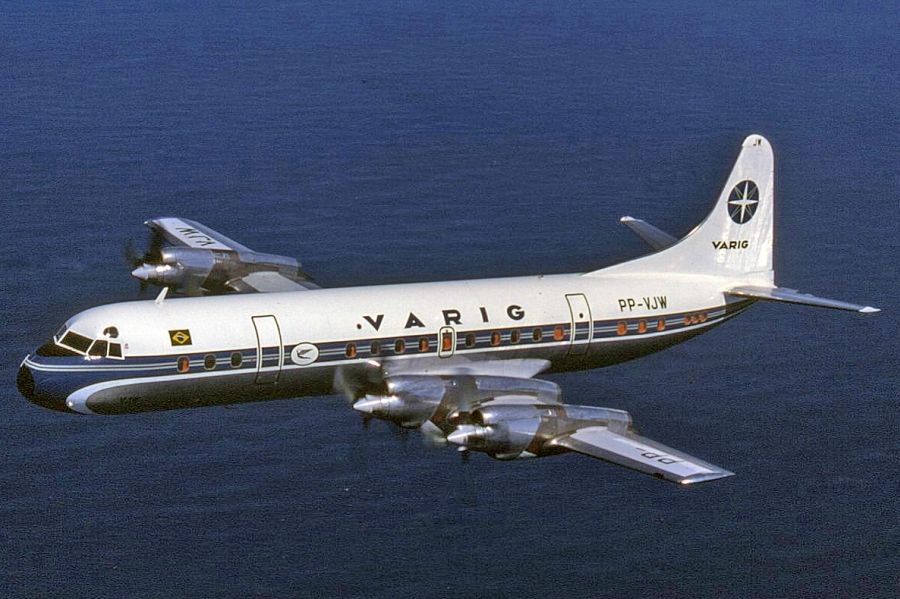
The Electra was a four-engine turboprop, a cutting-edge configuration for its time which made it distinctive. Featuring a robust and reliable design, it featured a low wing and pressurized fuselage optimized for passenger comfort. Its aesthetics were elegant and functional, designed for long national and regional routes.
The technological heart of the L-188 Electra were its four Allison 501-D13 engines, turboprops that delivered impressive power for their time. These powerplants provided not only remarkable speed but also superior fuel efficiency compared to piston engines, significantly reducing travel times.
The aerodynamic design of the aircraft was the result of in-depth studies, aimed at maximizing performance and stability. Innovations such as reduced noise and vibration in the cabin significantly improved the flying experience, distinguishing the Electra as a forerunner in passenger comfort.
Onboard Specifications
- ◆Engines: Four Allison 501-D13 turboprops, each delivering approximately 3,750 shp (shaft horsepower).
- ◆Cruising Speed: Remarkable for a turboprop, reaching approximately 650-660 km/h (350-356 knots).
- ◆Passenger Capacity: Typically configured for 70-98 passengers, depending on airline internal layout.
Operational Career & Operators
The Electra quickly entered service with major airlines such as American Airlines, Eastern Air Lines, Braniff International and the European KLM. The initial enthusiasm for its performance, speed and comfort was palpable, and it seemed destined for a bright future in commercial aviation.
However, a series of tragic accidents in the late 1950s and early 1960s cast a shadow over the aircraft's reputation. Investigations revealed a structural problem related to the "whirl mode" of the propeller, which could lead to structural disintegrations in flight under extreme conditions.
Lockheed's response was exemplary: a thorough investigation, precise identification of the problem and the implementation of crucial structural changes (the so-called "Lockheed LEAP" - Lockheed Electra Action Program). These interventions restored safety and confidence in the Electra, which continued a long and honorable career, often converted for cargo transport or military uses.
Legacy & Cultural Impact
Despite the initial turbulence, the Electra left a significant technical and operational legacy. It demonstrated the untapped potential of turboprops, influencing future designs and underlining the crucial importance of engineering research and development for aviation safety.
Its design gave rise to one of the longest-serving and most successful maritime patrol aircraft in history: the Lockheed P-3 Orion. This military variant cemented the Electra's technical legacy, demonstrating the robustness and adaptability of its core architecture for decades to come.
Today, the Electra is celebrated by aviation enthusiasts as a symbol of an era of transition and innovation. Its history of overcoming challenges and lasting impact makes it one of the most fascinating and respected aircraft in the annals of commercial aviation.
Telemetria Specs (HUD)
Hangar Trivia & Curiosità
- 💡The L-188 Electra holds the distinction of being the last large turboprop airliner developed and built in the United States.
- 💡Despite initial issues, many Electras enjoyed remarkably long service lives, with some flying for over 50 years, primarily in cargo roles.
- 💡The Electra's basic airframe and wings were adapted to create the highly successful P-3 Orion, a prominent maritime surveillance and anti-submarine warfare aircraft.
Archivio Avvistamenti Spotter
Immagini scattate dalla community in tutto il mondo