L-1049 Super Constellation
Lockheed
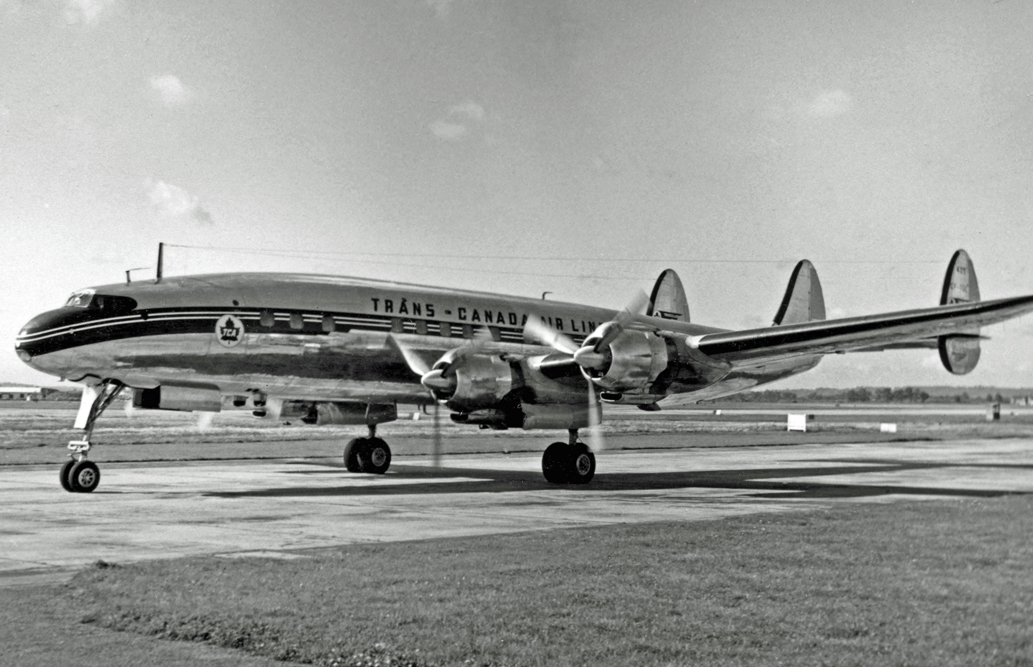
Historical Context & Origins
The post-World War II era was a period of extraordinary expansion for commercial aviation, with growing demand for faster, longer-running, higher-capacity aircraft. In this dynamic context, Lockheed Aircraft Corporation sought to capitalize on the success of its iconic Constellation.
The Lockheed L-1049 Super Constellation was born as a direct response to the need to outperform competitors, in particular the Douglas DC-6 and future DC-7 models. The goal was to create an aircraft that offered superior comfort and performance on long-haul routes, consolidating Lockheed's leadership in the transcontinental transportation sector.
The first flight of the Super Constellation occurred in 1951, introducing a significantly improved version of the original "Connie". Its main innovation was the extension of the fuselage, which allowed an increase in both passenger and cargo capacity, making it a true giant of the skies of its time.
Architecture & Technological Design
The Super Constellation maintained its unmistakable silhouette, characterized by the triple vertical fin and the "dolphin" fuselage, a design that was not only aesthetically pleasing but also functionally aerodynamic. This configuration, designed to improve directional stability, became its hallmark and an icon of piston aviation.
Technologically advanced for its time, the L-1049 integrated a pressurized cabin, allowing passengers to travel in comfort at high altitudes, well above turbulence. Its structure was strengthened to accommodate the increased length and weight, while maintaining aerodynamic elegance.
The beating heart of the Super Constellation consisted of four powerful Wright R-3350 Duplex-Cyclone radial engines, often equipped with turbocompound technology. This innovative system recovered energy from exhaust gases to increase power and improve fuel efficiency, pushing the performance of piston engines to the limit.
Onboard Specifications
- ◆Four Wright R-3350 Duplex-Cyclone turbocompound engines: Provided impressive combined power and increased efficiency.
- ◆Wingspan of 37.49 meters: Contributed to considerable stability and lift.
- ◆Cruising speed of approximately 500-550 km/h: Made it one of the fastest aircraft of its time for scheduled flights.
- ◆Autonomy up to 8,200 km: Allowed non-stop transcontinental and transoceanic flights.
- ◆60-100 passenger capacity: Significant for the time, with luxurious configurations available.
Operational Career & Operators
The Lockheed L-1049 Super Constellation quickly became a mainstay for major global airlines. Prestigious carriers such as TWA, Eastern Air Lines, Lufthansa, Air France, Qantas and KLM employed it on their most important routes, symbolizing elegance and reliability in air travel.
In addition to passenger transport, the Super Constellation also found use in the cargo sector and, in modified versions, in military roles. The C-121 Super Constellation variant served the US military as a transport aircraft and, in particular, as an airborne early warning and control (AEW) aircraft with the famous EC-121 Warning Star version.
Its operational career represented the pinnacle of the piston-powered aircraft era, distinguishing itself for its ability to navigate long distances with unprecedented passenger comfort. It was a fierce competitor to the Douglas DC-7, contributing to a golden era of innovation and service in civil aviation.
Legacy & Cultural Impact
The Lockheed L-1049 Super Constellation has left an indelible legacy in the history of aviation, becoming one of the most iconic and recognizable aircraft ever. Its elegant silhouette and history of transoceanic flights have made it a symbol of the golden age of air travel, evoking a sense of adventure and luxury.
This magnificent aircraft pushed the limits of piston engine technology and aircraft design, setting new standards for the comfort and range of commercial flights. It set the stage for the inevitable advent of the jet age, demonstrating what was possible with engineering and ambition.
Even today, a few restored examples of the Super Constellation fly at airshows around the world, capturing the imagination of new generations and recalling a time when flying was an extraordinary experience. Its magnetic presence and timeless design ensure that the "Super Connie" remains a loved and celebrated icon.
Telemetria Specs (HUD)
Hangar Trivia & Curiosità
- 💡Often affectionately known as the 'Super Connie' or 'Queen of the Skies' during its heyday.
- 💡Its unique triple-tail design was not just aesthetic; it allowed the aircraft to fit into existing hangars while providing sufficient vertical stability.
- 💡The Super Constellation served extensively with both civilian airlines and the U.S. military, notably as the C-121 transport and the EC-121 Warning Star radar picket aircraft.
Archivio Avvistamenti Spotter
Immagini scattate dalla community in tutto il mondo